
Above 1 MW, electric-motor lead times must be planned as engineered projects, with production slots, drawings, controls and testing often taking longer than standard stock deliveries [S4].
The relevant market boundary combines power above 1 MW, often below 1 kV, with medium-voltage machines and high-power industrial duty, so procurement teams should not apply catalog delivery figures to custom equipment [S2][S3].
Why the 1 MW threshold changes procurement
The market classification divides fractional motors below 1 hp, integral machines from 1 to 500 hp, and large motors above 500 hp, while voltage bands run below 1 kV, 1–6.6 kV and above 6.6 kV [S2]. A motor above 1 MW therefore falls inside large-machine territory even when its voltage remains in the low-voltage band.
The electric motors market is segmented by motor type, including AC motors, by voltage, including high voltage above 6.6 kV, and by application [S2]. That combination explains why a 1 MW-plus machine often carries more schedule value than its quoted motor price suggests, especially when housing, rotor, bearings, controls and site acceptance testing must be coordinated.
That figure is useful for screening suppliers, not for committing a pump, compressor or conveyor project with an outage date.
Compare standard, engineered and high-voltage options
Standard low-voltage machines are appropriate when the mechanical and electrical specification is already fixed, the supplier holds the required frame, and no special certification or test is required. Engineered low-voltage machines are suitable above 1 MW when voltage, mounting, enclosure, insulation, temperature rise or voltage variation departs from catalog data. High-voltage machines become necessary where the electrical system operates above 1 kV, with the market definition extending from 1–6.6 kV to above 6.6 kV [S2].
For a practical comparison, the industrial drive and VFD lead-time planning guide is relevant when the motor shipment must be coordinated with converter supply, harmonics, controls and commissioning rather than treated as an isolated component purchase.
Select for duty, not merely for megawatts
A motor above 1 MW must be selected against rated output, starting torque, duty cycle, insulation class, enclosure, cooling method, ambient conditions, altitude, vibration and permitted starting methods. Those parameters determine winding and rotor design, bearings, shaft stiffness, thermal margin and the factory test scope, so two motors of equal 1 MW rating can carry materially different procurement schedules. [S2]
Efficiency cannot be inferred from construction alone. Buyers should request tested efficiency data for the exact model under IEC 60034-2-1, together with the target efficiency class, rather than accepting a statement based only on copper windings [S4]. The 2026 procurement baseline is generally IE3 for most industrial motors, while IE4 applies to 75–200 kW motors under EU Regulation 2019/1781; IEC 60034-30-1:2025 defines IE5 as a voluntary class [S4].
For continuous-duty equipment, the selection should also include the driven load rather than the motor rating alone. Pumps and fans often justify variable-speed control, whereas constant-torque or high-inertia machinery can impose different starting and thermal requirements. The crossed-roller guide is relevant where a linear actuator or motion stage also falls within the project scope, although it is not a substitute for motor selection data.
Large machines need controlled factory scope
The technical scope should fix voltage, frequency, power, speed, pole count, insulation, temperature rise, enclosure, IP protection, mounting, shaft and flange dimensions, cooling arrangement, bearing arrangement, vibration limits, noise limits, paint, documentation, spare parts and connection details before the manufacturing slot is requested. Unresolved mechanical or electrical details can move the promised delivery date because each change can affect drawings, material procurement, machining, winding and test planning. [S4]
Controls and protection packages must be identified early because their content can change the motor order and commissioning sequence. Typical items include local and remote temperature monitoring, vibration sensing, earth-fault arrangements, current or differential protection, and interfaces with a variable-speed drive.
Hazardous-area classification, required certification and the applicable installation rules must be fixed before quotation. A supplier needs the exact area classification, gas or dust group, temperature class and applicable motor type; a general “explosion-proof” label is not an adequate procurement specification.
Test requirements can move the commissioning date
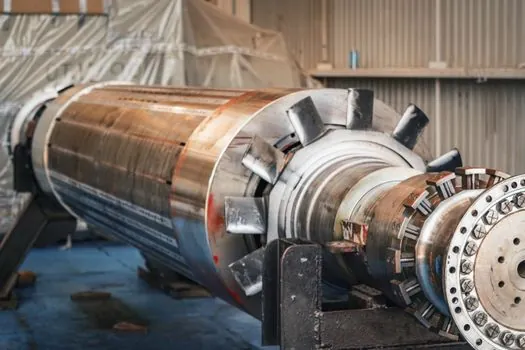
The contract should state which tests are routine, which are witnessed and which require site attendance, because each addition affects test duration and release documentation. [S5]
US market data shows why the voltage and power band cannot be overlooked: medium-voltage motors from 250 to 3,000 hp were forecast to grow at a 9.98% annual rate through 2031, while industrial machinery and automation represented 27.85% of US motor revenue in 2025 [S3]. Capacity expansion in these segments does not guarantee that a specific heavy motor frame is available for a specific week.
For motors with defined linear-motion requirements, the linear actuator selection depends on thrust, stroke, speed, duty and load rather than motor power alone. Keeping that interface in the motor data sheet prevents a supplier from quoting a machine that cannot meet the actuator duty.
Separate market growth from available delivery slots
Global electric-motor market estimates differ by scope: one study places 2026 revenue at USD 162.2 billion, another at USD 193.83 billion, and a third at USD 229.2 billion [S1][S2][S8]. These figures describe market value, not available production capacity or quoted lead time, and they should not be used to infer delivery availability for an above-1 MW machine.
The more relevant supply signal is the lead-time statement for standard models, 3–6 weeks, together with the explicit qualification that engineered orders take longer [S4]. A procurement schedule should therefore request three dates from each supplier: manufacturing-slot confirmation, factory-ready date and shipment readiness. For large motors, these dates can differ because final inspection, documentation or customer witness can precede release.
Semiconductor constraints have also affected motor supply chains. US motor-control chip lead times reportedly lengthened from 12 weeks to 26 weeks during 2024 as automotive and consumer-electronics demand absorbed fabrication capacity [S3]. That historical episode does not establish a 2026 delivery week for every large motor, but it demonstrates why control-component availability can affect a complete motor package.
Build a delivery schedule with hold points
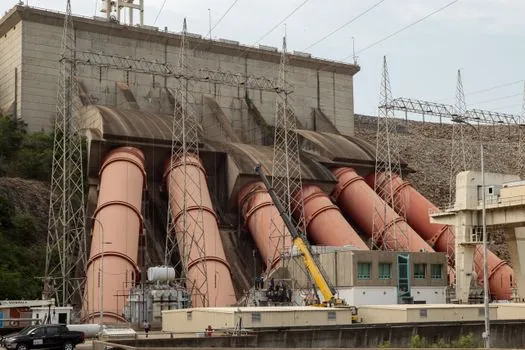
A large-motor procurement plan should separate approval dates from manufacturing dates. The first hold point is the approved technical specification, including voltage, duty, enclosure, cooling and certification. The second is approved general-arrangement and electrical drawings. The third is confirmed production slot and long-lead material status. The fourth is factory test and customer release. The fifth is transport, site receipt and commissioning readiness. [S2]
Buyers should request written lead-time ranges rather than a single date, state the consequences of drawing changes, and exclude the outage or commissioning milestone from supplier control. A contract that reports 3–6 weeks without identifying whether it covers a standard frame, a custom machine, testing or delivery is not adequate for a 1 MW-plus purchase [S4].
The trackable signals for the next purchasing cycle are supplier-specific manufacturing-slot availability, approval of electrical and mechanical drawings, and confirmation that medium-voltage or large-frame capacity has been reserved. These should be logged against the planned shutdown because a motor cannot offset a delayed converter, foundation, cable or commissioning team.