
As major manufacturers retire their oldest process nodes and redirect fabs toward AI-driven high-density storage, the market for SLC NAND flash is tightening fast.
The withdrawal affects industrial, military, medical, transportation and other long-lived platforms, while parallel NOR remains available in 8–32 Mb densities for legacy firmware and high-speed boot systems [S8].
What KIOXIA Is Discontinuing
The source describes manufacturers retiring old process nodes and a tightening SLC NAND market, but it does not identify a specific manufacturer withdrawal or any last-time-buy deadline.
Why NOR and SLC Supply Is Structural
NOR flash remains expensive and, because of supply-and-demand and manufacturing-capacity pressures, has not scaled in density and performance like NAND flash. NAND manufacturing capacity is being redirected toward high-density TLC products for AI storage, increasing competition for fabrication resources that previously supported mature SLC and NOR devices [S6][S7].
The technical trade-off is clear: NAND targets density and sequential throughput, while SLC NAND provides higher endurance and reliability for industrial data storage, and NOR supports execute-in-place firmware access with byte-level random reads [S5][S7]. Demand for high-density NOR devices at 256 Mb and above is being driven by industrial control systems and satellite communications applications [S6].
Parallel NOR devices remain a migration option where a legacy controller already supports them. Available densities from 8 Mb to 32 Mb provide a practical path for legacy systems and high-speed parallel boot code, subject to the specific device’s electrical, software and lifecycle constraints [S8].
NOR Versus SLC NAND for Industrial Control
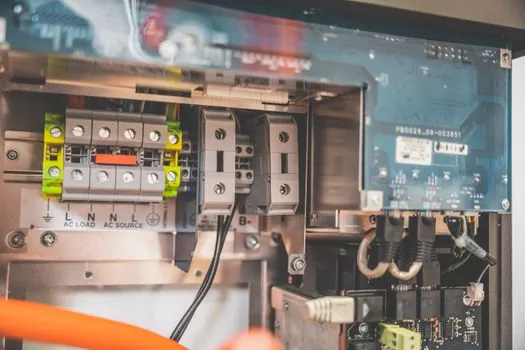
The choice between NOR flash, SLC NAND and an industrial SSD should be made against four criteria: execute-in-place firmware access, write endurance, storage density and replacement complexity. NOR remains the natural option for compact boot firmware and code that must execute directly from the array, whereas SLC NAND is better suited to logging and persistent data with higher write activity [S1][S5].
NOR is not the correct choice for high-volume sequential logging simply because it offers convenient code execution. SLC NAND or an industrial SSD provides a better capacity path when the workload is dominated by data writes, while NOR wins where deterministic random code access and mature firmware architecture matter more than cost per bit [S1][S5].
Built-In ECC Changes NOR Implementation
NAND relies heavily on block-level error correction because its raw bit error rate is higher than NOR, whereas NOR generally provides a stronger reliability baseline [S1]. Large-block ECC can correct wider error patterns in NAND, but applying that approach to NOR reduces random-read performance and removes byte-granular programming [S1].
Firmware developers must therefore review page-size, command, protection and data-layout assumptions before replacing a legacy NOR component with an ECC-equipped alternative.
Parallel NOR can reduce software disruption for systems that already support that interface, but serial devices require a different command set and driver path. The decision is not purely electrical: bootloader images, option bytes, partition tables, field-update logic and production-test fixtures can all depend on the original NOR command behavior [S8].
Who Needs Last-Time Buy, and Who Should Redesign

Last-time-buy allocation is appropriate for fielded systems that require an identical, qualified part and have a defensible service-life requirement. The KIOXIA deadline provides a hard procurement boundary of September 30, 2026, while final manufacturer shipments extend through December 31, 2028 [S3]. Long-running programs can also use specialist distribution channels that maintain inventory for current and EOL NOR, SRAM and DRAM devices [S2].
A redesign is more defensible when the installed base has a short service life, the product has high-volume field failures, or the controller already supports multiple flash interfaces. Moving from a discontinued NAND device to another SLC device does not remove the supply problem if the replacement also depends on mature-node production, so the new device, controller and firmware combination needs qualification as a system.
Legacy support is not limited to memory selection. Long-running production also depends on exact package, temperature grade, interface, density and lot traceability. NAC offers legacy NOR Flash, SRAM, and DRAM components to keep long-running programs operational and supports long-term supply for end-of-life programs.
Migration Constraints and Failure Modes
Four failure modes dominate migration planning: incorrect byte addressing, improper erase-block handling, endurance miscalculation and loss of update-path compatibility. NOR’s byte-addressable programming model differs from NAND’s page-and-block model, while SLC NAND still requires wear management even though it offers stronger endurance than MLC or TLC [S1][S5][S7].
Supply substitution also creates a hidden-requirement problem. A pin-compatible-looking device may differ in command set, page size, timing, voltage tolerance, protection behavior, temperature rating or endurance. Data written by the original component must also remain readable after field updates, particularly where logs and configuration histories have legal or diagnostic value.
MLC supply is contracting as Samsung discontinued its MLC NAND line in March 2025, while KIOXIA’s 2026 notices cover 24 nm and 15 nm MLC products with last-time-buy orders due September 30, 2026 [S3][S4]. That narrowing makes MLC unsuitable as a default long-term industrial answer unless the equipment has a documented, validated service horizon.
Procurement Checklist for 2026
The first procurement task is to freeze a bill of materials by manufacturer, density, interface, package, temperature grade and revision. For the affected KIOXIA products, reconcile every active platform against the 32 nm SLC, 24 nm MLC, 15 nm MLC/TLC and 64-layer/96-layer BiCS FLASH notice boundaries, then reserve last-time-buy quantities for the September 30, 2026 deadline [S3].
The second task is to model three quantities: committed last-time-buy stock, post-EOL manufacturing demand through the December 31, 2028 shipment horizon, and the field population requiring repair and obsolescence support [S3]. A stock count without platform population is not a supply plan, because the same device number can serve products with radically different deployment dates and service lives.
The third task is to validate alternatives before the buying window closes. Record read latency, boot behavior, program granularity, endurance, temperature range, power-loss recovery and error handling. Use the existing NOR flash guide to structure that qualification, and avoid treating an identical package outline as evidence of software compatibility.
Supply Signals Through the Migration Window
Two procurement signals provide a practical control point: the September 30, 2026 last-time-buy deadline for KIOXIA’s listed devices and the December 31, 2028 final-shipment date [S3]. Before September 30, 2026, buyers should have a platform-level allocation, not merely a distributor quote; after that cutoff, every additional order becomes an aftermarket dependency.
For storage purchasing, the broader industrial equipment lead-time dashboard can support cross-category planning, but the flash decision still turns on cell type, interface and qualification. The defensible course is to reserve qualified legacy parts where redesign risk is high, redesign high-volume or short-life platforms, and test every alternate against the original power-fail and update behavior.