The opportunity is strongest for procurement teams that compare qualified cell formats, supplier data, delivered cost, and project-specific warranty terms rather than buying on headline price alone.
What 35–40% Capacity Surplus Means for Buyers
This is a manufacturing-capacity imbalance, not a guarantee that every nominal ampere-hour is commercially deployable.
Availability and sellability are separate conditions. Thousands of battery modules sit in warehouses across Europe and North America, but trust, data transparency, buyer needs, chemistry, standardization, and regional regulation affect whether the stock can move. A buyer may therefore find low cell prices alongside limited availability of the exact cell, module, certificate, and warranty required for a specific project.
Cell pricing had already entered a slower phase by mid-2026. Average FOB China prices were $65–$80/kWh for 280Ah prismatic cells, $70–$85/kWh for 314Ah cells, and $72–$88/kWh for 320Ah cells, with year-over-year changes of -8%, -5%, and -4%, respectively [S1].
Cell Formats and Price Bands Buyers Can Compare
Mid-2026 prismatic cells were differentiated by nominal capacity, with 280Ah, 314Ah, and 320Ah options priced from $65, $70, and $72/kWh FOB China at the lower end of their respective ranges [S1].
Form factor changes the procurement decision. A 100Ah 32700 cylindrical cell averaged $75–$90/kWh FOB China in mid-2026, above the lower prismatic price bands, while a complete 48V 100Ah pack was listed at $550–$750, down 7% year over year [S1]. Buyers must separate cell economics from the assembled-pack price, which includes enclosure, interconnects, BMS hardware, thermal provisions, and warranty structure.
For raw-material exposure, How Exposed Are LFP Batteries to Phosphate and Iron? provides a useful input to contract and scenario analysis rather than treating cell quotes as fixed.
Price Pressure Does Not Guarantee Equivalent Quality

Oversupply raises the risk that buyers select average or non-standard output that lacks the commercial evidence required for deployment [S2].
Standardized modules designed for several vehicle platforms can move faster than younger or difficult-to-integrate formats such as pouch cells [S2]. Tier-one cells from established suppliers can also maintain stronger demand and margins than second- or third-tier capacity [S2]. For project procurement, that distinction matters because a low quotation from unproven capacity may carry greater warranty, traceability, and replacement risk.
These practices target scrap rate, throughput, and process control. A buyer should therefore ask for production-line data, cell-lot traceability, and validation results rather than treating every nominally identical 280Ah, 314Ah, or 320Ah cell as interchangeable.
Delivered Cost Matters More Than the FOB Cell Quote
This spread can erase much of the apparent advantage of a low FOB China cell price, so the procurement comparison should include duties, freight, insurance, customs handling, warranty reserves, and project-specific qualification.
A nominal premium may therefore purchase a more convenient compliance path, while a cheaper imported cell may require additional documentation, traceability work, and supplier verification.
Buyers can use How Battery Buyers Hedge Lithium Price Swings in Cell Contracts to structure escalation and indexation terms around this exposure.
Best Suited for Repeatable, Qualified Cell Programs
LFP procurement fits buyers purchasing repeatable volumes for stationary storage, commercial systems, telecom backup, and other cycle-oriented applications where cost per delivered kWh matters more than minimum cell footprint. A 48V 100Ah pack priced at $550–$750 and a 280Ah cell at $65–$80/kWh FOB China provide relevant benchmarks for 2026 budgeting [S1].
The chemistry is less suitable as an automatic choice for buyers whose load profile requires greater energy density, very low weight, or an established NMC-based mechanical platform. It is also a poor fit for procurement teams unable to perform incoming inspection, retain lot-level records, or define acceptance criteria beyond price per watt-hour.
Large BESS projects can use LFP cost reductions, but project qualification remains a separate workstream. One 2026 BESS product range spans 261 kWh to 4.176 MWh, illustrating that the commercial enclosure, power conversion arrangement, and thermal design can differ substantially from the cell itself [S3]. Buyers comparing station-scale systems should evaluate usable capacity, operating limits, communication interfaces, fire-safety evidence, and commissioning performance rather than applying a cell-only price factor.
Procurement Criteria That Expose Weak Offers
A 2026 quotation should be compared across at least four measurable criteria: cell cost, delivered cost, quality evidence, and contractual protection. The price table above provides cell and pack benchmarks, while certification and third-party validation establish whether the quoted product can be deployed with confidence [S2].
One useful comparison is cell versus complete pack versus integrated BESS. The cell offers the lowest visible unit price at $65–$90/kWh FOB China, the complete 48V 100Ah pack adds system integration at $550–$750 per unit, and an integrated station-scale BESS covers a much broader equipment and commissioning scope [S1][S3]. Each step transfers more responsibility to the supplier, so the nominal cost advantage must be tested against integration risk.
Contract terms should match the remaining uncertainty. Obtain serial-number traceability, sample-retention arrangements, acceptance procedures, electrical-performance data, cycle-life evidence, and remedies for failed lots. Where prices are index-linked, define the lithium input, conversion period, floor, ceiling, and source with enough precision for audit. The objective is not maximum flexibility at every price, but a contract that prevents a low cell quote from becoming an uncontrolled project liability.
Signals Buyers Can Track Through 2027
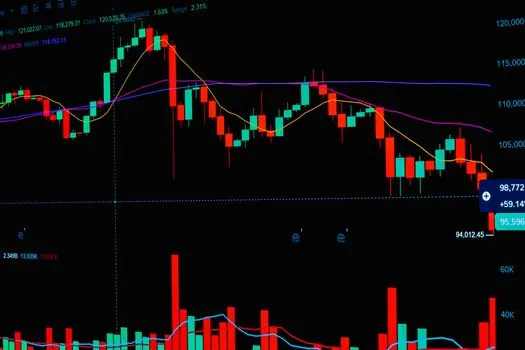
Two measurable signals will determine whether surplus capacity continues to benefit buyers: changes in cell quotations and changes in bankable supplier evidence. If 280Ah pricing falls below the mid-2026 $65–$80/kWh FOB China band without a matching reduction in delivered project cost, freight, duties, or qualification expenses may be absorbing the cell decline [S1].
The second signal is the gap between nominal and deployable supply. Production capacity can remain 35–40% above demand while qualified tier-one cells, standardized modules, and traceable project volumes stay tight [S1][S2]. Buyers should monitor lead times for the specified cell, document completeness, and the supplier’s willingness to provide lot-level production data rather than relying on aggregate market statements.
For larger projects, Evaluate Cell Supply Security for a 100 MWh BESS can support the supplier-risk work. The practical conclusion for 2026 purchasing is straightforward: use the 35–40% capacity surplus for leverage, but select on delivered cost and deployability rather than nominal cell price alone.