
Selection of a point level switch is governed by four binding inputs: the physical state of the medium (liquid, slurry, powder), the process temperature and pressure envelope, the required switching output (SPST, SPDT, relay, PNP/NPN), and the geometry of the vessel or pipe connection [S1].
Manufacturer catalogues published in 2026 list tuning forks rated to 150 °C and 64 bar, thermal-dispersion switches rated to 454 °C and 240 bar, magnetic floats to 300 °C, and polypropylene-bodied optical units to 176 °F, confirming that no single technology covers the full industrial envelope [S2][S3][S4][S10].
Technology options and operating envelopes
Float switches remain the lowest-cost solution for clean liquids; the SLLF40/RSF40 series offer nylon, polypropylene, PPS, and PVDF wetted options for corrosive media, with process temperatures from -20 °C to 105 °C and switching capacities of 25 VA or 100 VA [S4]. Magnetic float SPDT microswitch units (Trimod'Besta A 01 14, A 22C) reach 0-300 °C / 16 bar and 0-330 °C / 40 bar respectively, with switch ratings of 250 VAC at 5 A [S3].
Tuning-fork switches (Bürkert Type 8111, UWT Vibranivo VN 7000) span -50 °C to 150 °C and up to 64 bar, with the Vibranivo series covering -40 °C to 150 °C at -1 to 40 bar, marking the typical process window for liquids with viscosity below about 10 000 cP [S3]. The VEGAWAVE 62 vibrating-fork cable-suspended unit detects powders from 8 g/l density at distances up to 80 m, with grain size limited to 10 mm [S9].
Thermal-dispersion switches (FCI FLT93 family) cover the widest temperature band: FLT93B from -40 °C to 177 °C, FLT93F from -73 °C to 454 °C, FLT93M from -20 °C to 260 °C, all at 240 bar, with ±6.4 mm accuracy on level and interface service [S2]. The FAFNIR 76 A overfill prevention unit uses acoustic or optical sensing from -25 °C to 80 °C at 0-2 bar for water-pollutant tanks [S2].
Optical/photoelectric switches in polypropylene housings, such as the Flowline Switch-Tek LU10-1305, operate at -40 °F to 176 °F, mount in any orientation, and use a 0.7 in insertion length with 3/4 in NPT connection and a 24 V supply with SPST relay output [S10].
Selection criteria that drive the decision
Five criteria filter the seven technologies into a single shortlist: medium state, process temperature, process pressure, wetted-material compatibility, and output interface [S1][S2][S3].
For clean aqueous liquids below 100 °C at low pressure, magnetic float or optical switches deliver the lowest unit cost; the RSF40 series is offered in WRAS-pending and NSF-approved variants for potable-water and food duty [S4]. For aggressive chemicals at moderate temperature, polypropylene or PVDF-bodied floats and optical switches are common, with 21 manufacturers listed for polypropylene switches alone on DirectIndustry's 2026 index [S4].
For powders and fine-grained bulk solids with low bulk density, the VEGAWAVE 62 cable-suspended tuning fork is rated from 8 g/l with a 10 mm maximum grain size, and the switching point can be located up to 80 m from the installation point [S9]. For high-temperature hydrocarbons or interface detection in separators, the FCI FLT93F thermal-dispersion switch reaches 454 °C at 240 bar and is widely specified for level, interface, and sump service in refinery and power applications [S2].
For sanitary or pharmaceutical service, optical and tuning-fork switches with 316L stainless steel and PEEK faces dominate; FCI's FLT93C and similar thermal-dispersion models are built specifically to meet food, beverage, pharmaceutical, and biotech cleanliness requirements [S2]. The conductive (electrode) principle remains standard for pump control in conductive liquids, as in Omron's 61F-G[] floatless controller, offered in general-purpose, high-temperature, and long-distance variants up to 4 km [S7].
Side-by-side comparison of the seven technologies

Comparison axes: max process temperature, max process pressure, typical media, switching output, and lowest dielectric-constant or minimum-density limit where stated [S2][S3][S4][S9][S10].
Magnetic float (Trimod'Besta A 22C): 330 °C, 40 bar, clean liquids, SPDT 250 VAC/5 A, density >0.7 SG typical [S3]. Tuning fork (Bürkert 8111, UWT VN 7000): 150 °C, 64 bar, liquids and light slurries, relay/PNP, no DK limit stated [S3]. Optical in PP (Flowline LU10-1305): 176 °F, low pressure, clear liquids, SPST relay N.O./N.C. [S10]. Conductive (Omron 61F): up to 4 km electrode distance, conductive liquids only, relay [S7]. Thermal-dispersion (FCI FLT93F): 454 °C, 240 bar, liquids and interfaces, relay, ±6.4 mm accuracy [S2]. Vibrating-fork cable (VEGA VEGAWAVE 62): powders from 8 g/l, grain size max 10 mm, switching point up to 80 m [S9].
Where two technologies overlap (e.g. optical vs float on clean water below 60 °C), material compatibility and orientation usually decide: optical switches mount in any orientation with a 0.7 in insertion, while floats require a horizontal or top-entry geometry and a minimum liquid specific gravity near 0.7 [S4][S10].
Who should NOT pick the cheapest option
Specifying a magnetic float or simple optical switch in a high-temperature hydrocarbon service above 150 °C will fail on wetted-material limits and process-pressure rating; the RSF80 and SLLF40 polypropylene floats are capped at 120 °C and 105 °C respectively [S4].
Specifying a thermal-dispersion switch in a low-density powder below 8 g/l will fail to detect the medium; the VEGAWAVE 62 is the documented lower bound for fine-grained bulk solids [S9]. Specifying a conductive electrode switch on deionized water, oil, or any non-conductive liquid will produce false readings because the sensing principle requires a conductive path between electrodes [S7]. Specifying a tuning-fork switch in a high-viscosity or coating medium above roughly 10 000 cP risks damping the oscillation; the UWT documentation lists viscosity limits and coating tolerance as disqualifying factors for sticky media [S3].
For continuous level measurement rather than point switching, none of the seven technologies apply; the buyer should pivot to a radar level meter or an ultrasonic level meter instead, because point switches only give a single on/off signal at one elevation.
Standards, output types, and installation constraints
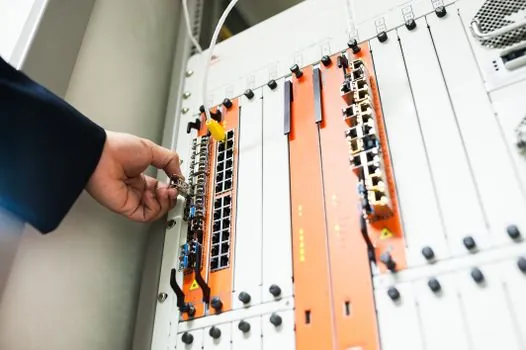
ATEX/IECEx zone classification, SIL rating, and ingress protection govern hazardous-area and outdoor installations; the Trimod'Besta A 22C lists IP65 enclosure, while flowline optical units typically carry NEMA 4 or IP67/IP68 for washdown duty [S3][S10].
Output options most commonly stocked in 2026 are SPST or SPDT relay, PNP/NPN transistor, and 4-20 mA with HART on the higher-end thermal-dispersion models; the Flowline LU10-1305 ships with a user-selectable N.O./N.C. SPST relay [S10]. For overfill prevention on water-pollutant tanks, the German TrbF/ATEX framework is the typical reference, with the FAFNIR 76 A listed as an overfill-prevention device in that class [S2].
Process connection is most often 3/4 in or 1 in NPT for compact units and flanged (DIN/ANSI) for high-pressure or high-temperature units such as the Vibranivo 8111 at 64 bar [S3][S10]. For broader media coverage including slurries, foam, and corrosive chemicals, a tuning-fork or RF-admittance level switch covers more aggressive services than a float at a small cost premium.
Decision flow and shortlist logic
Step 1: classify the medium. Clean liquid, slurry, viscous liquid, powder, foam, or interface. Step 2: read off the binding temperature and pressure from the P&ID. Step 3: confirm wetted-material compatibility (PP, PVDF, 316L, Hastelloy, PEEK). Step 4: select the matching technology from the seven-line table. Step 5: verify the output, the process connection, and the hazardous-area approval. [S3]
A practical shortlist for a 2026 specifier: polypropylene float (SLLF40/RSF40) for clean water to 120 °C; Flowline LU10-1305 optical for any-orientation clean-liquid detection to 176 °F; FCI FLT93F thermal-dispersion for hot hydrocarbons and interface detection to 454 °C; UWT VN 7000 or Bürkert 8111 tuning fork for general-purpose liquids to 150 °C and 64 bar; VEGAWAVE 62 cable-suspended fork for low-density powders to 8 g/l; UWT RFnivo 8000 capacitive for low-DK media to 400 °C; Omron 61F conductive for pump control in conductive liquids with electrode runs to 4 km [S2][S3][S4][S7][S9][S10].
The simplest next step after selecting a level switch is to confirm the vessel geometry and mounting thread against the manufacturer's datasheet, then order a vendor sample for bench testing in the actual process fluid; the measurable verification signals are switching point repeatability, false-trip rate in the presence of foam or turbulence, and wetted-material weight loss after 30 days of immersion.
Detailed specification references: automatic level.