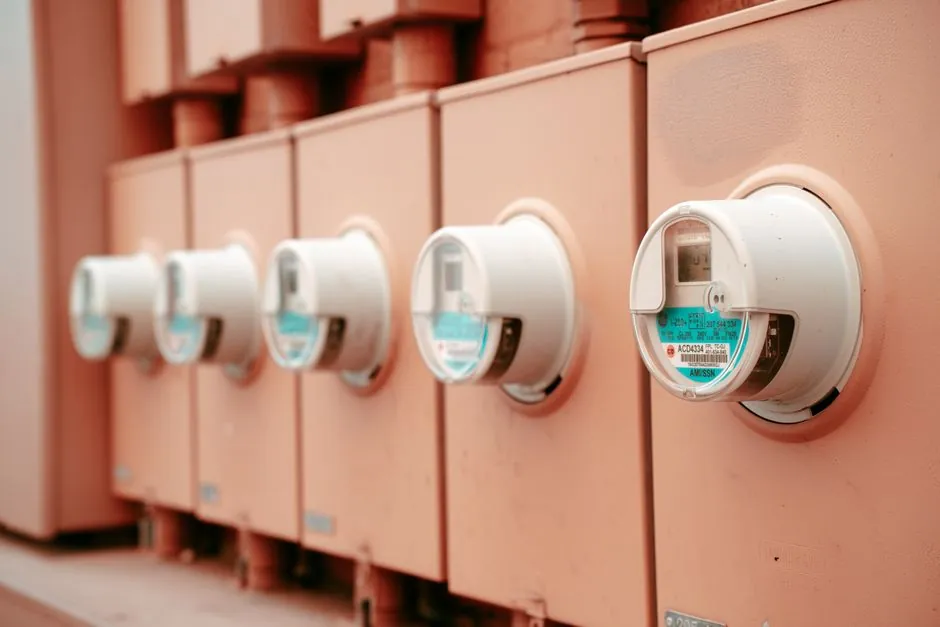
For process engineers choosing a non-contact level instrument in 2026, the practical split is straightforward: 80 GHz FMCW radar level meter handles steam, dust, foam, high temperature, and aggressive media at ranges to 120 m, while an ultrasonic level meter remains the low-cost pick for clean water, open-channel flow, and short-range chemical tanks under roughly 20 m where the vapour space is calm.
Both are non-contact, both are loop-powered on 4-20 mA or RS485, and both share the same wiring footprint, but the underlying physics, accuracy, and installed cost differ enough that specifying the wrong one is a common cause of repeat service calls. The following sections line the two technologies up against temperature, accuracy, vapour tolerance, range, and price so the choice is unambiguous.
Operating Principle and Why the Beam Angle Matters
Radar works on FMCW (Frequency Modulated Continuous Wave) in the 76-81 GHz W-band, with a narrow 3° antenna beam and 8 cm blind zone, per HCCK product data [S1]. Ultrasonic units work in the 20-200 kHz acoustic band, where the beam diverges by 6-12° and the blind zone grows with frequency. The narrower radar beam lets the same instrument look past internal obstructions (agitator shafts, ladders, heating coils) and reject false echoes, while the wider ultrasonic cone is more likely to ring on tank walls when the target is offset or when the liquid freeboard is short.
Two practical consequences follow. First, 80 GHz radar holds ±3 mm accuracy in tanks to 30 m, while ultrasonic accuracy is typically 0.25-1.0 % of full scale [S1][S4]. Second, ultrasonic beam spread means a 4 m open-channel weir cannot be measured with the same precision as a 4 m stilling well using a focused radar beam, especially if wind, foam, or condensation is present.
Process Tolerance: Steam, Dust, Foam, and Temperature
Microwave energy at 76-81 GHz passes through most non-conductive vapours with negligible attenuation, so 80 GHz radar reads correctly through steam, condensation, and dust that would otherwise attenuate or scatter a 20-200 kHz acoustic pulse [S1]. Guided-wave variants are specified for service to 250 °C and 20 kg/cm² process pressure on the HCCK HCDAR-51, with dielectric, foaming, and dust tolerance quoted as a design feature rather than a limitation [S1].
Ultrasonic performance degrades predictably as vapour, dust, or foam density rises: acoustic velocity shifts with temperature, and the pulse can be absorbed or scattered before it returns. For a clean potable water reservoir at ambient temperature this is a non-issue; for a chemical reactor with reflux vapours, a cement silo with airborne dust, or a steam boiler drum it is a deal-breaker. Silver Automation's published technical note frames the gap as a hard rule: ultrasonic is acceptable where the vapour space is air, radar is required where it is not [S7].
Range, Accuracy, and Output Options

Spec data from current Chinese OEM catalogues (HCCK, Aister, Sentec) shows the typical envelope as of August 2026. 80 GHz FMCW radar: 0-120 m range, ±3 mm accuracy, blind zone 8 cm, antenna beam 3°, output 2-wire or 4-wire 4-20 mA or RS485, ambient -40 to 85 °C, process up to 120 °C on the standard HCDAR-8X, 250 °C on guided-wave HCDAR-51 [S1]. Guided-wave radar tops out at 30 m with 3 mm accuracy for liquid, solid particles, and slurry service [S1].
Ultrasonic: typical range 0-20 m, accuracy 0.25-1.0 % of full scale, blind zone 0.25-0.5 m depending on the transducer, 4-20 mA or RS485 output, ambient -20 to 80 °C on most models, plastic or PTFE-faced transducers for corrosive media [S1][S4]. Pricing on Made-in-China.com shows ultrasonic at US$ 200-800 per piece and basic radar at US$ 123-369 for the simpler magnetic float category, with 80 GHz FMCW radar typically US$ 400-1200 per piece depending on antenna material, process connection, and HART/Modbus options [S4].
Selection Matrix: When to Pick Which
Use radar when any of the following is true: process temperature exceeds 80 °C, vapour or dust is present, accuracy tighter than 0.5 % is required, range exceeds 15 m, or the medium is a low-dielectric hydrocarbon, foam, or slurry. Use ultrasonic when the medium is settled liquid (water, dilute chemical, effluent), the tank is open or vented to atmosphere, range is under 10 m, and the budget for the instrument line is under US$ 300. For a broader level transmitter selection framework the same four criteria (range, accuracy, process media, total installed cost) apply; radar simply wins three of four whenever the service is hot, dirty, or long. [S4]
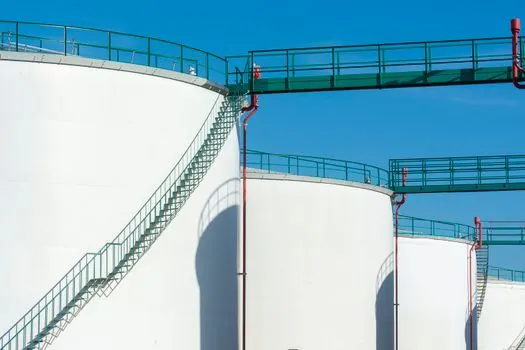
For a sump, lift station, or open-channel flow measurement, ultrasonic remains the default because the air gap is clean, the range is short, and the price delta funds a redundant unit instead. For a reactor, distillation bottom, cement silo, or LNG storage sphere, radar pays for itself in the first avoided false echo, especially when paired with HART or guided-wave radar on a 4-20 mA loop for diagnostics.
Integration, Cabling, and Communications
Both technologies integrate with the same DCS/PLC wiring: 2-wire 4-20 mA with HART, 4-wire 4-20 mA, or RS485/Modbus. Power is 24 VDC nominal on most models, with 12-30 VDC accepted on the low-power ultrasonic variants. Explosion-proof and intrinsically safe versions are standard on both, with HCCK, Sinomeasure, and Kexiang Automation publishing Ex d and Ex ia options for hazardous-area tanks [S1][S5][S8].
Where the two diverge is in the commissioning step. Radar needs an empty-tank or known-distance reference for echo curve mapping, while ultrasonic needs a measured distance to the surface plus the local air temperature for acoustic-velocity compensation. In hot tanks, ultrasonic velocity correction is the single largest source of level error after installation; it is also the error that disappears entirely when 80 GHz radar is used because microwave propagation is essentially independent of air temperature and composition at the distances involved.
Failure Modes and Field Service Reality
Common ultrasonic failure modes are foam-induced echo loss, condensation on the transducer face, temperature-gradient errors, and beam-wall ringing in narrow tanks. All four are addressed by relocating the sensor, adding a stilling well, or upgrading to radar. Common radar failure modes are antenna fouling, condensate bridging the horn, and mounting near high-dielectric tank roofs. Antenna fouling is solved with PTFE or stainless horn covers, and the narrow 3° beam makes roof reflections a non-issue for most installations [S1].
For a maintenance team, the practical rule is that an ultrasonic meter that has been touched twice in a year is a candidate for replacement with radar, because the labour cost of one service call (typically US$ 300-600 in 2026, including scaffolding) is close to the procurement delta between the two technologies on small to mid-size tanks. On large tanks the radar premium is recovered in a single avoided false reading that would have shut down a feed pump or triggered a transfer.
Trackable next signals for procurement: monitor Made-in-China.com 80 GHz FMCW radar SKU count (the August 2026 catalogue shows the 80 GHz category expanding versus 26 GHz legacy lines [S1][S2]), and watch the ultrasonic price floor, which has been under pressure from low-cost 20 kHz modules out of Shenzhen. The directional read is radar getting cheaper in absolute terms as the 80 GHz silicon supply matures, and ultrasonic holding the bottom-tier price for OEM/private-label panels. For process engineers building a 2027 spec, the safe default is 80 GHz FMCW for any tank where the maintenance access is poor, and ultrasonic level for clean, accessible sumps and open-channel flow.