
A level transmitter converts a liquid or bulk-solid surface position into a stable 4-20 mA, HART, or Foundation Fieldbus signal, and selecting the right one in 2026 hinges on five process-driven gates before any vendor is named. The market now offers compact magnetostrictive probes from ABB [S1], 2-wire 80 GHz FMCW radar units from Magnetrol-AMETEK [S3], ultrasonic sensors from Riels [S2] and Siemens channels via Able [S5], each solving a different slice of the same problem.
Specifying on price alone is a 2026 mistake. The dominant cost drivers in instrument selection are accuracy class (±1 mm vs ±5 mm), output protocol (HART vs Foundation Fieldbus), hazardous-area certification, and the media's dielectric constant / foam profile. A wrong gate picks the wrong sensor; a missing gate leaves money on the table or the tank over-filled.
Define the Measurement Before Picking a Technology
Continuous vs point, liquid vs solid, and contacting vs non-contacting — these three binary choices eliminate roughly 70% of catalog entries before a datasheet is opened. A magnetostrictive rigid probe like the ABB AT600 [S1] is a contacting, continuous liquid sensor, while the Magnetrol Pulsar R96 [S3] is a non-contacting, continuous radar unit rated for liquids on a 2-wire 4-20 mA loop. Ultrasonic models in the RIL330 series [S2] cover both liquids and solids, marking the technology's flexibility edge for bulk-solid silos and open-channel applications.
Tank geometry is the second filter. Tall, narrow tanks favor guided-wave radar (GWR) or magnetostrictive probes that ignore most foam; short, wide tanks with low dielectric media favor non-contacting 80 GHz radar. Open channels and weirs drop straight to ultrasonic because the air-gap measurement is short and the surface is well-defined.
Five Selection Gates to Run Before Quote
Gate 1 — Media behavior. Foam, turbulence, vapor, and dielectric constant εr decide between radar, ultrasonic, and guided-wave. Water (εr ~80) is friendly to every technology; hydrocarbons (εr 1.8-2.5) and low-dielectric solvents (εr 2-4) require 80 GHz FMCW radar or a stilling well to push performance. A magnetostrictive probe like the AT600 [S1] sidesteps dielectric problems entirely because the float's position is read by a torsional strain pulse, not an electromagnetic reflection.
Gate 2 — Accuracy and repeatability. Bulk solids and inventory tank gauging call for ±1 mm or better, where magnetostrictive and servo-capacitance probes dominate. Process control loops on reactors typically accept ±5 mm; 80 GHz FMCW radar in compact housings (e.g. R96 [S3]) routinely lands inside that band. Ultrasonic is rarely specified below ±0.25% of full scale, which is the practical ceiling for that technology in field conditions.
Gate 3 — Output and integration. The 2-wire 4-20 mA + HART 7 stack remains the workhorse for retrofit projects and IS loops, and it is the explicit signaling on the Magnetrol R96 [S3] and the RIL330 ultrasonic family [S2]. Foundation Fieldbus and PROFIBUS PA appear in greenfield refinery and large-tank-farm builds where valve integration and diagnostics outweigh loop simplicity.
Gate 4 — Hazardous-area and materials certification. ATEX/IECEx zone ratings, NACE MR0175 compliance for sour-service hydrocarbon service, and FDA / 3-A for food-grade stilling wells all have to be present on the nameplate, not requested later. A compact magnetostrictive probe with stainless wetted parts [S1] is the typical pick for pharmaceutical and food skids; bulk-chemical storage runs to radar with appropriate gas-group approval.
Gate 5 — Mechanical fit. Process connection size, GWR / probe length on rigid magnetostrictive units [S1], flange vs thread vs Tri-Clamp, and IP66/IP68 / NEMA 4X enclosure rating. R96 radar [S3] ships in a 2-wire compact head that drops onto existing cable runs, a key retrofit advantage when pulling new conduit is impractical.
Technology-by-Criteria Comparison
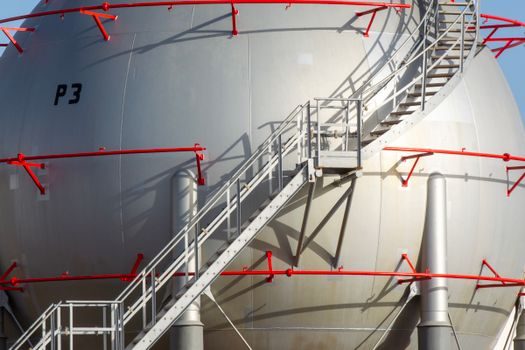
For a spec engineer comparing the four most common 2026 technologies, the practical ranking is straightforward. Magnetostrictive probes [S1] win on accuracy (±0.5-1 mm), independence from dielectric, and the cleanest mechanical install in stilling wells; they lose on contact (the float and stem sit in the media) and on long-range applications beyond ~6 m where 80 GHz radar pulls ahead. 80 GHz FMCW radar like the R96 [S3] wins on non-contact measurement, vapor and foam tolerance, and 2-wire retrofittability; it loses on cost and on very low-dielectric media where stilling wells are still mandatory. Ultrasonic — the Riels RIL330 [S2] and Siemens lines [S5] — wins on price and on liquids/solids versatility; it loses on accuracy, foam penetration, and high-temperature service. Capacitance and RF-admittance probes win on cost-sensitive point detection in conductive liquids; they lose on coating and build-up risk, which is why they are paired with cleaning cycles in slurry service.
An engineer chasing absolute top-end accuracy and zero media-contact risk for an aggressive chemical will still look at a magnetostrictive level transmitter inside a stilling well. The same engineer specifying a refinery product tank with vapor space and possible foam will land on a radar level transmitter on a 2-wire HART loop. A wastewater or open-channel application drops to a laser level or ultrasonic sensor because cost and surface accessibility dominate.
Who This Frame Is For — And Who Should Skip It
This selection frame fits process engineers and instrumentation specifiers working on chemical reactors, oil & gas storage, pharmaceutical and food skids, water/wastewater treatment, and bulk-solid silos. The five-gate method is overkill for a single off-the-shelf float switch replacement; it is the right tool when the project is a multi-tank build, a retrofit with mixed vendors, or any application where a wrong measurement has a safety or environmental consequence. [S1]
It is not the right frame for OEMs buying commodity float switches in volume, or for lab-scale research where a simple point-level sensor is the answer. It is also not a substitute for a full HAZOP and SIL review on safety-instrumented level loops, which still need a separate IEC 61511 path.
Real Use Cases Wired to 2026 Hardware
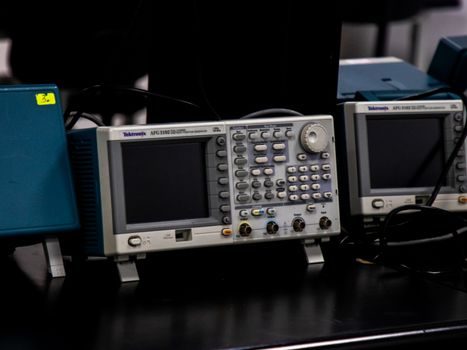
A chemical plant retrofit specifies compact magnetostrictive probes [S1] on reactor vessels where dielectric varies between batches and accuracy must stay inside ±1 mm for batch-end detection. A tank-farm upgrade moves to 80 GHz FMCW radar on existing 2-wire cable runs, picking the R96-style form factor [S3] to avoid pulling new conduit. A water-treatment works specifies ultrasonic units in the RIL330 family [S2] for both wet-well level and dry-screened solids, and runs everything back to a PLC on 4-20 mA. Bulk-cement and grain silos are still the bread-and-butter of ultrasonic level sensing because dust and surface irregularity defeat contact probes.
For lower-cost point detection and overflow alarms in conductive liquids, a capacitance level transmitter is the standard pick. For the new generation of open-channel and weirs, a laser level or 80 GHz radar is increasingly specified where ultrasonic struggled with foam in the past.
Limitations, Failure Modes, and Standards
Foam is the dominant failure mode for ultrasonic and an old adversary for 6 GHz radar; 80 GHz FMCW radar and GWR both push foam tolerance up, but neither is foam-proof in heavy aeration. Build-up and coating are the dominant failure modes for capacitance probes — the only practical fix is periodic wash cycles or relocation. Magnetostrictive probes fail mechanically when the float is lost or the stem is bent, typically from internal fitting damage during maintenance. Radar fails in low-dielectric media without a stilling well; ultrasonic fails in vacuum service and in hot vapor where the sound velocity drifts. [S2]
Standards that govern this selection include API 3.1A / API 2350 for tank overfill protection, ATEX 2014/34/EU and the IEC 60079 series for hazardous-area equipment, and ISA 5.1 / IEC 61131 for loop integration. NACE MR0175 covers sour-service materials. The five-gate frame above is intended to be a pre-quote filter, not a replacement for those standards — the final datasheet should still carry the explicit certification marks.
Cross-Reference to Companion Selection Guides
Engineers who already ran the Turbine Flowmeter 2026 Buying Guide: Sensor Size, Output and Fluid Class know the same five-gate logic (process, accuracy, output, certification, mechanical) translates directly into the level world. The Variable Area Flowmeter vs Coriolis: 2026 Selection Comparison article applies the same decision frame, and the Pressure Transmitter Buying Guide 2026: Match Type, Output and Certification to Process is the closest sibling — pressure, level, and flow all collapse onto the same selection logic in 2026. [S3]
The next decision node after technology choice is the HART / FF / PA integration path, and the verifiable signal to track in the second half of 2026 is the continued migration of 80 GHz radar from greenfield to retrofit, plus the formal entry of IO-Link level sensors for skidded OEM equipment. Engineers specifying tanks over the next six months should verify the latest ATEX/IECEx certificate revisions on the chosen part number before final purchase order release.