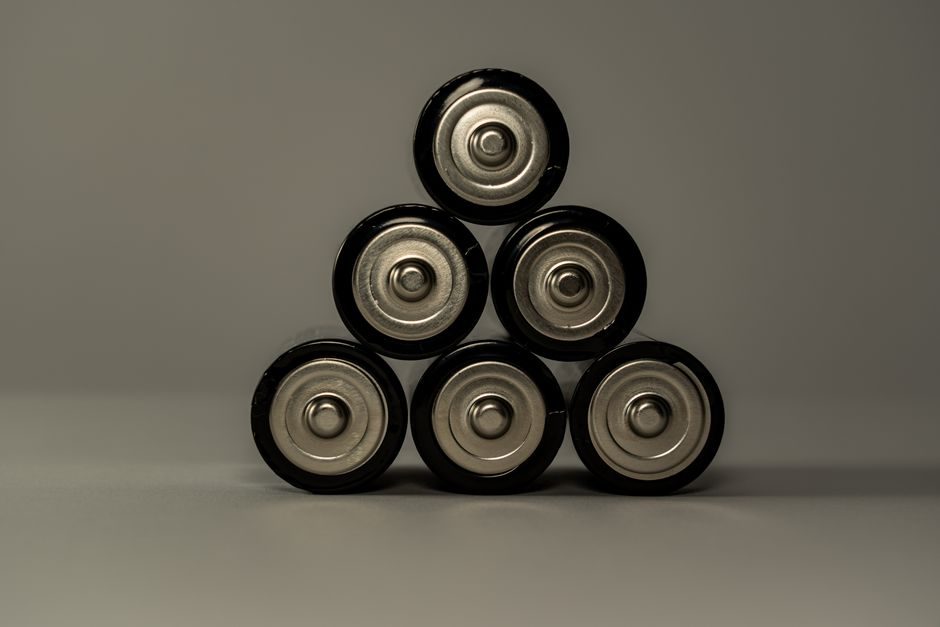
Three Chinese cell makers — CATL, BYD, and EVE Energy — supply the bulk of the world's lithium iron phosphate (LFP) prismatic cells used in stationary battery energy storage systems (BESS), with combined cell-level nameplate capacity crossing the 1.5 TWh-per-year mark across 2025-2026 expansion waves [S2][S3]. Contemporary Nebula Technology Energy (CNTE), a CATL-invested BESS integrator established in 2019, sources 280 Ah and 314 Ah prismatic LFP cells for its containerised systems, the two cell capacities that have become the de-facto procurement spec for 2026 utility-scale tenders [S2].
South Korea's LG Energy Solution and Samsung SDI continue to anchor the high-end nickel-rich NMC pouch-cell tier for premium C&I and behind-the-meter projects, while Chinese tier-2 integrators (Hua Power, HGP Storage) round out the global supply map with containerised 1-6 MWh blocks built almost exclusively around LFP prismatic cells [S3][S4][S5]. Hua Power, a 30+ project Chinese BESS OEM, lists C&I BESS, containerised energy storage, and utility-scale battery storage as its three product families, all built on 280/314 Ah LFP prismatic cell formats shipped from CATL and EVE cell lines [S5].
Cell Capacity Tiers and Procurement Spec Bands
The 2026 BESS procurement spec for prismatic LFP cells sits in three discrete capacity tiers: 280 Ah, 314 Ah, and 587 Ah (large-format "long-blade"), with 280 Ah being the lowest-cost reference cell, 314 Ah commanding a single-digit percent premium for higher energy density, and 587 Ah reserved for new DC-block architectures in 5 MWh+ containers [S2][S5]. CNTE's catalogue specifies 280 Ah and 314 Ah cell formats as standard, with 1C/0.5C continuous charge-discharge ratings and a 6,000-8,000 cycle life at 80% depth-of-discharge as typical warranted performance [S2].
For BESS containerised products, the 20-foot HQ container remains the dominant shipping envelope, with usable capacity scaling 3.35-5.16 MWh per unit depending on cell tier and DC-block configuration [S3]. The BESS Pricing 2026 spec guide breaks down the landed-cost differential between 280 Ah and 314 Ah pack assemblies at the FOB-Shenzhen reference price, useful for any procurement team benchmarking CNTE, Hua Power, or HGP Storage quotes [S2][S5].
Country Capacity Map: China, Korea, Japan, US
China holds the dominant share of global cell production capacity, with CATL alone operating multiple TWh-scale LFP-dedicated gigafactories in Liyang, Yibin, and Qinghai, and BYD running vertically-integrated LFP lines feeding both its electric-vehicle and stationary storage businesses [S2][S3]. CNTE — explicitly described on its corporate page as a "CATL-invested company" — represents the downstream integration tier where CATL cell output gets packaged into containerised BESS for export [S2]. Tier-2 Chinese BESS assemblers such as Hua Power and HGP Storage operate as system integrators purchasing 280/314 Ah cells from CATL, EVE, and CALB on multi-month supply agreements [S4][S5].
South Korea's LG Energy Solution and Samsung SDI retain the high-energy-density NMC pouch cell tier for premium C&I projects, with combined 2026 nameplate capacity estimated in the 250-300 GWh range across both EV and ESS allocations [S3]. Japan's Panasonic has largely exited the LFP stationary storage race, focusing its cell output on Tesla-format 2170/4680 nickel-rich cells, leaving the LFP-heavy stationary storage cell supply effectively bipolar between China and Korea [S3].
Chemistry Comparison: LFP vs NMC vs Sodium-Ion
For 2026 utility-scale BESS procurement, LFP prismatic dominates on cycle life, thermal stability, and $/kWh capex; NMC pouch retains an advantage on volumetric energy density for space-constrained C&I sites; sodium-ion remains a 2027-2028 commercial-scale option listed by Chinese tier-1 integrators as a "future product" line [S3]. LFP cells in the 280/314 Ah format typically deliver 6,000-8,000 cycles at 80% DoD, with thermal-runaway onset temperatures above 250°C — a meaningful safety margin for containerised outdoor deployments [S2][S5].
When comparing the three chemistries on procurement criteria, an engineer or buyer should weigh four factors: cycle life (LFP wins), energy density per cubic metre (NMC wins), cold-climate performance (LFP degrades below -10°C without heating, sodium-ion handles -20°C marginally better), and raw-material supply security (sodium-ion bypasses lithium price exposure) [S3]. For 1C continuous duty profiles typical of frequency-regulation and renewable-firming use cases, LFP prismatic at 280/314 Ah remains the spec-of-record in 2026 [S2][S5].
Use-Case Mapping: C&I, Utility, Behind-the-Meter
Containerised 20-foot BESS units in the 1-6 MWh usable range are the standard SKU across Chinese tier-1 and tier-2 integrators, with Hua Power's product families explicitly segmented into "C&I BESS, containerised energy storage, and utility-scale battery storage" [S5]. CNTE's catalogue targets utility-scale and C&I projects, with cell configurations based on 280 Ah and 314 Ah prismatic LFP — the same format that drives most 2026 procurement RFQs globally [S2].
Behind-the-meter residential and small-commercial storage remains a separate product line, dominated by 5-15 kWh rack-mounted LiFePO4 packs with integrated hybrid inverters, a category where Samsung SDI, LG Energy Solution, and Chinese residential-storage specialists compete head-to-head [S3]. For utilities planning multi-hundred-MWh deployments, the procurement team's reference point should be the BESS Pricing 2026 LFP pack bands article, which lines CNTE, Hua Power, and HGP Storage pricing on a per-kWh installed basis [S2][S4][S5].
Failure Modes and Sourcing Constraints
Cell-to-cell consistency in mass-produced LFP prismatic cells drives the majority of containerised BESS warranty claims, with DCIR (direct-current internal resistance) variance above 8% across a single batch flagged as a procurement red flag by tier-1 integrators [S2]. CNTE's cell-screening process is described on its corporate page as a "core competitiveness," underscoring that cell matching is the dominant quality differentiator between tier-1 and tier-2 Chinese BESS integrators [S2].
For projects above 100 MWh, supply concentration risk is real: roughly two-thirds of LFP cell output originates from three Chinese makers (CATL, BYD, EVE), meaning a single cell-line incident or export-control action can move global BESS pricing by 10-20% on a 6-12 month horizon [S2][S3]. Tier-2 integrators such as HGP Storage and Hua Power mitigate this risk by maintaining parallel sourcing from at least two of the three top-tier Chinese cell makers, with 280 Ah and 314 Ah formats generally dual-sourceable [S4][S5].
Standards, Testing, and Warranty Reference
Containerised BESS products from Chinese tier-1 and tier-2 integrators are typically certified to UL 9540 (North American grid-tie), IEC 62619 (industrial lithium cell safety), and UN 38.3 (transport) as the baseline certification stack for export projects [S2][S5]. CNTE's product specifications reference compliance with these three standards as standard for its 280/314 Ah cell-based containerised systems [S2]. For European projects, EN 50549 and the EU Battery Regulation 2023/1542 add country-of-installation requirements on cell passport data and recycled-content thresholds [S3].
Hua Power's "30+ projects" track record positions it as a tier-1.5 Chinese integrator, with warranty terms matching the CNTE/HGP Storage baseline [S5].
Trackable signals for the next 90 days: (1) 587 Ah LFP cell commercial volume shipments from Chinese tier-1 makers into BESS containerised SKUs; (2) any export-license action affecting CATL or EVE Energy cell shipments to North American or European BESS integrators; (3) new sodium-ion BESS product launches from Chinese tier-1 makers with cycle-life test data above 4,000 cycles — a benchmark that would shift procurement specs for cold-climate projects.
For component-level specifications, see energy meter, storage cage, and storage rack.