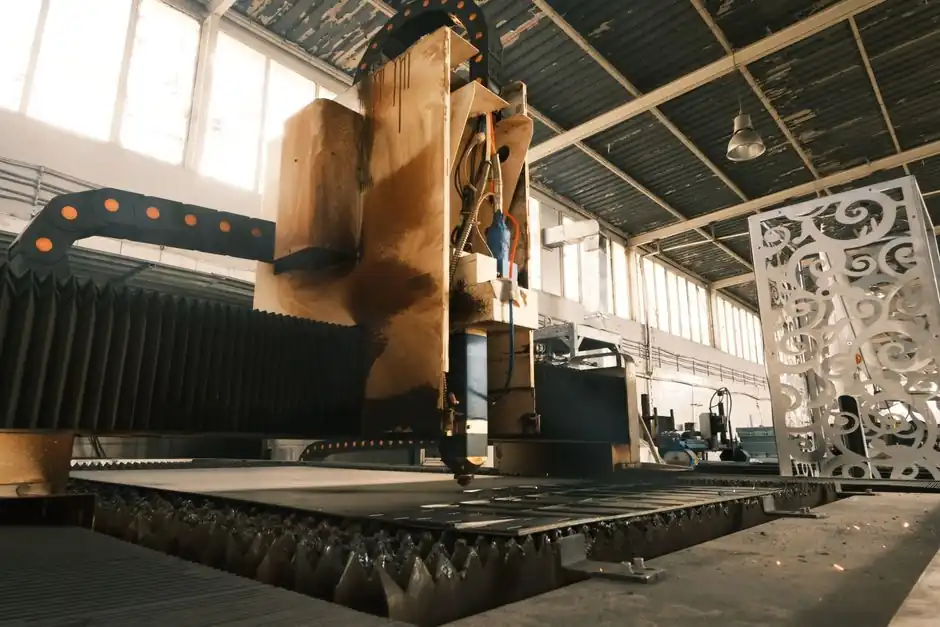
Commercial industrial AGV payloads now span roughly 50 kg light-duty units up to 600-ton heavy-duty platforms, with the 500–2,000 kg band covering the bulk of warehouse and pallet-handling deployments [S3][S4].
Payload rating is the first number a specifier cross-checks, but the right vehicle depends on three linked variables: load class, navigation technology, and drive topology (unit load, tugger, forklift, pallet mover, or hybrid arm carrier) [S2][S5].
Payload bands and what they actually mean on the floor
AGV mobile robots typically split into three load classes: light-duty at 50–500 kg for small parts, totes, and mail containers; medium-duty at 500–1,500 kg for standard pallets and roll containers; and heavy-duty at 1,500–5,000 kg or more for machinery, large pallets, and bulk materials [S3]. Within those classes, single-product announcements have pushed the upper boundary dramatically: Lonyurobot's LY-1-450(600)T-416-A is rated at 600 tons on deck, marketed as the highest-capacity commercial AGV [S4]. ANT driven lists fleet-ready units from 350 kg up to 1,500 kg, and its MOVVO automated pallet truck reaches 6 tons [S7].
For comparison, the Omron LD-60 AMR sits at 60 kg for compact light-material transport [S2], while heavy-manufacturing specialist Invio Automation quotes standard platforms rated to 66,000 lb (about 30 tonnes) on deck or in tow, with custom builds engineered beyond that for aerospace and heavy-vehicle assembly [S1]. The headline number is the static load rating; dynamic derating from acceleration, deceleration, and turning is built into manufacturer safety margins [S3].
Selection criteria beyond the headline payload
Payload capacity must be specified against the heaviest expected load, including any fixture, lift mast, or onboard arm mass, not just the part being moved [S2][S5]. Chassis-payload guides for 50 kg, 100 kg, 300 kg, and 500 kg platforms consistently warn that adding actuators, vision stacks, or a robotic arm eats into rated capacity and forces larger batteries and motor inverters [S5][S6].
Navigation technology changes the spec sheet as much as the load. Traditional AGVs follow magnetic tape, RFID tags, optical strips, or laser reflectors; AMRs use SLAM and natural-feature navigation that let them reroute around obstacles instead of stopping [S2][S5]. For mixed-traffic facilities, navigation choice often matters more than a 200 kg payload delta. Drive topology is the second filter: tugger AGVs scale by adding carts up to the train limit, forklift AGVs need lift-height and aisle-turning data, and hybrid arm carriers trade payload for dexterity [S2].
Comparing the main AGV types by decision criteria
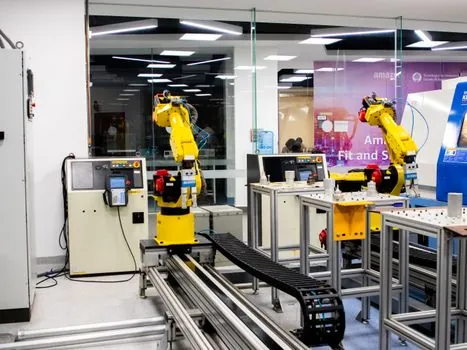
Five common AGV types line up against payload, flexibility, navigation, and typical use case as follows [S2][S3][S5]:
1. AMR (e.g. Omron LD-60, 60 kg): low-to-medium payload, highest flexibility, natural-feature navigation, suited to compact lineside replenishment and electronics assembly [S2].
2. AGV pallet mover (350 kg–6 t, e.g. MOVVO): medium-to-high payload, fixed-path navigation, suited to pallet jack replacement in distribution centers [S2][S7].
3. Tugger AGV (train of carts up to rated drawbar pull): scalable medium payload, fixed-path navigation, suited to kitted parts delivery along assembly lines [S2].
4. Forklift AGV (1–5+ t typical): high payload with lift height, fixed-path or hybrid navigation, suited to pallet stacking in racked warehouses [S2][S3].
5. Heavy-duty unit-load AGV (30 t standard, up to 600 t custom, e.g. Invio 66,000 lb, Lonyurobot LY-1-450): extreme payload, tightly engineered fixed paths, suited to vehicle, aerospace, and energy-sector assembly moves [S1][S4].
For specifiers weighing capital cost against flexibility, the trade-off is sharp: AMRs win in unstructured spaces but lose above roughly 1,500 kg, where heavy-load manufacturing's "10,000 lb and greater" requirement puts AMRs at a structural disadvantage against purpose-built AGVs [S1].
Where heavy-duty AGVs outperform and where they don't
Heavy-load conveyance is the strongest case for AGVs over AMRs or fixed conveyance. Moving a vehicle body or aircraft structure between stations is a different problem from delivering a tote of parts; the load can be 20,000 lb and worth more than the carrier, so the safety and routing case for engineered AGVs dominates [S1]. Towline conveyors can move heavy loads but require deep trenching, extensive concrete work, and labor-intensive reconfiguration when the line changes [S1].
AGVs are not universal. They require flat, smooth terrain, cannot handle holes, bumps, or cracks, and depend on reliable wireless connectivity, industrial Ethernet, or Wi-Fi for fleet coordination [S5]. Heavy-duty platforms also need reinforced chassis, larger battery packs, and higher-capacity motor inverters, which raise both unit cost and facility power demand. For plants handling sub-50 kg tote flows, a fleet of light-duty AMRs is the lower-capex path; for plants moving single loads above 10 tonnes, a heavy unit-load AGV is typically the only engineered option [S1][S3].
Standards, sourcing, and what to verify on a quote

AGV safety and performance in industrial settings typically reference ISO 3691-4 (driverless industrial trucks, safety), with regional variants for CE marking in Europe and ANSI/ITSDF B56.5 in North America, though exact applicable clauses depend on the integrator's risk assessment. For now, specifiers should confirm the integrator documents these standards on the data sheet rather than assume them. [S3]
On the commercial side, sourcing paths split three ways: OEM direct (Lonyurobot, Omron), systems integrator (Invio Automation builds around the product rather than adapting it [S1]), and aggregator directories such as ANT driven's vehicle finder, which lists units from 350 kg to 1,500 kg and specialty pallet trucks to 6 t [S7]. For midsize buyers, the 500–1,500 kg medium-duty band remains the volume sweet spot, covering standard pallets, roll containers, and most distribution-center flows [S3]. For very high loads, the only commercial 600 t platform is Lonyurobot's LY-1-450, with 30-tonne standard platforms from Invio as the more accessible heavy tier [S1][S4].
Track two signals through the rest of 2026: new medium-duty AMR launches above the current 1,500 kg ceiling, which would blur the AGV/AMR payload line further [S2]; and any second-source entrant into the 100 t+ heavy unit-load class, which would break Lonyurobot's current 600 t monopoly [S4]. For a deeper look at how specifiers handle the cost-versus-flexibility trade-off, see this selection guide on AGV and AMR evaluation (linked for context on industrial spec decision frameworks).
Component reference pages worth checking: agv robot, industrial robot, and industrial adhesive.