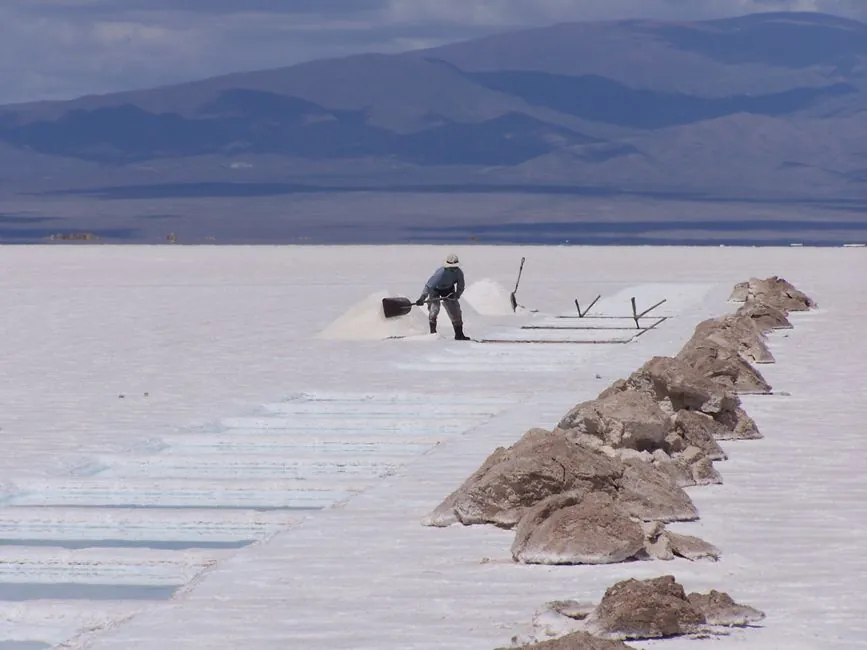
On 8 June 2026, battery-grade lithium carbonate (Li2CO3 ≥99.5%, CAS 554-13-2, MW 73.89) was transacting at 163,200 RMB/tonne ex-works Jiangxi and 161,700 RMB/tonne ex-works Sichuan, with European and South American landed prices clearing near 19,750 USD/tonne CFR and 19,500 USD/tonne CFR respectively on the same reference date [S1][S4].
The 2026-06-08 spread between the top and bottom of the Chinese spot tape is only 3,900 RMB/tonne across four quoted grades, which means the procurement decision is now driven by impurity ceiling, D50 particle size, and CoA structure rather than headline price [S1]. Buyers instrumenting Li2CO3 precipitation reactors with pressure transmitters and crystalliser bottoms with industrial valves should plan for higher diurnal flow variability as upstream lot rotation accelerates through 2H 2026.
Battery-Grade vs Industrial-Grade: A 1,750 RMB/tonne Spread, Not a Price Decision
The 2026-06-08 Chinese spot tape puts Jiangxi battery-grade Li2CO3 at 163,200 RMB/tonne, Sichuan battery-grade at 161,700 RMB/tonne, Shanghai industrial-grade (99%) at 160,450 RMB/tonne, and Sichuan industrial-grade (≥99%) at 159,300 RMB/tonne, a 3,900 RMB/tonne top-to-bottom band [S1]. The differentiator that justifies any premium is technical: battery-grade lots carry impurity ceilings for Na, Ca, Fe, Cu, typically <10 ppm each, with magnetic Fe <50 ppb in common Chinese battery-maker specs, and a D50 particle size around 5–10 µm suitable for cathode precursor synthesis, whereas industrial-grade 99% is acceptable for glass-ceramic, continuous casting mould flux, and aluminium smelting electrolyte where purity is not rate-limiting [S1]. Industrial-grade ≥99% fails LFP precursor qualification if Na or SO4²⁻ overruns, so procurement must lock the impurity panel into the purchase spec, not the assay alone [S4].
For slurry dosing skids instrumented with flow meters on Li2CO3 mother-liquor lines, the aqueous solubility ceiling of roughly 3.95 mg/mL at room temperature defines the practical upper concentration before re-precipitation, a number worth pinning into the process basis [S3]. Process engineers running Li2CO3 → LiOH·H2O conversion lines should treat 2026 grade-availability as the binding constraint: battery-grade ≥99.5% lots are being allocated rather than auctioned, and industrial-grade 99% parcels are being re-tested and upgraded by mid-tier processors to capture the wedge [S1].
2026 Price Stack: China Ex-Works, CFR Europe, CFR South America, CIF Asia
Three reference benchmarks matter for a 2026 procurement contract. First, the Chinese ex-works band (Jiangxi 163,200 RMB/tonne, Sichuan 161,700 RMB/tonne, Shanghai 160,450 RMB/tonne, Sichuan industrial 159,300 RMB/tonne, all on 2026-06-08) is the cost floor for direct converter business [S1]. Second, the imported battery-grade CFR benchmarks (19,750 USD/tonne CFR Europe, 19,500 USD/tonne CFR South America on the same date) sit 250 USD/tonne apart, a wedge driven by freight, port-of-origin duty, and contract structure rather than grade differentiation, since both reference Li2CO3 ≥99.5% [S1]. Third, S&P Global Commodity Insights has published a 2026 CIF Asia reference of 42,093 USD/tonne, set high enough to pull mothballed capacity back online and to sanction new projects, a level roughly 2.5–3x the 2024 trough [S4].
Any BOM that assumed continued LiFePO4 cell cost decline in 2026 should be re-baselined against the 95,200 yuan/t domestic anchor rather than the 2024 low, because the read-through to downstream LiFePO4 cell pricing is that battery cells will not fall as steeply in 2026 as they did in 2023–2024 [S6]. Capex tied to UPS banks or storage-buffer cabinets built on those declining-cost assumptions is now exposed, and instrument rebuilds on filter presses using pressure sensors should be scoped against the 2H 2026 feedstock band, not the 2024 contract [S6].
Supply-Side Pressure Points: From 2023 Oversupply to 2026 Allocation
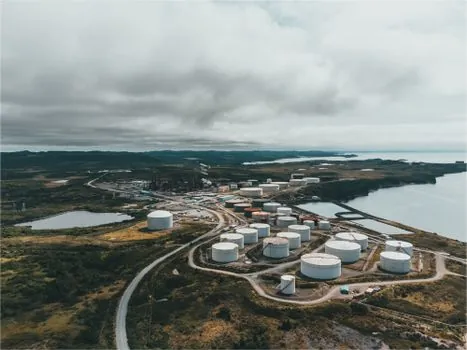
The 2022 peak that ran battery-grade Li2CO3 more than 1,200% above its July 2020 floor collapsed into a 2023–2024 destocking cycle that compressed converter margins, but mining discipline, project slippage in South America and Africa, and accelerating battery demand have rebuilt a tight structure heading into 2H 2026 [S4]. Lithium converters that ran below nameplate during the destock phase are now being asked to ramp back toward 90–95% utilisation, but several spodumene-to-carbonate lines in Sichuan and Qinghai remain constrained by lepidolite feedstock variability [S4]. Discovery Alert's 2026-07-18 market note frames the year as a transition from oversupply to a potential critical shortage, consistent with Statista's 2023-2032 outlook that sizes the downstream Li-ion battery pull in the tens of billions of USD by 2032 [S1].
For pharmaceutical-grade lithium carbonate, the pool is structurally separate: the FDA drug database lists Pfizer's reference listed drug Lithium Carbonate tablet 300 mg (NDA 016834, approved prior to 1 January 1982, currently discontinued) and Glenmark's ANDA 091544 covering the same 300 mg oral tablet, while ANDA 018558 (Roxane reference standard, 300 mg tablet, AB-rated) covers chronic-bipolar API contracts that are shielded from industrial shocks by long-term terms [S3][S4]. The dual specification, industrial reagent on one side, pharma API on the other, is the reason the same CAS number 554-13-2 sits in two different sourcing tracks with non-overlapping buyers.
Sourcing Criteria: Grade, Certification, and Contract Structure
Buyers rebuilding a Li2CO3 specification in 2026 should anchor on three axes. First, grade: battery-grade Li2CO3 ≥99.5% with magnetic-impurity limits typically specified as Fe ≤5 ppm, Na ≤50 ppm, Ca ≤50 ppm, and Cu ≤5 ppm; industrial-grade Li2CO3 ≥99% is acceptable for non-electronic uses but fails LFP precursor qualification if Na or SO4²⁻ overruns [S4]. Second, certification: ISO 9001 plus ISO 14001 at the converter site, plus a current ISO/IEC 17025-accredited Certificate of Analysis per lot, and for shipments to EU battery passport schemes a chain-of-custody aligned with the EU Battery Regulation due-diligence clauses [S4]. Third, contract structure: the 2H 2026 market is moving from spot tape to allocation, so multi-quarter fixed-price volume commitments with quality-claim backstops are replacing single-shipment purchases.
For research- and pharma-grade procurement, the technical picture is different: CAS 554-13-2, molecular formula Li2CO3, molecular weight 73.89, supplied as a solid at 98.00% purity by research-grade vendors in 1 mL, 100 g, 500 g pack sizes, and stored at ambient temperature since the material ships as a stable inorganic salt rather than a refrigerated hazardous chemical [S3]. Storage at ambient, packaging in bottles, country-of-origin India, and a 99% purity description are the standard technical-grade attributes on Indian export platforms [S3]. The lithium-7Li isotopically-enriched variant is a separate product line tracked by ChemicalBook suppliers for NMR and fusion-reactor applications and should not be cross-quoted against natural-abundance battery-grade lots [S3].
Four Procurement Channels: Direct Converter, Trading Desk, Indian Exporter, Research Vendor
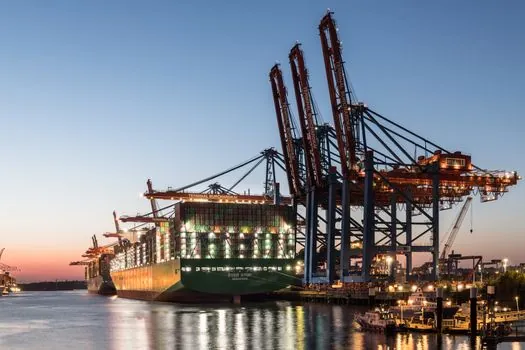
Procurement teams have four realistic channels in 2026, and the right pick depends on volume, spec, and risk appetite. (1) Direct converter contracts with Chinese Li2CO3 producers in Sichuan, Qinghai, and Jiangxi offer the lowest unit cost at ≥500 t/yr but lock the buyer to RMB-denominated pricing and Chinese export-licence risk [S4]. (2) International trading desks publishing daily ex-works contract prices for battery-grade Li2CO3 on CBCIE Metals under the Lithium Industry Chain taxonomy add a margin layer but provide currency hedging and shipping bundled with the contract [S3]. (3) Indian and global technical-grade exporters quoting 99% purity on bottle-pack shipments serve smaller-volume industrial buyers in glass-ceramic and continuous casting applications where battery-grade purity is overspec [S3]. (4) Research-grade vendors supply 98% purity Li2CO3 in 100 g to 500 g packs for laboratory, NMR, and pharma API development, with FDA ANDA pathways distinct from the industrial tracks [S3].
For procurement managers specifying linear guides on Li2CO3 crystalliser skids or crossed-roller guides on packaging lines for 25 kg drum filling, the channel decision maps cleanly onto a 2×2 of grade (battery vs industrial) and volume (>100 t/yr vs <10 t/yr), with the four channels each occupying one quadrant. The same logic applies to adjacent process inputs covered in Sourcing Polysilicon from China: 2026 Grade Map, Supplier Tiers, and Verification Path, since anode-grade polysilicon and battery-grade Li2CO3 are typically co-procured under the same EU Battery Regulation due-diligence framework.
Who Lithium Carbonate Is For, and Who It Is Not For
Battery-grade Li2CO3 ≥99.5% is for LFP and NMC811 cathode precursor producers, large-format stationary storage integrators building multi-hundred-MWh banks, and tier-1 EV cell manufacturers who can absorb the 163,200 RMB/tonne ex-works cost and need a chain-of-custody aligned with EU Battery Regulation due-diligence clauses [S1][S4]. Industrial-grade 99% Li2CO3 is for glass-ceramic tile producers, continuous casting mould flux blenders, aluminium smelting electrolyte formulators, and low-end porcelain enamel frit makers where purity is not rate-limiting and the 1,750 RMB/tonne saving against battery-grade compounds at scale [S1]. Pharmaceutical-grade Li2CO3 under USP monograph is for bipolar-disorder API manufacturers operating on long-term contracts, with ANDA pathways separate from the industrial supply curve and prices that do not track the spot tape [S3][S4].
It is not for: short-term spot buyers who wait for a price dip, because allocation has replaced auction through 2H 2026; buyers who cannot produce a per-lot ISO/IEC 17025 CoA acceptance gate, because the alloy of grade, impurity panel, and D50 particle size cannot be verified from the assay number alone; and any procurement plan that assumes the 2023–2024 destocking cycle will repeat, since the S&P Global CIF Asia reference of 42,093 USD/tonne is structurally above the 2024 trough by 2.5–3x [S4].
Limitations, Failure Modes, and Trackable Signals
Three failure modes recur in 2026 Li2CO3 procurement. First, accepting a 99% industrial-grade CoA against an LFP precursor spec, then discovering Na or SO4²⁻ overruns only at cathode active material qualification; this is a feedstock-spec problem, not a price problem [S1][S4]. Second, taking a battery-grade CoA without verifying that the issuing lab holds current ISO/IEC 17025 accreditation, which means a downstream claim against the supplier is hard to enforce in EU jurisdictions [S4]. Third, locking a 12-month fixed-price contract without a quality-claim backstop for impurity drift, which leaves the buyer exposed when lepidolite variability in Sichuan and Qinghai pushes Na and Fe up across multiple lots in a quarter [S4].
Trackable signals through Q4 2026: CBCIE Metals daily ex-works battery-grade Li2CO3 contract price direction relative to the 8 June 2026 anchor of 163,200 RMB/tonne Jiangxi; S&P Global CIF Asia updates against the 42,093 USD/tonne reference; and converter utilisation reports from Sichuan and Qinghai against the 90–95% ramp target, which is the leading indicator for whether the 2026 supply crisis framing holds or whether mothballed capacity returns faster than expected [S1][S4].