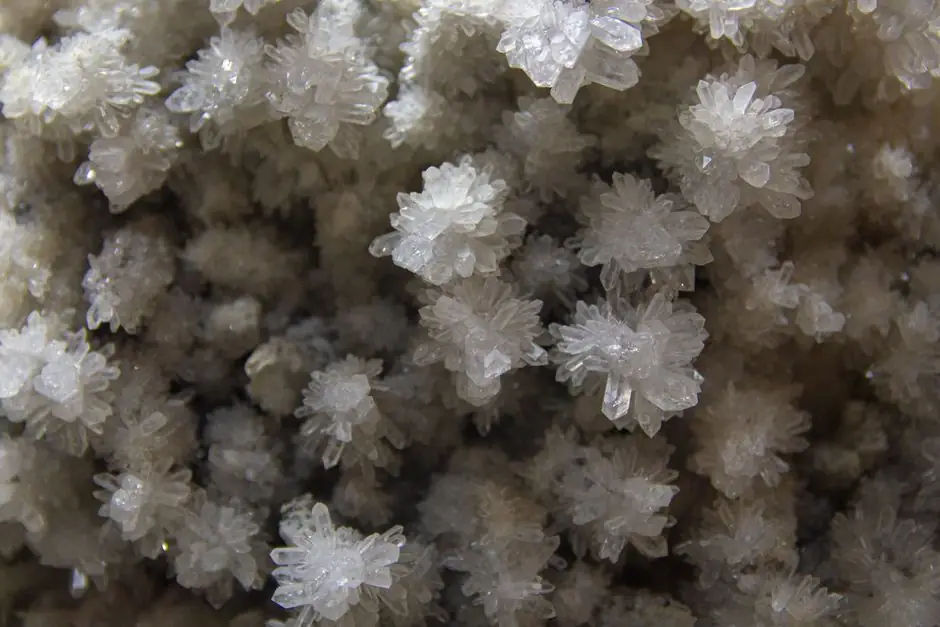
LiOH·H₂O is displacing Li₂CO₃ as the preferred Ni-rich cathode precursor because it sinters at 650-700 °C versus 850-900 °C for the carbonate, a step that directly lowers cathode capex and stabilises cycling performance [S2]. That shift puts the crystallizer, not the kiln, at the centre of battery-grade purity.
Process data published in 2025-2026 shows that a combined cation/anion-exchange pretreatment on a sulfation leachate removed more than 90% of Al and roughly 70-75% of Mg, Ca, Na, K, and Ni at pH 6-7 (10 g cation resin + 50 g anion resin per batch), bringing the solution into a window where a double-displacement reaction with Ba(OH)₂ at 70 °C and an [OH]:[Li] molar ratio of 1:1 yielded 91.91% sulfate-removal conversion efficiency and 98.84% LiOH filtrate purity [S1].
Why the crystallizer, not the reagent dose, is the dominant purity lever
Even a ±0.1 pH unit swing in hydroxide or carbonate crystallisation changes morphology, agglomeration, particle growth rate, and slurry rheology, so pH is treated as a first-class control variable rather than a side parameter [S3]. Battery-grade lithium salts must clear 99% purity, and selectivity above that band has to be negotiated through supersaturation and dissolution-recrystallisation cycles without flooding the centrifuge with fines or starving the downstream drier of yield [S3].
Two crystalliser geometries dominate commercial LiOH·H₂O: forced-circulation (FC) evaporative units that keep solids suspended and resist scaling, and draft-tube-baffle (DTB) units that are typically used for Li₂CO₃ where larger, more uniform crystals are washed and centrifuged to a final spec; MVR-driven FC vacuum and heat-pump vacuum variants are now the default where cheap steam is unavailable [S4]. Comparable selection logic, including the EPDM sealing limits that show up on the same crystalliser skid, comes down to chemical compatibility with hot, concentrated LiOH, not on nominal pressure rating.
Anti-solvent crystallisation: room-temperature LiOH with a distillation bill
Anti-solvent crystallisation drives LiOH·H₂O out of an aqueous solution by adding a water-miscible organic such as ethanol or acetone; polar organic molecules hydrogen-bond with water, shield Li⁺ and OH⁻ from their hydration shell, drop water activity, and push precipitation at or near room temperature [S2]. In a closed-loop study using isopropanol, this route achieved greater than 99% lithium precipitation efficiency, but the post-crystallisation solvent recovery column (typically distillation) is now the dominant energy draw, so any energy claim has to credit or debit that reboiler [S8].
Ethanol anti-solvent trials on an 11 wt% LiOH·H₂O feed at 70% and 90% ethanol concentration, with alcohol addition rates of 7, 30, and 60 cm³/min, show that the addition-rate window is the main knob for crystal habit and residual solvent inclusion, not the final alcohol fraction [S2]. On the equipment side, the same data-rich, inline-spectroscopy playbook that pharmaceutical crystallisation has used for two decades is now migrating into lithium pilot lines, where Raman, FBRM, and AI-driven supersaturation models replace end-of-batch wet-chemistry checks [S3].
Ion-exchange pretreatment: the cleanest knob on the impurity map

Spent-cathode-crucible leachate carries Na, K, Mg, Ca, Al, and Ni at levels that block direct battery-grade precipitation, so a combined cation- and anion-exchange resin step is run before the conversion reactor [S1]. At pH 6-7 the process simultaneously conditions pH and pulls metals out, with the specific removal distribution of 90% Al and 70-75% of Mg/Ca/Na/K/Ni that the 2026 dataset reports [S1].
Classical Ca/Mg removal for battery-grade LiOH uses fluoride or carbonate precipitation followed by polishing, and a Chinese patent teaches a two-stage scheme in which Ca/Mg are stripped efficiently and the product stream stays within battery-grade limits, illustrating that bulk-precipitation and ion-exchange are complementary, not competing, unit operations [S7]. On the analytical side, ICP-OES with sub-ppb detection limits is the workhorse for verifying that the finished LiOH·H₂O meets battery-grade ceilings on Na, K, Ca, Fe, Ni, Cu, and other transition metals [S9].
Comparing the two routes against four selection criteria
Evaporative FC crystallisation and anti-solvent crystallisation are not drop-in substitutes; on four decision criteria the gap is concrete [S2][S4][S8]. On energy footprint, evaporative FC is the higher baseline due to water evaporation, but MVR variants largely recover that latent heat, whereas anti-solvent shifts the cost onto the solvent-recovery distillation column. On operating temperature, evaporative FC runs hot to drive water off, while anti-solvent runs at or near room temperature. On crystal habit, FC gives the well-formed LiOH·H₂O crystals that downstream centrifugation expects, while anti-solvent quality depends on alcohol addition rate and tends to need polishing recrystallisation to reach battery-grade wash-and-filter behaviour. On capex/throughput, FC is the standard skid at industrial scale and is straightforward to integrate with a ZLD loop, while anti-solvent is more compact per tonne of Li but adds solvent inventory and a fired reboiler [S2][S4][S8].
Where each route breaks: failure modes a control system must catch
Excess OH⁻ in the Ba(OH)₂ double-displacement step generates dissolved and complexed barium-lithium species that drag purity down, so the [OH]:[Li] ratio must be held at 1:1 rather than pushed higher for yield, a counter-intuitive constraint for operators used to running base in stoichiometric excess [S1]. On the crystalliser side, scaling on FC internal surfaces is the classic long-run failure mode and is the reason MVR/FC self-cleaning cycles and high-alloy wetted parts are now standard rather than optional [S4].
For anti-solvent, residual solvent inclusion in the crystal cake and solvent carry-over into the mother liquor are the two failure modes that erode battery-grade purity, and both are governed by mixing intensity and the final alcohol-to-water ratio in the crystalliser, not by the upstream feed concentration [S2]. Outside the crystalliser envelope, the same impurity control logic that drives vibration condition monitoring on rotating equipment applies: the analytical signal has to be fast enough to close the loop, which is the explicit reason pharmaceutical-style inline PAT is now being bolted onto lithium pilot lines [S3].
Signals to track next: ICP-OES cycle time, anti-solvent reboiler duty, and pretreatment resin life
Three trackable numbers will mark the next step-change in this field: ICP-OES cycle time on battery-grade LiOH·H₂O production samples (driven by the move to at-line and inline multi-element analysis), specific reboiler steam duty in tonnes-steam per tonne-LiOH for anti-solvent solvent recovery, and bed-life in cubic metres of feed per litre of resin for the combined cation/anion-exchange pretreatment [S3][S8][S9]. A second signal sits in the equipment layer, where lighting equipment and electric lamps on the crystalliser skid are increasingly specified to survive LiOH mist and MVR compressor heat, since enclosure corrosion is the silent throughput killer on outdoor Chinese and South American sites. Until the next 12 months of operating data land, the safest design posture is the 2026 reference set above: ion-exchange pretreatment to 90% Al and 70-75% Mg/Ca/Na/K/Ni removal, Ba(OH)₂ conversion at 70 °C and 1:1 [OH]:[Li], and either MVR-FC evaporative or isopropanol anti-solvent crystallisation selected against the four-criterion table, with ICP-OES as the gate.
For component-level specifications, see condition monitoring system.