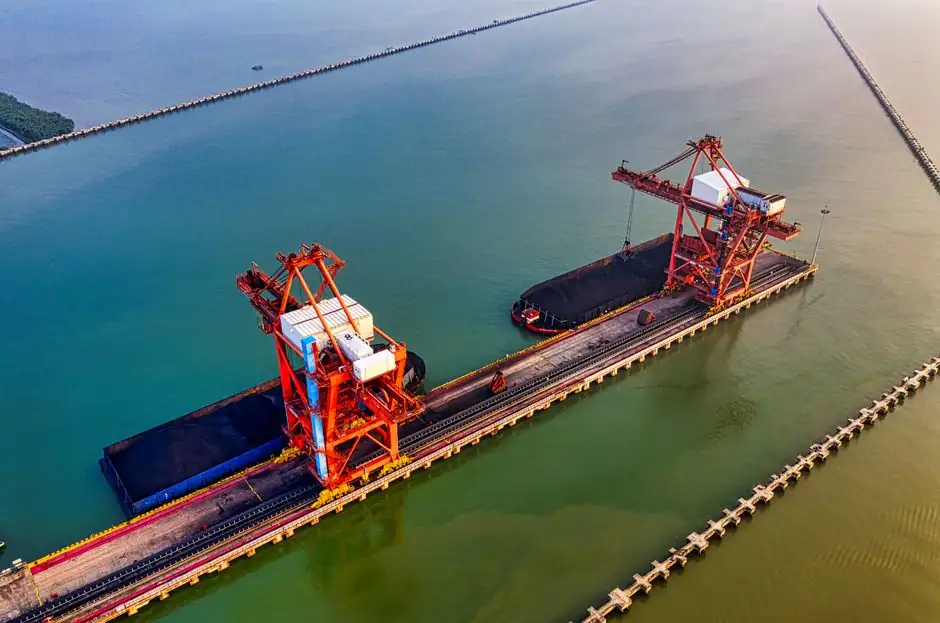
Battery-grade lithium hydroxide monohydrate with a 56.5% minimum LiOH specification is the defining input for nickel-cobalt-manganese and nickel-cobalt-aluminum cathodes used in premium, long-range electric vehicles, and the Chinese refining complex is the only one currently capable of delivering that grade at the volumes global cathode plants require [S2].
Platts assessed DDP China battery-grade lithium hydroxide at Yuan 145,100/mt on April 10, 2026, up Yuan 3,600/mt day over day but Yuan 1,400/mt below the April 2 print, framing the Q2 2026 band buyers should anchor contract talks against [S1].
Two Grades, Two Supply Chains: Why Hydroxide Is Not Carbonate
Lithium hydroxide monohydrate and lithium carbonate are chemically distinct inputs, with non-substitutable roles in NCM/NCA versus LFP cathode chemistries, and the two products carry different purity requirements and different demand drivers [S2]. The CME hydroxide contract settles against a Fastmarkets CIF CJK (China-Japan-Korea) assessment at 56.5% LiOH minimum, while the GFEX lithium carbonate contract settles in yuan per tonne against a domestic index [S2].
A cathode line locked into NCM811 or NCA cannot drop back to lithium carbonate without retooling, which is why hydroxide pricing has its own derivative market rather than being proxied through the more liquid carbonate contract [S2]. For procurement, that means spec sheets, COA formats, and even container lining choices should be treated as hydroxide-specific rather than copy-pasted from carbonate SOPs.
Price Band, Contract Anchors, and the GFEX Launch
Inside China, domestic hydroxide trades DDP at roughly Yuan 145,100/mt as of April 10, 2026, and the Asian battery-grade complex is described as likely to extend its Q2 uptrend amid ongoing supply uncertainties [S1]. The forthcoming GFEX lithium hydroxide futures contract is the strategic counterpart to the July 2023 lithium carbonate launch and is designed to give Chinese NCM/NCA buyers a yuan-denominated hedging tool so they no longer have to run FX exposure on top of commodity exposure through the CME contract [S2].
Buyers writing 2026 supply contracts should distinguish between three reference points: the Platts DDP China spot assessment, the CME USD/kg hydroxide futures, and the GFEX yuan/tonne hydroxide contract once it lists, and should confirm with each converter whether invoicing is pegged to one or the other [S1][S2]. A useful framing is the lithium hydroxide procurement spec and contract lever map, which walks through the same reference prices from a buyer's perspective.
Where the Material Actually Comes From: Mining, Conversion, and Carbon Load
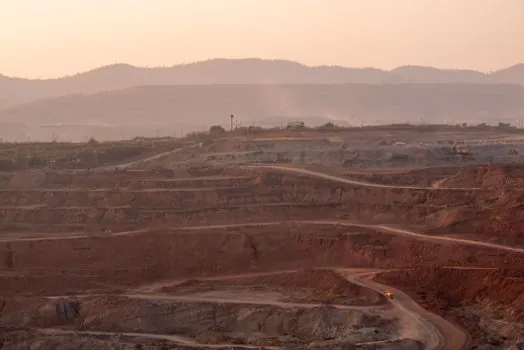
China does not mine most of its feedstock; spodumene is overwhelmingly sourced from Australian hard-rock operations, then shipped to Chinese converters for the causticisation step that turns lithium sulfate into battery-grade LiOH·H₂O [S6]. A 2025 life-cycle analysis of this hard-rock-to-hydroxide route puts cradle-to-gate emissions at about 17.1 t CO₂e per tonne of lithium hydroxide produced, a number that is now showing up in cathode-maker scope-3 disclosures and in EU CBAM pilot filings [S3].
For procurement, that flow means the audit trail is bi-national: mining, radioactive-element checks, and concentrate moisture at the Australian port of loading, then impurity profile (Na, Ca, Fe, Cu, SO₄, Cl), magnetic-foreign-body counts, and D50 particle sizing at the Chinese converter exit [S3][S6]. Buyers should request both the mine-of-origin and converter-of-origin on every COA, and treat a missing mine field as a red flag rather than an administrative gap.
Selection Criteria: Spec Gates That Actually Filter Lots
The minimum LiOH assay at 56.5% is necessary but not sufficient, and serious buyers add at least four additional gates: Na and Ca each below 50 ppm for high-nickel cathode use, SO₄ below 100 ppm, magnetic-foreign-body count below the converter-specific limit, and D50 particle size inside a defined band that matches the cathode line's mixing and sintering profile [S2]. Platts pricing tracks the 56.5% battery-grade specification, which is the same threshold the CME contract enforces, so any lot below 56.5% should be priced and contracted as technical grade, not battery grade [S1][S2].
Three converter-tier signals separate reliable monthly volume from spot-only resellers: documented conversion route (causticisation of lithium sulfate versus lithium carbonate liming), audited Scope 1 and 2 emissions data, and the ability to issue COAs against locked COA templates with lot-level traceability back to the spodumene vessel [S3][S6]. For context on how sister-material carbonate is graded, the lithium carbonate sourcing from China buyer spec map covers the parallel purity gates for industrial versus battery grade.
Comparison of the Main Pricing and Delivery Options

Buyers in 2026 have four primary ways to lock in hydroxide exposure, and the right choice depends on cathode chemistry, FX policy, and contract length. The table below lines them up on settlement, currency, chemistry served, and minimum purity, drawing on the published contract terms [S2] and the spot assessment [S1].
Platts DDP China spot at roughly Yuan 145,100/mt suits short-dated spot buys and benchmark reference, while the CME USD/kg hydroxide futures suit international NCM/NCA cathode plants that need a USD-denominated hedge with cash settlement against Fastmarkets CIF CJK [S1][S2]. The planned GFEX yuan/tonne hydroxide contract will be the natural fit for domestic Chinese cathode plants that want to strip out USD exposure, and direct long-term offtake with a converter remains the lowest-friction route for buyers willing to lock 6-12 month volumes at negotiated differentials to one of the three reference prices [S2]. On every option the 56.5% LiOH minimum specification is the common floor, and any lot below that threshold is contractually technical grade, not battery grade [S2].
Who This Route Is For, and Who Should Look Elsewhere
The Chinese converter route is the right answer for NCM and NCA cathode plants that need 56.5% min LiOH at container-load cadence, for LFP producers who occasionally need hydroxide for blended chemistries, and for traders building position against the GFEX launch [S2]. It is the wrong answer for non-battery industrial users such as glass manufacturers who can use lithium carbonate at lower cost, and for buyers concerned about the environmental footprint of the Australia-to-China lithium processing route.
Europe's first announced lithium refinery, planned in Britain, is explicitly positioned to compete with the China-refined, shipped-halfway-around-the-planet flow to Polish cathode plants, and that project is worth tracking as a future alternative-source signal even though it is not delivering commercial tonnage yet [S7].
Logistics, Documentation, and Sourcing Risks to Engineer Out

Three failure modes dominate rejected-lot incidents on China-origin hydroxide: moisture creep in 25 kg sealed bags during monsoon-season container voyages, magnetic-foreign-body spikes from worn crusher liners at the converter, and COA drift where the converter quietly relaxes Ca and SO₄ limits when spodumene feedstock quality slips. Each one is addressable through contract language, and none of them are addressed by generic Incoterms alone. [S4]
For ESG and CBAM readiness, retain the converter's Scope 1 and 2 audit report and the spodumene vessel name so the roughly 17.1 t CO₂e/t figure can be defended or challenged with primary documents rather than generic averages [S3].
Standards, Purity Benchmarks, and a Trackable Signal
Battery-grade lithium hydroxide monohydrate is traded against a 56.5% LiOH minimum specification, which is the floor enforced by the CME contract and tracked by Platts in the DDP China daily assessment [S1][S2]. Beyond the headline assay, cathode-grade buyers typically layer in impurity ceilings (Na, Ca, Fe, Cu, Cl, SO₄) that align with their own sintering and cathode-electrode recipes, and these are not standardised across the industry, which is why locked COA templates matter more than generic spec sheets.
Two signals to watch over the next two quarters: the formal listing date and first-trade volume of the GFEX yuan-denominated lithium hydroxide futures, which will set the on-shore hedging benchmark for Chinese NCM/NCA plants [S2], and the front-month spread between the CME USD/kg hydroxide contract and the Platts DDP China assessment, which is currently the cleanest read on arbitrage between the two pricing hubs [S1][S2]. Either a sustained GFEX discount or a CME-Platts convergence outside the Yuan 145,000/mt band would be the first hard evidence that the new Chinese benchmark is actually moving physical flow.
Spec-level background on the components involved: linear guide, crossed roller guide, and pressure transmitter.