
A conventional 174,000 m³ LNG carrier was reported at about $248.5 million in July 2026, while the LNG carrier orderbook reached 54.5 million m³ in Q3 2026 [S1].
The comparison covers prompt secondhand tonnage, contracts with multi-year delivery delays and newbuild economics, with vessel age, condition, specification and available charter income separating quoted prices from completed transactions.
Newbuild Price Benchmarks and Specification Effects
The most concrete 2026 benchmark is $248.5 million for a conventional 174,000 m³ carrier in July 2026. Actual contract prices vary with the selected yard, machinery arrangement, containment system, cargo-handling equipment, regulatory notation, performance guarantees and commercial terms [S1]. This figure is therefore a market reference, not a universal quotation for every LNG carrier.
The gap between $248.5 million and approximately $265 million may reflect different specifications or datasets, so buyers should normalize quotations around cargo capacity, delivery date, propulsion, containment system and escrow terms before comparing them.
Containment and propulsion choices materially affect the asset. S3 lists steam turbine, DFDE/TFDE, X-DF two-stroke, ME-GI and hybrid propulsion types, while S4 states that a ship ordered today and delivered years later can cost far less than a comparable tanker available for immediate employment.
Secondhand Value Drivers: Age, Condition and Earnings
A secondhand LNG carrier should be valued on an individual ship basis because age, specification, survey status, physical condition, trading history, delivery location and prompt employment potential can move the result by tens of millions of dollars. A broker valuation establishes an indicated price, but it is not proof that a sale at that level closed [S4].
The wider tanker market illustrates the value of timing rather than proving an LNG-carrier price. Poten & Partners estimated a prompt-delivery VLCC resale at about $235 million against roughly $130 million for a 2029-delivery newbuilding contract, an indicative premium of about 81%. Its five-year-old VLCC estimate was about $210 million and its ten-year-old estimate about $180 million [S4]. These figures belong to VLCCs, not LNG carriers, and must not be transferred to the LNG market.
Prompt delivery can justify a premium because the buyer earns freight revenue earlier instead of waiting several years for construction. However, quoted premiums also include the risk that exceptional freight rates normalize, sellers resist completed bids, or a future charter contract changes the asset’s income profile [S4]. For LNG tonnage, the useful comparison is the present value of available charter income plus residual value against the newbuild contract price plus financing and delivery costs.
Newbuild Versus Secondhand: Decision Matrix

On acquisition cost, a newbuild offers a defined contract basis, while secondhand acquisition starts with an asking price, survey exposure and possible bid-ask spread. A ship ordered today and delivered years later can cost far less than a comparable tanker available for immediate employment, while S4 reports an indicative value of about US$235 million for a prompt-delivery VLCC resale against roughly US$130 million for a newbuilding contract with delivery expected in 2029.
On earnings certainty, a newbuyer assumes construction, machinery and performance risk until delivery, whereas a secondhand owner can inspect existing machinery but inherits maintenance, residual-life and condition risks. On liquidity, newbuilds are future assets whose market value can move before completion, while the secondhand market can be illiquid because a quoted valuation may not become a completed sale [S4].
On technological exposure, a newbuild can specify modern propulsion and cargo equipment, including low-pressure two-stroke or dual-fuel arrangements, but it carries integration and yard-performance risk. An older secondhand vessel may offer lower acquisition cost and immediate deployment, yet greater maintenance exposure and less efficient fuel consumption. The explicit decision is therefore not simply “new or used,” but whether prompt earnings and residual flexibility justify the secondhand premium over a delayed, specified newbuild.
Who Should Buy Newbuild and Who Should Buy Secondhand
Newbuild contracting suits owners with committed long-term charter demand, financing aligned with a multi-year construction schedule and technical teams able to supervise specification, yard progress, testing and acceptance. It also suits buyers that prioritize a defined new asset with modern propulsion rather than immediate deployment [S1][S3].
Secondhand acquisition suits charterers or owners seeking prompt capacity, buyers comfortable with class and condition surveys, and sellers holding contracts that allow an advantageous forward sale. It is less suitable for buyers whose case depends entirely on future charter rates, because prompt tonnage can carry the highest earnings expectations at the point when market rates are elevated [S4].
A forward purchase can separate price agreement from delivery date, but it does not remove earnings uncertainty, completion conditions or financing exposure. Shipowners should compare an outright purchase with a time charter or bareboat charter when utilization, crew and operating cost responsibility differ. S3 identifies time charters, spot or voyage charters and bareboat charters as market segmentation categories and lists LNG producers among the end-user groups.
Orderbook, Delivery Risk and the 2027–2028 Supply Question
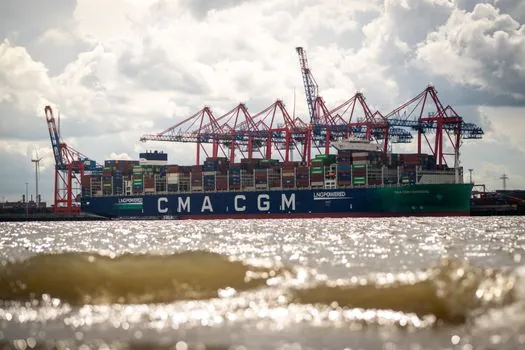
The Q3 2026 LNG carrier orderbook totaled 54.5 million m³, equal to 38% of the existing fleet [S1]. Approximately 80% of that capacity consisted of conventional 174,000 m³ ships, 15% of 180,000–200,000 m³-plus vessels and 5% of smaller regional ships. Membrane containment represented most of the orderbook [S1].
Orderbook size alone does not establish oversupply. The decisive variables are annual delivery volume, actual LNG trade growth, scrapping, project schedules and yard execution. A delivery wave that exceeds cargo demand could weaken freight rates and secondhand values from 2027–2028 onward, but that outcome remains a scenario rather than a certainty [S1].
Chinese and South Korean yards remained the principal construction centers, with Chinese yards gaining a growing share of 2026 orders [S1]. Owners should monitor delivery slippage, yard congestion and the concentration of contracts at individual builders. A vessel ordered at a firm price can still acquire economic exposure to a lower market value if delivery is delayed into a weaker freight cycle.
Market Scale Does Not Equal Vessel Price
Published LNG carrier market estimates are not substitutes for vessel valuations. Market Research Future values the market at $17.78 billion in 2026 and forecasts $33.83 billion by 2035 at a 7.4% compound annual growth rate [S3]. Mordor Intelligence gives a 2026 market value of $16.62 billion and a 6.89% CAGR through 2031, while Ken Research places the market at $15.47 billion in 2025 and $23.19 billion by 2031 [S6][S8].
These totals cover vessels, charter structures and end-user activity across different forecast definitions, so they should not be divided by fleet count to infer an average ship price. A defensible asset decision uses vessel-specific newbuild quotations, independent secondhand valuations, class records, condition surveys and charter comparables.
For 2026 procurement, use $248.5 million as the near-term conventional newbuild reference, approximately $265 million as a higher market estimate requiring specification normalization, and the delivery schedule as a separate risk variable [S1][S3]. Track completed secondhand transactions rather than relying solely on asking prices, and compare the price with charter income available before the anticipated delivery date.