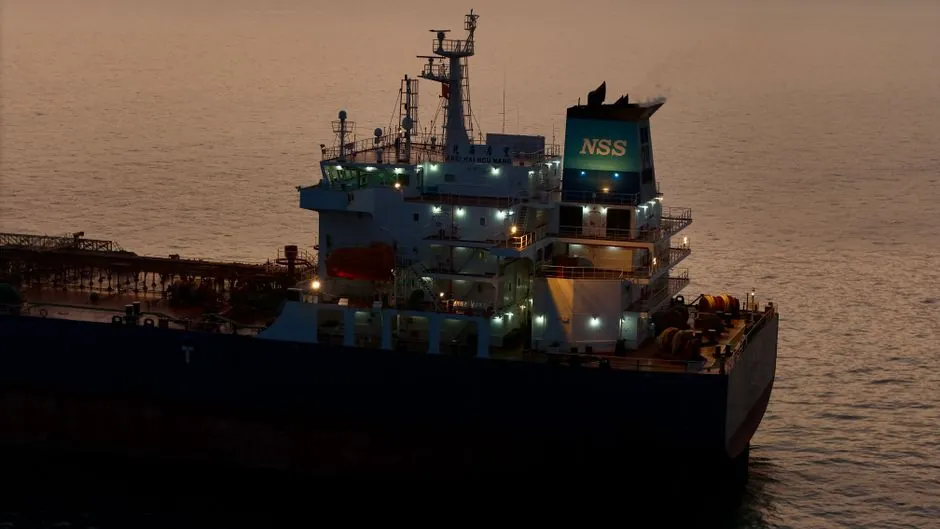
China won 52 of 90 LNG carrier contracts placed globally in H1 2026, giving Chinese yards a 57.8% vessel-count share and 15-contract lead over South Korea [S2].
The 338 vessels on order represented 54.3 million cubic metres, equal to 38.9% of the 908-carrier fleet measured by Clarksons Research on 1 July 2026 [S5].
Vessel count and shipyard share diverge from global orderbook totals
The 90 H1 2026 contracts covered large LNG carriers and smaller inland-waterway vessels, so the 57.8% Chinese share is a vessel-count measure rather than a capacity-weighted shipyard ranking [S2]. China secured 52 vessels and South Korea 37, representing 41.1% of the same 90 orders [S2].
By contrast, the wider global shipbuilding orderbook for H1 2026 contained 1,481 vessels worth 42.9 million CGT and 126.6 million DWT. These broader figures include tanker, bulker, container, gas carrier and other ship types, so they must not be presented as LNG-carrier shares.
The 338-ship backlog represents more than one-third of fleet capacity
Clarksons Research counted 908 LNG carriers in service on 1 July 2026, with combined capacity of approximately 139.7 million cubic metres [S5]. The orderbook added 338 vessels and 54.3 million cubic metres, producing the stated 38.9% orderbook-to-fleet capacity ratio [S5].
A separate Q3 2026 benchmark put orderbook capacity at 54.5 million cubic metres, equal to 38% of the existing fleet [S1]. The 0.2 million cubic metre difference between that figure and the 54.3 million cubic metre Clarksons measure is consistent with different reporting dates and definitions, so the two datasets should not be blended into a more precise ratio.
Earlier May 2026 reporting described the newbuild orderbook as exceeding 340 vessels and roughly 50% of the existing fleet [S6]. The orderbook’s 54.5 million cubic metres of capacity is equivalent to 38% of the existing fleet in Q3 2026, while Chinese yards were winning a growing share of new orders in 2026.
Conventional 174,000 cubic metre ships dominate the orderbook
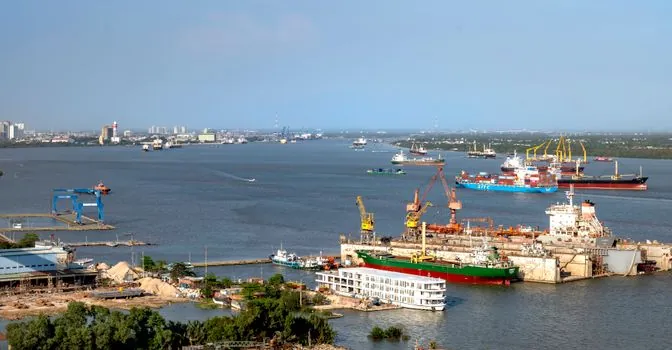
This mix explains why vessel count and cargo capacity do not move in direct proportion.
A 174,000 cubic metre newbuild was valued at approximately US$248.5 million in July 2026, although final contract price varies with yard, specification and commercial terms [S1][S4]. That price provides a useful benchmark for conventional tonnage, not a universal quotation for the full orderbook.
Chinese yards gained share from a low 2025 base
Chinese yards won 15 LNG carrier orders and South Korean yards won 13 in H1 2025, compared with 52 and 37 respectively in H1 2026 [S2]. China therefore added 37 contracts year on year, while South Korea added 24, with the Chinese lead widening from 2 vessels to 15.
The shift should not be described as a collapse in South Korean capability. Korean yards continued to receive major GTT tank-design orders from Samsung Heavy Industries, Hanwha Ocean and HD KSOE between 19 August and 14 October 2026 [S3]. The H1 2026 figures underscore the growing competitiveness of Chinese shipbuilders in the LNG carrier sector.
During H1 2026, Chinese and South Korean shipbuilders secured 52 and 37 LNG carrier orders, respectively, with market shares of 57.8% and 41.1%.
Delivery slots, cargo systems and charter commitments separate buyers
Buyers can reduce slot risk by securing a firm yard contract and linking it to charter employment, rather than holding an unconfirmed delivery position and no cargo coverage.
GTT expects approximately 550 LNG carrier orders between 2026 and 2035, while Clarksons Research counted 338 LNG carriers on order as of 1 July 2026.
GTT expects approximately 550 LNG carrier orders between 2026 and 2035, equal to an average of about 55 vessels per year if evenly distributed [S5]. GTT expects approximately 550 LNG carrier orders between 2026 and 2035.
Supply pressure depends on delivery timing and fleet replacement
The 338-ship backlog does not translate into 338 simultaneous additions. Delivery slots extend through 2029, and replacement demand can absorb capacity if older vessels retire, while project delays can release new ships into the spot charter market without matching cargo [S5].
GTT identified potential orders for 25–40 very large and ultra-large ethane carriers, up to 10 floating storage and regasification units, as many as 10 floating LNG production units and about 30 onshore storage tanks over its 2026–2035 outlook [S5]. These categories should be separated from conventional LNG carrier counts because their cargo systems, roles and utilization patterns differ.
Global LNG imports were 428 million tonnes in 2025, up 5%, while liquefaction capacity reached 524 million tonnes per year, including 16.5 million tonnes per year of floating capacity [S3]. Ten LNG projects reached final investment decision in 2025, representing 84 million tonnes per year of capacity expected to enter production progressively from 2027 through 2031 [S5].
Regulatory cost raises the value of efficient new tonnage
Ships of 5,000 gross tonnage and above entered the EU Emissions Trading System in January 2024. The surrender obligation covers 40% of 2024 emissions, 70% of 2025 emissions and 100% of reported emissions from 2027, while methane and nitrous oxide enter the system from 2026 [S3].
Voyages between EU ports receive full EU ETS coverage, while eligible voyages beginning or ending outside the EU receive 50% coverage [S3]. FuelEU Maritime, Regulation (EU) 2023/1805, has applied in full since 1 January 2025 and requires a 2% reduction in onboard-energy greenhouse-gas intensity against 2020 averages, increasing to 6% in 2030 and 14.5% in 2035 [S3].
LNG carriers operate at approximately -163°C, making cargo containment, thermal insulation and voyage stability defining engineering constraints [S2]. These requirements connect newbuild economics to the 2026 LNG carrier delivery and fleet expansion context, but shipyard share is a contracting outcome, not a direct measure of fuel efficiency or operating capability.
The next trackable signals are vessel-count bookings for H2 2026, firm delivery slots at Chinese and Korean yards, and GTT tank-design awards tied to named liquefaction projects. A sustained Chinese order share above 57.8% would confirm broader yard diversification, while Korean delivery queues extending beyond 2029 would constrain the pace of substitution.