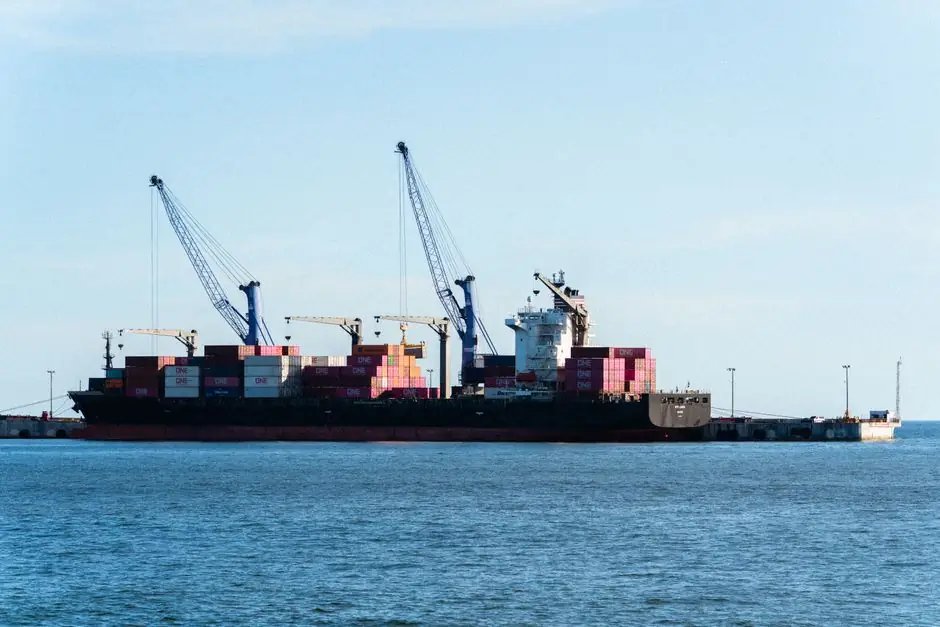
About 338 LNG carriers totaling 54.3 million cubic metres were on order by 1 July 2026, equal to 38.9% of the 908-vessel operating fleet by capacity [S2].
South Korean yards are selling scarce construction capacity into 2029, with an order announced in 2026 due in 2029 [S3][S4].
2026 Delivery Peak and Backlog Profile
The orderbook profile runs from 2024 through 2029, with the largest concentration of deliveries in 2026–2027 [S7].
Across the broader market, 868 LNG and LPG gas carriers were listed on order at 42 shipyards for 135 owners in 2026, representing 22.5% of the existing fleet [S6]. LNG-specific counting differs by vessel class and reporting date, but both datasets point to substantial newbuilding activity rather than an empty pipeline.
Some 234 newbuild LNG carriers were scheduled for delivery over 2026–2030, and 2026 was expected to be the fastest delivery year on record [S5]. This concentration makes yard slots, propulsion and containment-system allocation the practical constraints for owners, rather than a simple shortage of announced vessel capacity.
What Makes a 2026 Shipyard Slot Valuable
Delivery date, tank system and engine are the first screening criteria for LNG carrier buyers, while yard record and owner relationships affect commercial positioning [S3]. In 2026, Samsung Heavy Industries secured an order for four 200,000 m³ LNG carriers, while Jiangnan Shipbuilding secured an order for four 175,000 m³ LNG carriers [S3].
For a charterer or owner, the shipyard offer should be compared on delivery window, cargo-box size, containment technology, engine configuration and ability to serve Atlantic and Pacific trade lanes.
Shipowners are therefore moving to secure scarce remaining 2029 construction slots at South Korean yards [S4]. Orders placed late in the 2026–2027 cycle may not translate into delivery before 2029, so an orderbook headline does not by itself establish available near-term capacity.
Korean Yards Versus Chinese Alternatives
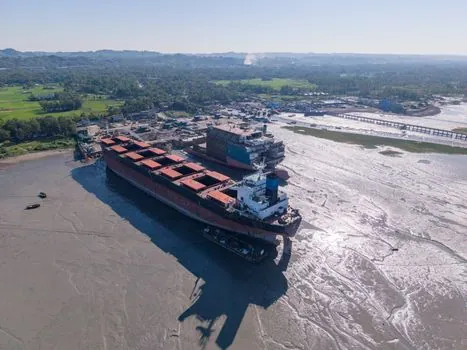
South Korean yards have a near-term advantage in established membrane-tank LNG carrier construction and access to slots extending into 2029, while Chinese yards provide an additional source of 175,000 m³ capacity [S3]. The choice is not simply Korean versus Chinese because tank design, engine package, ownership structure, price and confirmed delivery date remain decisive.
The broader comparison should include delivery date, cargo-box size, tank system, engine, shipyard record and charterer demand. GTT technology was specified for roughly four out of every five LNG carriers on order, although that estimate uses reporting dates and definitions that differ from the global orderbook count [S2].
Owner Orders Demonstrate 2029 Demand
On 5 October 2026, GTT announced a Samsung Heavy Industries order for four 200,000 m³ LNG carriers due in 2029 [S3]. Earlier, COSCO SHIPPING Energy contracted Jiangnan Shipbuilding and Shell for four 175,000 m³ LNG carriers on 25 June 2026 [S3].
These transactions show that the backlog is not confined to one vessel size or ownership group. Four 200,000 m³ Samsung vessels and four 175,000 m³ vessels were announced in 2026 [S3].
Demand is supported by liquefaction projects, not fleet replacement alone. Shipping demand also depends on route length: around 1.5 new LNG carriers are needed for each 1 million tonnes of new supply routed to Europe, compared with three ships for the equivalent Asia journey [S5].
Orderbook Demand Exceeds Near-Term Supply
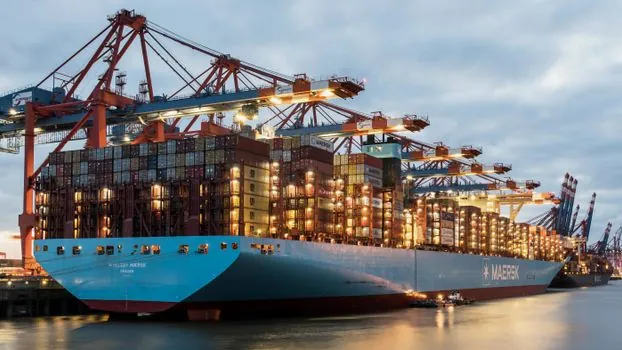
GTT projected approximately 550 LNG carrier orders between 2026 and 2035, equivalent to an average of about 55 vessels per year if orders were spread evenly [S2].
The 550-vessel figure covers fleet expansion, replacement, project requirements, longer trading distances and some early or speculative ordering [S2]. It does not represent 550 vessels lacking immediate employment. Long-term charter commitments, project financing, final investment decisions and offtake agreements remain the main triggers for large vessel series.
For fleet planning, the LNG carrier orderbook versus new liquefaction capacity comparison is more useful than headline order totals because Route configuration changes the carrier requirement even when the same volume of liquefaction capacity enters service.
Delivery Delays and Project Slippage
The Mozambique LNG program illustrates how upstream delay can release valuable shipyard capacity. Delivery of 17 LNG carriers ordered from Samsung Heavy Industries and HD Hyundai Samho for the Mozambique LNG project was postponed to the first quarter of 2028–2029 [S1].
Those 17 ships formed part of a planned 40-carrier program. Nine were allocated to HD Hyundai Samho and eight to Samsung Heavy Industries, with delivery originally planned from 2023 [S1]. The shift created an opportunity for yards to replace project-linked tonnage with orders from other owners, but it also demonstrates that firm charter demand does not eliminate schedule risk.
The Mozambique project carried a stated investment of USD 20 billion and two development phases with combined capacity of up to 43 million tonnes per annum [S1]. A vessel tied to such a project may still face delay when upstream security, financing or construction conditions change. Owners should therefore separate yard delivery commitments from project readiness and offtake schedules.
Scrapping Can Tighten the Effective Fleet
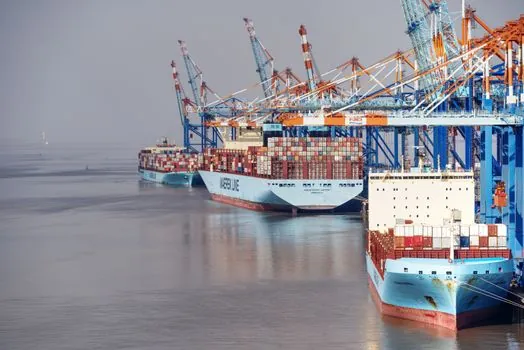
The available fleet may tighten even when the newbuilding orderbook appears large.
Steam-turbine vessels face high boil-off costs and generally provide less cargo and routing flexibility than newer two-stroke-powered ships [S5]. Some 234 newbuild LNG carriers are scheduled to be delivered over 2026–2030 [S5].
That attrition risk leaves shipowners exposed to both sides of the market. Early ordering can secure a 2029 slot, but fixed charter commitments on a delayed project can create idle time. Owners without firm employment should compare the cost of waiting for a lower-priced slot with the commercial value of earlier delivery, while shipyards need to balance new orders against slots released by postponed projects.