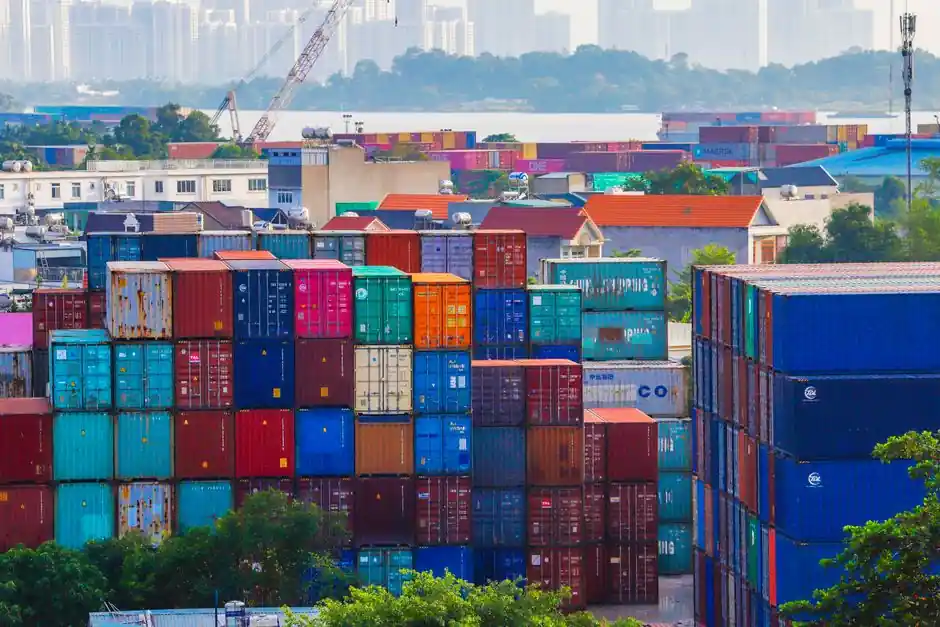
Lithium supply capacity is projected to meet most demand through 2035, yet water-intensive brine extraction, chemical conversion and cathode-material traceability can still delay usable battery supply [S3][S5].
The constraint is shifting from lithium alone to an integrated chain: Chile and Argentina account for 29% and 5% of lithium processing, while battery-grade graphite and cathode active material require staged purification and auditable origin [S6][S2].
Where the 2035 lithium constraint actually sits
Lithium ranks as the 31st most common element in Earth's crust, but electric-vehicle batteries now account for most demand, linking the raw mineral directly to transport and stationary-storage deployment [S3]. Projected capacity is sufficient for most demand through 2035, which makes utilization, conversion yield and permitting more useful procurement indicators than geological abundance alone [S3].
The supply chain has four practical stages: mine or brine extraction, production of a saleable lithium chemical, blending or refining into battery-grade material, and manufacture of cathode active material [S1][S6]. A plant in the first stage does not add equivalent cell output if downstream conversion is constrained, and a cathode expansion does not remove a bottleneck if graphite, purified phosphoric acid or traceability remains unresolved [S2][S9].
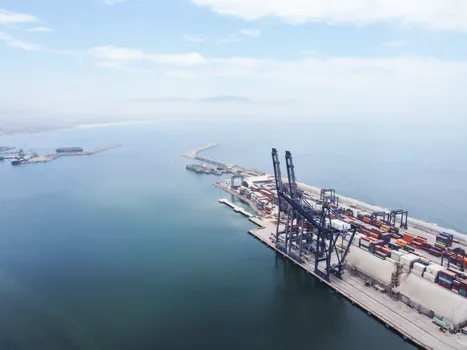
Chile accounts for 29% of lithium processing and Argentina for 5%, demonstrating that the conversion geography remains concentrated even though lithium occurs across multiple deposit types [S6]. Chile and Argentina also convert lithium from brines within their territories, adding chemical-processing exposure to regions that have strong resource positions [S6].
Brine and hard-rock routes fail different tests
Upstream exposure to water stress creates material environmental, social, and governance risk for lithium-ion battery supply chains [S5]. Hard-rock projects avoid that specific extraction profile but must still convert spodumene concentrate into battery-grade lithium chemicals before the material reaches cathode production [S7].
The two routes cannot be compared on water use alone. Brine offers a distinct extraction and chemical-conversion route, while spodumene requires mining, beneficiation and chemical processing; the life-cycle study explicitly compared battery supply chains producing LFP and NCA cells from both brine and spodumene [S7]. For buyers, the relevant comparison is deliverable battery-grade lithium at the required quality, not mineral-unit output.
Production decisions also face several external constraints. Benchmark's 2026 market agenda identified new African hard-rock supply, Indonesian licensing changes and evolving recycling economics as variables affecting the market balance [S4]. A named supply project therefore needs four checks: resource basis, chemical conversion route, permitting status and offtake capability. Mineral endowment alone satisfies none of the other three.
Conversion creates the first hard industrial bottleneck
Chile and Argentina account for 29% and 5% of lithium processing, respectively, with a focus on in-country conversion of lithium from brines into lithium chemicals [S6]. The conversion stage is also where water, energy, reagent logistics, product quality and residue handling converge, making it more difficult to replicate than a simple mining expansion.
Battery-cell demand is divided between established chemistries and emerging formulations. The cathode index recorded a 21.27% move in the Benchmark dataset, while the LFP index moved 4.96%, NCM mid-nickel 6.02% and NCM high-nickel 3.49% [S4]. These index movements do not establish physical shortages, but they show that cathode-market signals can diverge materially by chemistry and should be read alongside processing capacity.
For LFP and LMFP systems, the refining of phosphate rock into battery-grade purified phosphoric acid is identified as a growing potential bottleneck [S9]. An LFP cathode plant without qualified purified phosphoric acid is not operational, regardless of whether lithium carbonate is available. Procurement must therefore separate lithium availability from phosphate purification, mixing, particle engineering and qualification of cathode active material.
Graphite and cathode materials narrow the bottleneck
Battery-grade graphite is mined, purified, refined and coated before entering a cell, with material potentially changing hands, crossing borders or being blended at each stage [S2]. Under the Certification Safe Harbor approach described for the U.S. MACR framework, tracing proceeds link by link, with each supplier certifying to its customer [S2].
The framework also requires manufacturers to assign precise cost percentages to constituent materials and trace those costs to prohibited foreign entity or non-PFE origin [S2]. For a vertically integrated graphite supplier that mines and processes material, the attributable cost can effectively cover the whole input [S2]. This is a compliance problem, not simply a geological one.
The same logic applies to cathode active material. A vertically integrated producer can combine mining, processing, and cathode-material operations before selling to a cell maker. When manufacturing equipment or process know-how is supplied by a prohibited foreign entity under the applicable rules, the compliance analysis can extend beyond a material-cost calculation and affect the manufacturer's entity-level status [S2]. The practical procurement response is chain-level evidence, not a country-of-origin declaration on a purchase order.
LFP, NMC and LMFP require different bottleneck checks
LFP, LMFP and NMC cathodes cannot be assessed against a single lithium supply metric because their non-lithium inputs differ. LFP depends on purified phosphoric acid, LMFP adds manganese-bearing feed requirements, and NMC depends on nickel, cobalt and manganese as well as lithium [S9].
LFP is the less direct fit for buyers whose immediate concern is cobalt access, but purified phosphoric acid can shift the constraint downstream. NMC projects are more exposed to multi-metal availability and cobalt constraints, while LFP projects require attention to phosphate refining and graphite qualification [S4][S9].
Environmental and social constraints can block otherwise bankable supply
Upstream lithium operations face material ESG exposure through water stress, greenhouse-gas emissions, pollution, labor practices, community impacts and inadequate health and safety controls [S5]. These risks are especially consequential where operating permits, financing and market access depend on demonstrable performance rather than corporate policy statements [S5].
The 500,000-liter brine water figure establishes a scale of exposure, but it should not be treated as a universal plant requirement without site-specific process data [S5]. Buyers still need basin-level water accounting, withdrawal permits, brine-residue handling, freshwater commitments and community grievance data. The evidence standard must reach beyond the mine because conversion and graphite processing can introduce additional emissions and labor exposure [S5].
For cathode procurement, these upstream constraints remain part of product qualification. A compliant cathode certificate can establish documentation at one level, but it cannot erase a water-scarce basin, unsafe labor condition or opaque graphite chain. Risk review should therefore combine chemical quality data with chain-of-custody and ESG evidence.
Who should use this framework for what
Cell manufacturers should use the chain map to qualify multiple lithium chemical sources, qualify purified phosphoric acid independently, and verify graphite processing link by link [S2][S9]. They need supplier redundancy at the conversion and cathode-material stages because a lithium mine alone does not protect cell output.
Cathode producers should focus on process yield, chemical impurity control, water and energy availability, and customer qualification for each cathode grade. They should not treat a lithium offtake agreement as equivalent to a bankable feedstock package, especially where phosphate, manganese, nickel or cobalt must arrive from separate supply chains [S9].
Investors, policymakers and small buyers should not treat this framework as a substitute for site-specific engineering, financial diligence and legal review. It is appropriate for screening which links can constrain a lithium deliverable, while unsuitable for declaring a project bankable, estimating a share price or substituting for an environmental impact assessment.
Sourcing signals worth tracking through 2026
Three operating signals matter more than an undifferentiated tonnage forecast: utilization of lithium conversion plants, qualification progress for battery-grade graphite and purified phosphoric acid, and the share of cathode output passing customer acceptance. The first shows whether raw lithium is becoming usable chemical; the second identifies a downstream gate; the third separates installed cathode capacity from saleable production [S1][S9].
Trackable market signals include Benchmark's listed movements in the lithium carbonate index of 200.2, lithium hydroxide index of 239.87 and cathode index of 57.72, alongside policy changes affecting African hard-rock supply, Indonesian licensing and black-mass economics [S4]. These figures and developments provide a dated market checkpoint rather than a forecast of shortage or surplus.
On the evidence reviewed, lithium's 2035 supply problem is not a simple geological deficit. The harder engineering question is whether water, conversion, traceable graphite, purified phosphoric acid, cathode qualification and ESG evidence move in step, because a delay at any one of those links can restrict deliverable battery-grade supply [S3][S5][S9].