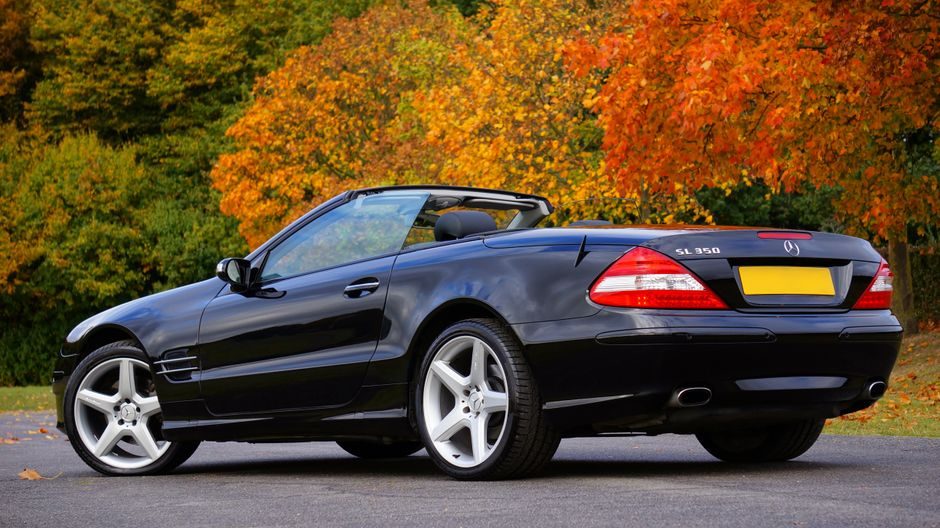
A 2026-06-05 review of Amazon's "Automotive Replacement Power Door Lock Motors" category shows that automotive lock assemblies split into two distinct engineering worlds: mechanical shaft-locking hardware (Z8 keyless locking assemblies) for powertrain/drivetrain duty, and electromechanical latch/lock actuator assemblies for cabin closures [S4]. Mixing the two spec sheets is the most common procurement error on mixed-model lines.
Concurrent 2026-06-09 data on "Vise Grips & Locking Pliers" and "Automotive Assembly Lubricants" lists the front-runner clamping tools (WORKPRO 5-piece Cr-V set at 4.7 stars across 3,162 reviews, Klein Tools 38660 2-piece at 4.8 stars) alongside silicone, PTFE, and engine-assembly lubes from CRC, Permatex 81950, and Liquid Wrench L106 [S1][S2]. Together they form a working kit that any shop floor can match to a spec sheet.
Z8 Keyless Locking Assembly: Where It Actually Fits
Manufacturer Changzhou Tianniu lists the Z8 keyless shaft-locking assembly in the same catalog tier as their CSK 20/25/35/40 PP cam clutches and 3-inch/2-inch/1-inch rigid split couplings, indicating it is engineered for high-torque metric shaft mounting rather than low-duty clamping [S3]. Keyless locking assemblies like the Z8 generate radial locking force through tapered sleeves and axial bolt pre-load, so the bolt-torque value is the binding spec — under-torque yields micro-slip, over-torque yields sleeve cracking.
For automotive applications, the relevant duty cycles are transmission input/output shafts, steering column stubs, and EV rotor mounts. A locking assembly installed in any of those positions must be paired with a shaft material of at least 250 HB (Brinell hardness) to prevent brinelling; softer stubs require a hardened sleeve. Select Z8-class hardware when the duty is rotational, continuous, and the radial load exceeds what a set-screw or keyed joint can hold without key-fatigue failure.
Locking Pliers: Cr-V vs CR-MO Trade-Offs
The 2026-06-09 best-seller list puts four plier families in front: WORKPRO 4-inch mini curved-jaw Cr-V ($8.08, 4.4 stars, 1,790 reviews), WORKPRO 5-piece Cr-V set with 5/7/10-inch curved and 6.5/9-inch long-nose ($22.49, 4.7 stars, 3,162 reviews), Klein Tools 38660 2-piece 7/10-inch curved-jaw ($25.98, 4.8 stars, 616 reviews), and DURATECH 7-inch Cr-V ($9.99, 4.6 stars) [S1]. Cr-V (chromium-vanadium) is the volume leader because it balances hardness (HRC 58-62 typical for plier jaws) with cost; CR-MO (chrome-molybdenum), used in the WORKPRO 6.5" long-nose, adds toughness at the expense of wear resistance [S1].
On automotive assembly lines the choice maps to duty: Cr-V for repetitive clamping and welding fixtures, CR-MO for impact-loaded extraction work (bearing removal, seized fastener breakout). For under-$10 spend, the DURATECH 7-inch Cr-V is the rational pick; for kit consolidation, WORKPRO 5-piece covers more jaw geometries per dollar. Locking pliers are not a substitute for a pressure sensor fixturing clamp but they do double as a shop-grade vice for sensor-port plug installation.
Assembly Lubricant Pairing: Silicone, PTFE, and Engine-Assembly
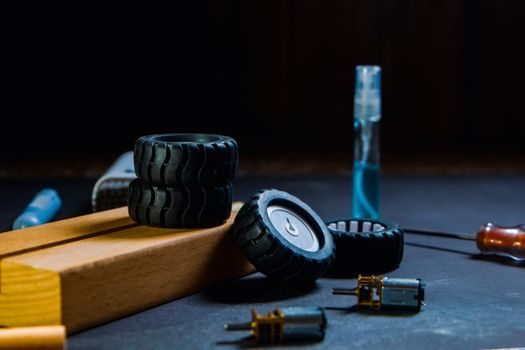
The 2026-06-09 assembly-lubricant leaderboard starts with CRC Heavy Duty Silicone 11 Wt Oz (4.7 stars, 4,438 reviews, from $4.24), CRC Power Lube Industrial with PTFE 11 Wt Oz (4.7 stars, 2,698 reviews, $13.79), Malco Tire Mounting/Demounting Lubricant (4.7 stars, 603 reviews, $25.97), Permatex 81950 Ultra Slick Engine Assembly Lube 4 oz (4.8 stars, 9,953 reviews, $9.25), and Liquid Wrench L106 Penetrating Oil 5.5 oz (4.5 stars, 286 reviews, $11.99) [S2]. These five cover the four chemical roles a shop actually needs: dry-film silicone for non-metal/rubber mating, PTFE for high-load metal-on-metal, paste engine-assembly lube for bearing/spline initial run-in, and penetrating oil for seized-fastener release.
For powertrain work the binding rule is that assembly lube must be present at first rotation: Permatex 81950's high-zinc formula protects camshaft, rod-bearing, and piston-pin interfaces during the first 20-30 seconds of starter cranking before oil pressure builds. For interior door/latch work (the power door lock motors cluster from Blycorul, A-Premium, etc. [S4]), dry silicone is preferred because wet oils attract dust into the actuator gear train. Penetrating oil sits in a different chemical category — kerosene/light distillate base — and should never be used as a permanent assembly lube; its role is fastener release only [S2].
Door-Lock Actuator vs Shaft Locking Assembly: Spec Boundary
Reading the 2026-06-05 best-seller list for "Automotive Replacement Power Door Lock Motors" against the Z8 locking-assembly catalog, the engineering boundary is unambiguous: door-lock actuators are 12 V DC gear-motor units with plastic housings, an integrated latch cam, and a wiring pigtail, with replacement parts (Blycorul 69110-35090 for Toyota 4Runner 2003-2009, A-Premium for Chevrolet Impala/Cruze/Malibu/Sonic) listed by OEM-style part number rather than by torque or hardness [S4]. Shaft locking assemblies are passive mechanical devices specified by bore diameter, outer diameter, axial length, and transmissible torque [S3].
Cross-specifying between them is a common RFQ (request-for-quote) error. A door-lock actuator is selected by vehicle year/make/model and connector pinout; a shaft locking assembly is selected by metric shaft diameter (e.g. 16 mm or 19 mm, as listed for the aluminum bellows coupling on the same Changzhou catalog) and torque margin [S3]. Procurement systems that key both on the word "lock" can collapse the two categories; engineering review must gate the search.
Selection Criteria: A Direct Comparison
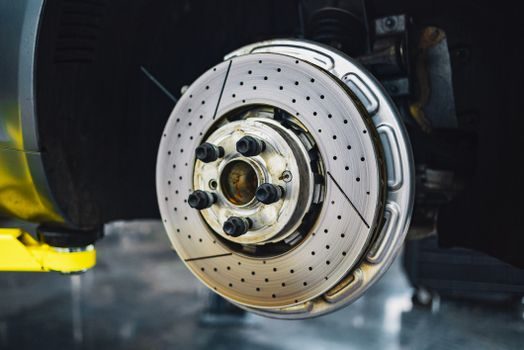
Lining the three tool families up against four decision criteria gives a one-page spec map. Cr-V locking pliers score high on cost ($8-$25) and availability, mid on wear life, and low on impact toughness; CR-MO inverts that with higher cost and toughness but lower abrasion resistance [S1]. Z8 keyless locking assemblies score high on torque density and reusability, mid on bore-size range, and low on initial install precision (requires controlled bolt torque sequence) [S3]. Assembly lubes split cleanly: silicone for rubber/plastic dry film, PTFE for loaded metal contact, engine-assembly paste for bearing run-in, penetrating oil for seized fasteners only [S2].
For an automotive assembly line doing both powertrain and cabin work, the minimum kit is one Cr-V 5-piece plier set (WORKPRO at $22.49 or equivalent), one Z8-class keyless locking assembly per shaft station, one can of Permatex 81950 per engine-bay station, and one can of CRC silicone per interior-trim station. Total tool spend lands under $60 per station, which is the operational baseline for 2026 small-to-mid volume shops. A more complete procurement guide on fastener hardware — useful for the studs that typically surround a locking assembly — is in the lock nut sizing and selection thread/material/locking-mechanism guide.
Failure Modes and Field Constraints
The most common failure on a Z8 keyless locking assembly is sleeve-creep under cyclic torsional load, typically appearing after 10,000-50,000 load cycles depending on the torque margin and surface finish. The mitigation is a controlled re-torque after the first 10-20 hours of operation, not a switch to a different locking principle. For locking pliers, the dominant failure is jaw-tooth wear on the adjustment screw, accelerated by exposure to cutting fluids; re-greasing the adjustment screw with a PTFE lubricant (CRC Power Lube class) doubles the service life versus dry operation [S1][S2].
Assembly-lube failure modes are usually selection errors: silicone on a high-load metal spline gives insufficient film strength and leads to galling; engine-assembly paste on a rubber weather-seal causes swelling and eventual cracking. The field rule is that chemistry must match substrate — silicone for elastomer, PTFE for clean metal, zinc-loaded paste for ferrous bearing surfaces during break-in. Door-lock actuators fail most often in the gear-train (plastic planetaries) when contaminated by an inappropriate wet lubricant; the OEM service kits ship with dry-film PTFE on the gear teeth for that reason [S4].
Track these two signals through Q4 2026: (1) Z8 and equivalent keyless locking assembly price points and lead times from China-volume manufacturers like Changzhou Tianniu [S3], and (2) movement in the Cr-V vs CR-MO ratio on the locking-pliers best-seller chart, since the 4.4-4.8 star spread is narrow enough that a single new SKU (stock-keeping unit) can reshuffle the top five within a quarter [S1].
Spec-level background on the components involved: pressure transmitter.
