
Select LoRaWAN for private, low-power sensing across a large plant, NB-IoT for geographically dispersed assets with verified operator coverage, and Wi-Fi for powered sensors near managed access points.
These networks serve different operating models: LoRaWAN uses an owner-controlled gateway layer, NB-IoT uses a licensed mobile network, and Wi-Fi uses IEEE 802.11 local-area infrastructure.
Decision criteria for plant sensor connectivity
The primary decision is not maximum range but control of coverage, payload, power, backhaul, and maintenance responsibility. LoRaWAN permits a private gateway estate and local network-server placement, while NB-IoT normally uses an operator-owned radio access network [S1].
LoRaWAN suits many battery-powered sensors that transmit small packets across a factory, farm, campus, or estate [S2]. NB-IoT suits scattered devices where cellular service reaches each location and installing gateways is undesirable [S4]. Wi-Fi suits areas with existing access points, network credentials, and power [S2].
Range cannot be selected from one catalogue number. LoRaWAN coverage depends on gateway and antenna placement, terrain, walls, metal obstructions, regional frequency plans, spreading factor, endpoint antenna, and traffic. NB-IoT coverage depends on operator deployment, supported bands, building penetration, and device conditions [S1].
Power, payload, and battery-life limits
Battery life is an endpoint-system property, not a guaranteed network figure. Message interval, payload size, retries, receive windows, network conditions, firmware, and sensor duty cycle all affect energy consumption [S1].
LoRaWAN is generally the strongest fit for low-data, battery-powered nodes [S3]. A comparative study characterizes NB-IoT as more expensive and less energy-efficient than LoRaWAN [S6].
Wi-Fi has more throughput than plant telemetry usually requires, but its power and coverage behavior make it a poor default for a coin-cell node. Use it for sensors near reliable access-point coverage, particularly where local configuration, firmware downloads, or gateway duties justify the energy and infrastructure cost [S2].
For each design, model the busiest credible reporting interval rather than the average day. A sensor reporting a few bytes twice daily has a different energy budget from one sending frequent alarms and expecting downlinks [S1].
Coverage and infrastructure comparison
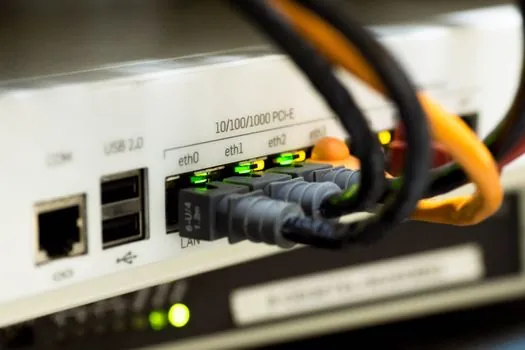
LoRaWAN and NB-IoT provide different answers when coverage is difficult. LoRaWAN allows additional or repositioned gateways; NB-IoT requires acceptable service at the final device position, or an alternative operator or antenna arrangement [S1].
The ranges and rates above are shortlisting guides rather than guaranteed operating limits [S3]. Survey basements, plant rooms, pits, metal enclosures, and distant plant areas before purchasing equipment [S1].
Cost, ownership, and lifecycle exposure
A private LoRaWAN design shifts radio planning, gateway maintenance, backhaul, and network-server operation to the plant owner, but it can avoid a recurring per-device network charge [S1]. NB-IoT removes the need to install a private gateway network, yet subscriptions, SIM or eSIM provisioning, roaming terms, and operator coverage remain part of the service [S1][S4].
Wi-Fi often has the lowest radio-hardware burden when suitable infrastructure already exists, but its total cost includes access points, cabling or backhaul, power, credential administration, and coverage remediation [S2]. Cost should be compared after those lifecycle duties are assigned, not by comparing gateway purchase price with a SIM tariff alone.
Command response, mobility, and application fit

The Robustel LG3120e is a LoRaWAN gateway with 4G, eSIM, Wi-Fi, serial, and I/O capabilities that fits projects seeking a local LoRaWAN access layer [S1].
Neither LoRaWAN nor NB-IoT is the preferred transport for an asset that moves while transmitting. LTE-M is identified as the better cellular option for moving assets [S4]. Wi-Fi supports local IP functions but requires the sensor to remain associated with suitable infrastructure.
Use LoRaWAN for static temperature, level, pressure, utility, and environmental points that transmit small packets at low frequency. Use NB-IoT for meters and sensors dispersed across an area where basements or reinforced structures make private gateway placement difficult. Use Wi-Fi for powered sensors around control rooms, production lines, or gateways that need direct IP access [S2][S4][S5].
Which network fits each use case
For a large plant with 100 or more dispersed low-rate battery sensors, start with LoRaWAN, subject to an RF survey and gateway redundancy design. Its star-of-stars architecture and owner-managed gateway layer fit a controlled industrial site, while long airtime and local radio planning remain engineering responsibilities [S1][S3].
For a small number of devices spread across cities or remote assets with proven NB-IoT service, NB-IoT is the stronger choice. It removes private gateway installation and offers stronger indoor penetration, but every endpoint depends on a subscription and operator lifecycle [S3][S4].
For powered sensors within an existing building network, Wi-Fi is the practical choice. It provides direct IP connectivity and more throughput than low-rate telemetry requires, but installation teams must solve access-point coverage, power, credential security, and network maintenance [S2].
For critical plant data, no single radio technology removes the need for resilience. Evaluate offline storage, failover behavior, device identity, credential protection, application encryption, firmware updates, and access control for every network layer [S2].
Standards, sourcing, and acceptance tests

Specify LoRaWAN separately from the LoRa radio. LoRa is the physical-layer modulation, while LoRaWAN defines addressing, device classes, security, and backend roles;
For LoRaWAN gateways, require the intended regional frequency plan and explicit device-class support.
For NB-IoT, record the operator, supported bands, subscription terms, coverage evidence, and service roadmap for each installation region. LoRaWAN acceptance should include gateway placement, antenna-height testing, difficult-area surveys, busy-hour payload tests, and verification of local processing and backhaul [S1].
The procurement file should identify the network owner, maintenance party, security key and credential process, recovery behavior, and recurring charges. Those assignments determine whether the selected radio becomes a reliable plant subsystem or an isolated device link.
Next, survey the worst three sensor locations, pilot each candidate network at the real reporting interval, and record packet delivery, battery draw, downlink response, recovery after gateway or operator outage, and total ownership cost.