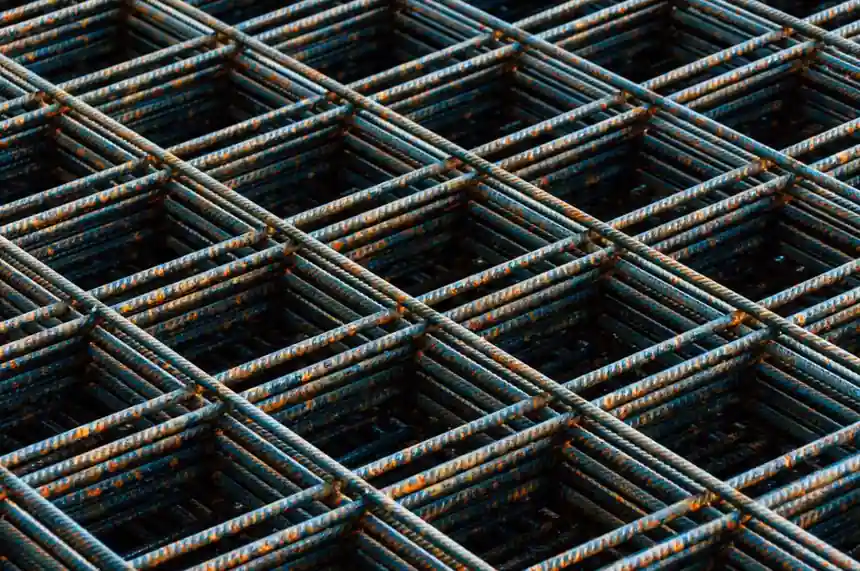
Carbon content is the single variable that flips a steel's behavior from deep-drawable sheet to through-hardenable tool stock, and the standard cut points are under 0.30% (low / mild), 0.30-0.60% (medium), and above 0.60% (high / tool steel) by mass [S3][S6]. Within each band the real selection work is matching strength, weldability, and machinability to the part's service duty rather than chasing the highest tensile number on the data sheet.
Three reference families cover most engineering decisions: ASTM structural grades for low-carbon plate, AISI 10xx plain-carbon for medium-carbon shafting and forging stock, and AISI 52100 or similar tool grades for high-carbon bearings and springs [S1][S2]. Mild steel (AISI 1018, 1020) is the cheapest and most weldable, medium-carbon AISI 1045 is the workhorse for heat-treated gears and axles, and 52100 is the standard bearing and shaft material for loaded ball contact [S2].
Carbon Content Bands and What Each One Buys You
Low-carbon / mild steel contains roughly 0.05-0.32% carbon (most sources quote 0.05-0.25% as the practical commercial band), giving yield strength typically in the 200-350 MPa range and excellent ductility for cold forming [S1][S4][S6]. Medium-carbon steel sits at 0.30-0.60% C and trades some ductility for higher as-rolled strength and the ability to be quenched-and-tempered into the 600-900 MPa UTS range; AISI 1045 at 0.45% C is the textbook example, hardened by austenitising around 820-850 deg C, soaking one hour per 25 mm of section, then air cooling [S2]. High-carbon steel (0.60-1.50% C) is the hardest and strongest of the three but the least weldable and least ductile; 52100 (~1.0% C, with Cr) is the dominant bearing and linear-shaft grade where a deep case-hardened surface is needed over a tough core [S2][S3].
A useful single-number rule: each 0.10% rise in carbon roughly doubles the achievable hardness after quench-and-temper but drops elongation-to-failure by a comparable factor, which is why mild steel can be roll-formed into a car body panel while a 0.80% C spring steel must be coiled hot and shot-peened. Wikipedia's plain-carbon entry ties this trade directly to the AISI definition (no minimum specified for alloying elements, max 1.65% Mn, 0.60% Si, 0.60% Cu) and notes that as carbon rises the melting point drops and weldability falls regardless of heat treatment [S4].
Standards and Grade Codes You Will See on the PO
In the U.S. the governing bodies are ASTM, AISI, and SAE, and on most drawings you will see the SAE/AISI four-digit code (10xx = plain carbon, 11xx = resulfurized, 12xx = resulfurized and rephosphorized) rather than an EN number [S1][S2]. ASTM A307 is the common low-carbon bolt standard at 60,000 psi tensile, split into Grade A (general / low stress) and Grade B (higher strength), which gives a useful floor for any "how weak is low-carbon steel really" question [S1]. For the medium band, AISI 1045 (0.43-0.50% C) and AISI 4140 (alloy, but in the same strength class after Q&T) are the reference grades; for high-carbon, 1095 (simple spring / cutlery) and 52100 (Cr-bearing bearing steel) are the names you will see on mill test reports [S2][S3].
Wikipedia notes that mild steel density is 7.85 g/cm3 (7,850 kg/m3) and Young's modulus is 200 GPa (29 x 10^6 psi), which is essentially the same stiffness for all three carbon bands; carbon shifts strength and hardness, not modulus [S4]. Service Steel's 2025 grade chart confirms the 0.04-0.30% low-carbon range and the 0.30-0.60% medium band, matching the older Monroe Engineering and Essentra cut points [S9].
Selection Criteria: Weldability, Hardenability, Machinability, Cost
Weldability is the first discriminator: low-carbon (under ~0.25% C) can be welded without preheat in most thicknesses using standard E6010/E7018 procedures, while medium-carbon often needs 150-300 deg C preheat to avoid HAZ cracking, and high-carbon is generally not welded at all without special austenitic filler and PWHT [S1][S4]. Hardenability is the inverse: low-carbon cannot be meaningfully through-hardened (case hardening or carburising is the workaround), medium-carbon air-hardens to useful strength, and high-carbon reaches full file-hardness in thin sections but needs a water or oil quench in heavier ones [S2][S3].
Machinability and cost push the other direction: mild steel chips easily, has short tool life at high speeds but tolerates deep cuts, and is the cheapest per kg on the market; medium-carbon 1045 machines to a good finish at 30-50% higher speeds than mild when normalized, and the free-machining 11xx / 12xx variants (with added S and P) push that another 50-100% higher, at the cost of weldability and impact toughness [S2][S5]. High-carbon and tool steels are the most expensive per kg, machine poorly in the annealed condition, and are usually bought as ground or near-net-shape stock to minimise machining time. A direct comparison worth quoting on a sourcing call: per Service Steel, low-carbon is the highest-volume and lowest-cost grade on the market, while AISI 1045 sits roughly 20-40% above 1018 plate and 52100 sits 2-3x above 1045 [S9].
Decision Matrix: Pick by the Dominant Failure Mode
If the dominant failure mode is yielding or buckling of a welded structure (building frame, bridge girder, pressure vessel shell, automotive chassis), specify low-carbon or HSLA, AISI 1018 / 1020 or ASTM A36 / A572, in the hot-rolled or normalised condition [S1][S5]. If the failure mode is surface fatigue or tooth shear on a power-transmission part (gear, spline, axle, crankshaft), the right answer is medium-carbon AISI 1045 or 4140, Q&T to 28-32 HRC, with case hardening only where pitting is expected [S2]. If the failure mode is wear, brinelling, or edge retention (linear shaft under a ball bushing, knife edge, spring, punch), move to high-carbon 1095, 52100, or a tool grade and accept that welding is off the table [S2][S3].
For a rule of thumb, use the AISI 1045 hardening recipe as the boundary: 820-850 deg C austenitise, hold one hour per 25 mm of section, air cool, then temper to the target hardness; if a part cannot survive that thermal cycle without distortion or grain growth, the steel choice is too high-carbon and you should drop to 1020 or 1026 [S2]. Nifty Alloys, Alliance Steel, and Monroe all converge on the same boundaries (0.05-0.25% / 0.30-0.60% / above 0.60%) which is what makes the bands robust for procurement specs [S3][S6][S7].
When to Specify Alloy Steel Instead
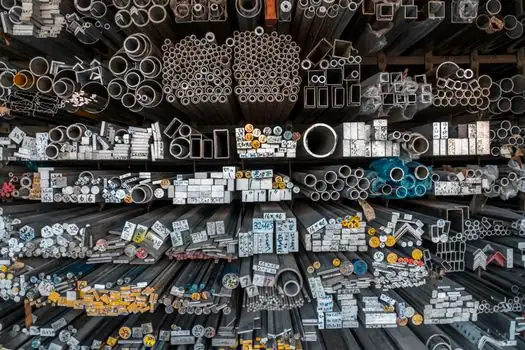
Once the duty involves sustained elevated temperature, sour-service hydrogen exposure, or large-section through-hardening, plain carbon steel stops being the right tool even at the same carbon number. AISI 4140 (Cr-Mo) and 4340 (Ni-Cr-Mo) take the same 0.40% C base as 1045 but add hardenability so that 100-200 mm sections can be Q&T to full hardness, which 1045 cannot do in air [S2][S4]. The Wikipedia entry is explicit on the boundary: "the addition of significant amounts of other metals, such as nickel, chromium, vanadium, molybdenum, changes the materials definition from carbon steel to alloy steel" and so the decision is not just about carbon but about what the rest of the chemistry buys you [S4]. For wear parts that also need corrosion resistance, move from 52100 into a martensitic stainless like 440C; for springs that need fatigue life, move from 1095 to a Cr-V or Cr-Si alloy spring steel.
Carbon steel remains the right answer for general structural, machinery, and consumer-goods applications where cost and availability dominate, and where the service environment is dry or only mildly corrosive. In mildly corrosive or wet service, plain carbon steel will rust and either needs a coating (galvanizing, paint, plating) or a move to a stainless or weathering grade [S1][S4]. This is the same trade-off that drives the more general carbon vs alloy steel decision; the carbon-only family is the cheapest, most weldable, and most repairable subset, and that is exactly why it covers the largest tonnage in industry.
Common Selection Mistakes on Real Drawings
Three errors come up repeatedly on RFQs. First, specifying "high-carbon steel" for a welded assembly; the weld will crack in the HAZ and the only fix is to drop to 1020 or add an austenitic filler plus PWHT, which usually costs more than picking the right grade up front [S1][S4]. Second, specifying "low-carbon steel" for a wear surface (a scraper blade, an agricultural sweep); the part will fail by deformation, not wear, and the correct pick is a medium-carbon Q&T grade or a hard-faced overlay. Third, ordering medium-carbon 1045 in the as-rolled condition and expecting the strength of Q&T 1045; the as-rolled UTS is around 565 MPa while a Q&T 1045 at 28 HRC reaches ~850 MPa, so the same grade number on the PO can mean two different materials in service [S2].
The clearest signal that you are looking at the wrong carbon band is the failure mode: if a part fails by ductile overload it was almost certainly under-strength for the load (drop to a higher carbon or Q&T); if it fails by brittle fracture with no plastic deformation it was almost certainly over-carbon for the geometry and service temperature (drop to a lower carbon or normalize) [S3][S4]. Get those two right and most other spec errors sort themselves out.
For deeper cross-references on adjacent steel-spec decisions, see the practical comparison of SAE J431 G3000 vs ASTM A48 Class 30 cast iron grades, the P20 vs 1045 mold base plate selection rules, and the broader carbon steel family reference for the alloy boundary. Two trackable signals to watch: ASTM is in the middle of a periodic revision cycle on A307 bolt grades that will tighten Grade B documentation, and the AISI 10xx plain-carbon naming convention is being mirrored into the newer SAE J403 digit system, so expect to see both four-digit and letter-number codes on the same mill cert through 2026.
For component-level specifications, see high voltage tester, and medium voltage vfd.