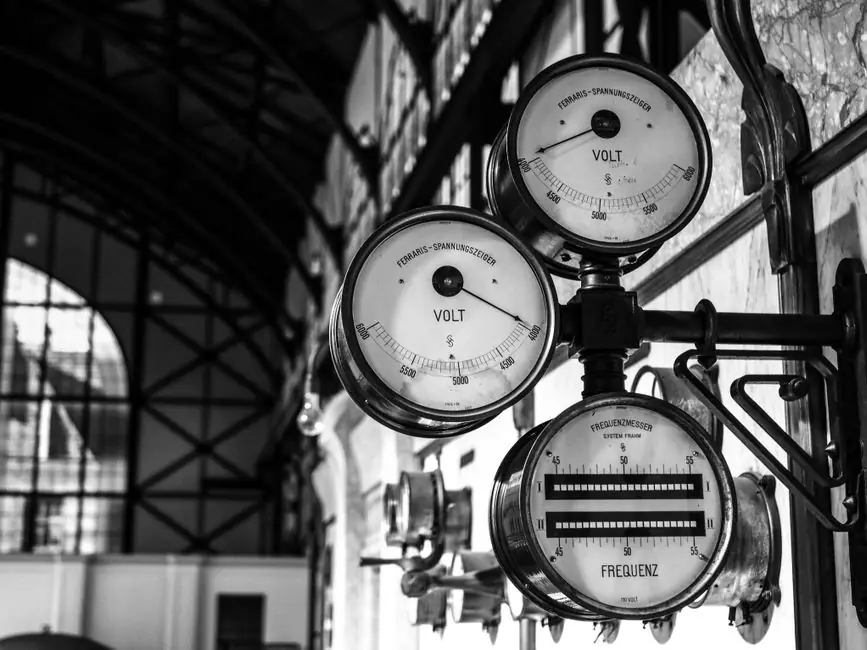
A lux meter measures illuminance in lux, with 1 lx defined as 1 lumen falling on 1 square metre through human-eye weighting [S4].
Photographic light meters, flash meters and lux meters are distinct types of light-measurement instruments, and workplace audits, production-area checks and on-site lighting checks are applications of lux meters [S2][S4].
Lux and f-stop readings answer different engineering questions
The distinction is functional, not merely a difference in display units. A lux meter measures illuminance, while a photographic light meter can determine an aperture setting for studio flash lights [S1][S2].
The unit relationship is fundamental: 1 lux equals 1 lumen distributed across 1 square metre [S1][S4]. Lumen measures luminous flux, candela measures luminous intensity, and lux measures incident illuminance per unit area. This is why a source output quoted in lumens does not by itself establish the illuminance at a workstation or floor area [S1].
For a clearer distinction between source output and surface illumination, see Lumens vs. Lux: Output, Illuminance, and Selection.
How a lux meter converts light into a reading
Lux is weighted according to the V(λ) curve, which describes the sensitivity of the human eye to different wavelengths [S1][S4].
The underlying relation is E = Φ/A, where E is illuminance in lux, Φ is luminous flux in lumens and A is illuminated area in square metres [S1][S4]. Cosine response is a factor in lux-meter selection because it affects how the instrument evaluates obliquely incident light [S4].
A cosine-corrected diffuser is therefore important when light arrives diagonally from ceiling luminaires or other large off-axis sources [S4]. In a field survey, sensor orientation, measurement location, control state and calibration status can change the comparability of results, so those variables should be recorded rather than treating every lux reading as interchangeable [S5].
Photographic light meters serve exposure control
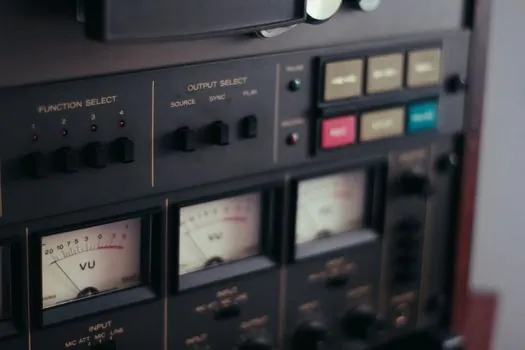
A basic lux reading cannot by itself reproduce all photographic factors.
Accuracy depends on spectral and angular response
Two lux meters can report different values under the same source because sensor spectral response, cosine response, instrument class, detector behaviour and calibration differ [S4]. The lux reading is weighted by the photopic V(λ) response curve, so it approximates the eye's wavelength sensitivity rather than measuring unweighted physical radiation [S4].
Spectral mismatch is identified by f1', with a smaller value representing closer agreement with the V(λ) curve. Spectral match, expressed as f1′, indicates the deviation of the sensor response from the V(λ) curve, and the smaller the value the more consistent the results are under different light sources [S4]. Cosine error is represented by f2; lower values give more reliable response to obliquely arriving light [S4].
Lux, spectral and color measurements are not interchangeable

A lux meter is the minimum tool when the question is illuminance, spatial distribution or repeatability. It supports task-lighting surveys, eye-level measurements, commissioning and before-and-after comparisons [S5]. A spectrometer resolves the spectral power distribution, allowing calculation of CCT, chromaticity, melanopic and other α-opic metrics when the instrument and software support them, whereas a lux meter measures photopic illuminance weighted to approximate human visual sensitivity [S5].
A spectrometer resolves the light by wavelength and provides spectral power distribution data from which supported software can calculate CCT, Duv, chromaticity, melanopic daylight equivalent radiance and related metrics [S5]. A traditional lux meter compresses that spectral information into one photopic value. Two sources can produce the same 100 lx reading while having very different spectra, including blue-pump warm white, amber, RGB mixtures and daylight [S5].
The main comparison is therefore clear. A lux meter is strongest for calibrated illuminance and mapping, a photographic light meter is strongest for continuous-scene exposure, a flash meter is strongest for instantaneous flash exposure, and a spectrometer is strongest for spectral composition [S2][S5]. Color rendering requires a spectral-capable instrument, while surface color itself belongs to a color meter or spectrophotometer rather than a light meter [S4].
Low-light, circadian and specialty use cases
Low illuminance weakens confidence because detector noise, dark-current correction, integration time and calibration become more influential [S5]. Nighttime scenes operating at only a few lux can therefore require more care than an office survey at hundreds of lux. A meter rated for workplace levels may show poor repeatability at 1–5 lx even if its specification remains valid for higher readings [S5].
Road-lighting assessment can also exceed the scope of an ordinary photopic lux reading. The Pro-Lite SL-3101 uses two sensor heads to measure photopic and scotopic illuminance and calculate the scotopic-to-photopic ratio [S3]. The S:P ratio was called for in BS 5489-1:2012 and the ILP Professional Lighting Guide PLG 03 (2012) for road-lighting work [S3]. This is a specialized dual-response measurement, not evidence that every lux meter produces both quantities [S3].
For circadian research, spectrometer data can support melanopic and other alpha-opic calculations, while a calibrated lux meter remains useful for spatial mapping after the source spectrum is characterized [S5]. Verify amber or low-blue sources, tunable-white channels and dimming-induced spectral changes with spectral data rather than inferring them from lux [S5].
Choosing and documenting the correct instrument
Choose a lux meter for workplace compliance checks, production-area lighting, installation commissioning and illuminance distribution. Choose a photographic light meter when the output must become an aperture, shutter speed or ISO setting, and choose a flash meter when the source produces a brief discharge [S2]. Choose a spectrometer when color quality, spectral shift or a non-photopic biological metric is the required result [S5].
For a luxury-meter specification review, the comparison with a sound level meter is instructive only in one respect: both are environment-monitoring instruments, but they quantify entirely different physical quantities. A sound level meter evaluates acoustic pressure in decibels, while a lux meter evaluates weighted visible illuminance in lux. The same separation of purpose applies when comparing the lux meter with an air quality monitor, which measures airborne contaminants rather than light.
Record the instrument model, accuracy class, calibration date, sensor orientation, measurement plane, location, time, source control state and environmental conditions. For illuminance mapping, keep the sensor orientation consistent between scenes; for spectral work, document wavelength calibration, stray-light control, detector linearity, diffuser quality, integration time and cosine response [S4][S5]. These records make a lux meter result traceable and prevent an isolated display value from being mistaken for a complete lighting assessment.
The practical decision point is the required output: one numeric lighting level, a camera exposure setting, a flash ratio, or spectral quality. Select the instrument that produces that output directly, then document the conditions under which the reading was taken [S2][S5].