
An LVDT (Linear Variable Differential Transformer) is a contactless inductive position sensor in which a ferromagnetic core moving through a primary/secondary winding set produces a differential AC voltage proportional to displacement [S3]. Specifying one in 2026 is largely an exercise in matching four numbers — stroke, linearity, excitation, and output — to the mechanical, electrical, and environmental envelope of the machine.
The vendor landscape is now deep enough to tier by duty rather than brand: 88 manufacturers and 384 products appeared on DirectIndustry's displacement-sensor index as of 2026-06-06, with European instrument houses (LVDT.co.uk, AMETEK Factory Automation, Brüel & Kjær, ASM Sensorik) anchoring the precision tier and Chinese OEM clusters (Soway, Houde, CoreMorrow, Shanghai Xingyu) anchoring the price-competitive 0–50 mm / 0–100 mm industrial tier [S1][S3][S4][S5].
Stroke Range and Linearity Bands to Specify
Standard industrial LVDT strokes cluster in three bands — ±0.5 mm to ±5 mm (sub-micron metrology), ±10 mm to ±50 mm (hydraulic actuator feedback), and ±100 mm to ±500 mm (civil/structural crack and slide monitoring) — with linearity graded at roughly ±0.5 % FS for general purpose, ±0.25 % FS for process control, and ±0.1 % FS for laboratory and metrology grades [S1]. A typical sub-mm inductive probe such as the CoreMorrow E75 covers 0–1 mm with resolution of 0.05 µm and accuracy better than 100 nm, making it the right reference for a metrology cell rather than a press line [S5]. For mid-stroke industrial use, Shanghai Xingyu's published LVDTs cover 0–50 mm and 0–100 mm with linearity of ±0.1 % FS and repeatability of 0.5 µm across a working temperature of −40 °C to +85 °C [S6].
Buyers should reject any LVDT datasheet that quotes a "FS" without a base stroke and a linearity definition (independent, terminal-based, or least-squares). The 0.1 % FS number on a 100 mm stroke is ±100 µm, not ±0.1 µm — the same percentage number means very different absolute error at different strokes.
AC vs DC Operation, Output Protocols, and Signal Conditioning
Traditional LVDTs are passive AC devices: a sine-wave oscillator (typically 1–10 kHz, 1–24 Vrms) drives the primary, and the two secondaries are summed and differenced to recover displacement. The signal chain is then finished by either an on-board demodulator/oscillator module (giving a DC LVDT) or by an external signal conditioner [S3]. Output options on commercially available DC LVDTs include 0–10 V, ±10 V, 4–20 mA, and increasingly IO-Link or digital RS-485 variants for Industry 4.0 retrofit [S2][S4].
For a buyer, the practical rule is: choose a DC LVDT with built-in oscillator/demodulator (and the output current/voltage you need) if the cabinet already runs 24 VDC; choose an AC LVDT plus separate signal conditioner if the run is long, the environment is electrically noisy, or you need the lowest possible thermal drift. LVDT.co.uk's product line keeps a separate "LVDT instrumentation" category of digital displays, indicators, and signal conditioning modules precisely because in their 25 years of supply, conditioning is where field failures concentrate, not the transducer itself [S3].
Dynamic Response, Environment, and Mechanical Integration
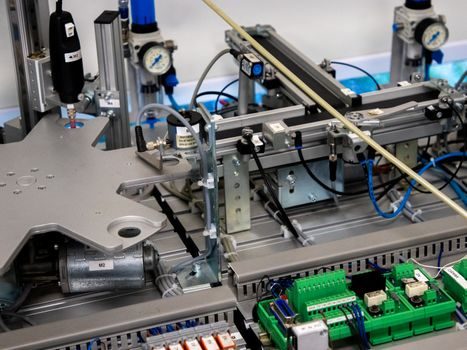
Dynamic behaviour is set by the moving mass of the core, the spring return (if any), and the excitation frequency. A spring-returned industrial LVDT such as the Capetti PZ67A-50 (50 mm stroke) is rated for displacement speed up to 3 m/s standard and 5 m/s max, displacement force ≤ 20 N, and vibration survival of 5–2000 Hz at 0.75 g — published numbers that any hydraulic or test-rig spec should require as a baseline [S1]. Capetti's IP-67 PT50IP variant extends the same 50 mm geometry to outdoor service for civil and geotechnical sites, illustrating that the mechanical envelope, not the electronics, usually determines the environmental rating [S1].
For buyers integrating LVDTs into OEM machines, the typical failure modes are: (1) core bending on long-stroke units > 250 mm, (2) bore misalignment causing side-load wear on the bearings, (3) cable failure at the gland under continuous flexing, and (4) temperature drift when an AC LVDT is paired with a low-grade oscillator. Most published LVDT bodies use stainless-steel housings and operate across −40 °C to +85 °C or wider, with IP-65 to IP-67 sealing the practical ceiling for field-deployed units [S1][S6].
Vendor Tiering and Sourcing Map for 2026
For procurement teams, the practical shortlist in 2026 resolves to three tiers. Tier 1 (European / US instrument-grade, longer lead, higher unit cost): LVDT.co.uk (UK, 25-year track record, 1–2 week expedited delivery available, 3–4 weeks standard), AMETEK Factory Automation, Brüel & Kjær / Brüel & Kjær Vibro, and ASM Sensorik — best for aerospace, defence, and metrology where a calibration certificate and ISO 17025 traceability are non-negotiable [S1][S3]. Tier 2 (Chinese OEM cluster, 0–50 mm and 0–100 mm, 4–20 mA / 0–10 V output, −40 °C to +85 °C, ±0.1 % FS linearity): Soway Tech, Wuxi Houde Automation, CoreMorrow (E75 0–1 mm sub-micron niche), and Shanghai Xingyu — competitive on stroke-for-stroke pricing, typical lead time quoted in days rather than weeks [S2][S4][S5][S6]. Tier 3 (project / geotechnical): specialist houses like the Nova TR50/FS50 crack-meter and TRF100 wire displacement transducer for landslide and structural-health monitoring, where 0.1 % linearity and 40 V supply are field-validated [S1].
For an OEM volume build, the differentiator is rarely the LVDT body itself — it is whether the manufacturer will hold a calibration certificate, expose the excitation-frequency trim, and ship a signal conditioner that mates cleanly with your existing PLC analogue input. For sub-micron or cleanroom duty, however, a [laser displacement sensor](ANCHOR) is the more common 2026 choice; the cross-technology decision is mapped in Laser vs LVDT Displacement Sensor: Selection Map for Industrial Buyers, and the broader transducer comparison is covered in Displacement Sensor vs Laser Displacement Sensor: Spec Decision Map.
Selection Criteria Comparison: AC LVDT vs DC LVDT vs Laser Triangulation
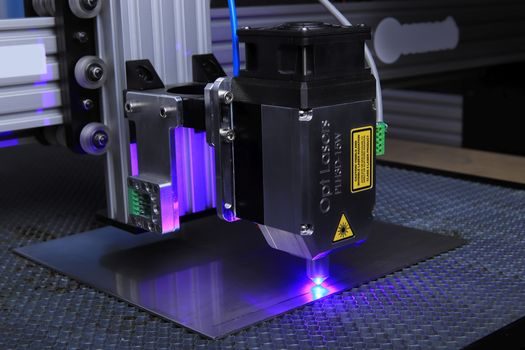
On four buying criteria — environmental robustness, sub-micron resolution, installed cost per channel, and stroke length — the three main options sort cleanly. AC LVDTs are the strongest on environmental robustness (IP-67, −40 °C to +85 °C, immune to dust, oil, and water) and on stroke length (units to ±500 mm are routine), with linearity in the ±0.1 % to ±0.5 % FS band and resolution typically 0.1–1 µm [S1][S3][S6]. DC LVDTs trade a small amount of thermal performance for the convenience of 0–10 V / 4–20 mA direct connection, at the same linearity band, and dominate the 0–100 mm industrial actuator-feedback slot [S2][S4]. Laser triangulation displacement sensors offer the best sub-micron resolution (0.02 µm repeatability and 0.02 % FS linearity are published for the ST-P series 2026 line) and zero contact force, but they require a clean optical path and lose accuracy on shiny or transparent targets — see the spec-banded comparison in Displacement Sensor vs Laser Displacement Sensor: Spec Decision Map and the LVDT sensor reference for transducer fundamentals.
Who Should NOT Buy an LVDT in 2026
An LVDT is the wrong tool when (a) the target is moving at > 5 m/s with sub-millisecond dynamic requirements — a laser interferometer or an optical encoder is the correct fit; (b) the measurement is rotary or angular — use a resolver or an angular encoder rather than a mechanical linkage to an LVDT; (c) the duty is sub-100 nm resolution on a clean, accessible surface — a confocal displacement sensor or a laser displacement sensor will outperform an LVDT at comparable cost; or (d) the installation is inside an explosive atmosphere requiring ATEX/IECEx-certified hardware, in which case you must specifically filter the shortlist for ATEX/IECEx-marked DC LVDTs rather than assuming any industrial LVDT body is certified — this filter is independent of IP rating and must be checked on the manufacturer's certificate, not inferred from the datasheet. For the broader displacement sensor selection logic beyond LVDT, including guide-rail and bearing-integrated transducers, the linear guide and crossed-roller guide references cover the mechanical-side decisions that usually drive the sensor choice in the first place. [S1]
Trackable signals for the next quarter: (1) whether the listed product lines from major Chinese OEM LVDT vendors (Soway, Houde, Shanghai Xingyu) continue to specify 4–20 mA analog output on their 0–50 mm industrial sensors, as documented for Shanghai Xingyu's 0–50 mm range; (2) whether the 88-vendor DirectIndustry displacement sensor index changes by end-2026. Both can be checked against the DirectIndustry displacement-sensor index and the named vendors' product pages without subscription.