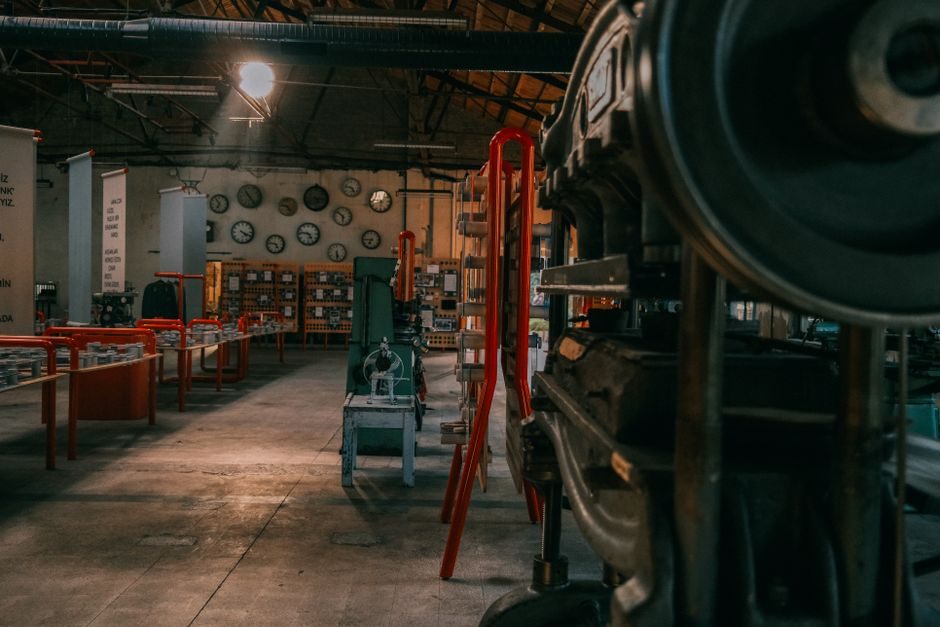
Quoted FOB-China price bands for machine tools in 2026 sit across three orders of magnitude depending on axis count, control architecture and structural mass: bench-top CNC milling centers are listed at US$40,000-70,000 per piece [S4], CNC vertical lathes and turning-grinding cells at roughly US$50,000 [S5], and 100-300 ton CNC hydraulic press brakes at US$33,200-33,600 per set [S6].
The dispersion is dominated by spindle count, travel size, CNC versus linear-control electronics and the OEM's certification tier, not by steel or copper content alone. The Business Research Company's January 2026 *Metalworking Machinery Market Report* segments the addressable market into Machine Tools, Metal Forming Machinery, Metal Cutting Machinery, Finishing & Surface Treatment Machinery, and Cutting Tools & Tooling Systems, confirming that accessory and tooling spend is reported as a separate line item from the host machine [S2]. For reference data on the host equipment itself, the cutting machine and tool-die-steel encyclopedia entries provide the spec vocabulary used in the bands below.
Where the 2026 Price Floor Sits by Machine Class
Small-footprint CNC milling centers with linear (non-full-CNC) control and ISO 9001 fabrication documentation are listed on Made-in-China.com in the US$40,000-70,000 range with 1-piece MOQ, anchoring the entry-level machine-tool import price [S4]. CNC vertical lathe turning-grinding cells sized for butterfly-valve work cluster near US$50,000, again at 1-piece MOQ, with quoted configurations that bundle grinding and turning in a single setup to displace two standalone machines [S5].
Sheet-metal press brakes in the 100-300 ton class with Delem DA53T/DA66T/DA69T controllers, supplied by Jiangsu-based audited manufacturers, list at US$33,200-33,600 per set, putting heavy-tonnage forming capability below the entry-level 3-axis milling center on a dollar basis [S6]. The inversion is structural: forming force in tons scales with welded-steel frame mass and hydraulic ram diameter, not with CNC electronics, so a 200-ton press brake is dominated by iron and hydraulic content rather than control hardware. Related reading on structural frames and the way linear guide selection shifts a machine's usable envelope is collected in the linear-guide sourcing guide.
Accessory and Tooling Floors: Where Margin Recovers
Machinery tool accessories quoted by Shaanxi, Zhejiang and Chongqing manufacturers span US$200-1,000 per piece, with Xi'an Qiyu listing a US$200-1,000 range at 100-piece MOQ and Chongqing UG Heavy Machinery posting a fixed US$236.20 list point at 1-piece MOQ [S3]. These are the components that fail first in service — chucks, indexers, tool-holders, rotary unions — and their pricing tracks specialty-steel grade and balancing tolerance more than CNC content.
Turning-tool sets and inserts are quoted as part of integrated machine packages rather than as standalone SKUs in the surveyed 2026 listings, but the pressure on tool consumption per part is the main driver of total tooling cost per shift [S5]. ISO 9001 fabrication certification is the recurring audit mark on Chinese mill and lathe suppliers, and it appears on essentially every Diamond-Member listing on Made-in-China.com in 2026, including Foshan Guheng and Qingdao Star Machine Technology [S4]. For a deeper look at the way platform metadata — Diamond Member status, Audited Supplier flags, Secured Trading — actually shifts negotiability on a 1-piece MOQ, see the maker-cluster analysis on floor grinder suppliers 2026.
AI Capex Pull vs. Industrial Capex Push: The Demand Backdrop
T. Rowe Price's 2026 Global Market Outlook flags AI-driven capex as the dominant 2026 investment narrative, with stretched valuations in AI sectors raising bubble concerns but with the broader industrial economy positioned to benefit from "enduring risks" requiring non-AI infrastructure spend [S1]. For machine-tool vendors this matters directly: AI data-center buildouts pull PCB drilling, server-rack sheet metal and precision aluminum cutting into capacity, and the suppliers that can quote lead times under eight weeks are absorbing the overflow.
The Business Research Company report sizes the metalworking machinery market for 2026 and breaks the addressable spend into conventional (manual) and CNC control types, with machine tools and metal-cutting machinery as the two largest sub-segments by revenue [S2]. The headline number is a 150-page paid report at US$4,490, and the public summary confirms the segment split but not the regional split, so any claim about country-level market share for 2026 should be treated as directional, not absolute. Comparable structural-iron and structural-mechanical demand patterns are documented for hydraulic accumulators, where bladder, piston and diaphragm types split along the same manual-versus-CNC capex axis.
Selection Criteria: What Actually Moves the Quoted Number
Four levers dominate the 2026 quote on a 1-piece MOQ: (1) axis count and CNC sophistication, where full-CNC and five-axis simultaneous mills price 2-3x above linear-control bench mills in the same frame size [S4]; (2) tonnage and bed size, where 300-ton press brakes with Delem DA69T controllers are quoted inside the US$33,200-33,600 band, suggesting the controller is bundled rather than priced separately [S6]; (3) certification stack, with ISO 9001 effectively a floor and CE/UL typically appearing on export-packaged units; (4) MOQ and supplier tier, where 1-piece MOQ from a Diamond-Member audited supplier carries a premium over 10-piece MOQ from a non-audited mill.
For the buyer building a 2026 sourcing decision tree, the practical filters are: confirm ISO 9001 on the certificate scan, confirm Diamond-Member or Audited-Supplier status on the platform, confirm the CNC controller model in writing (Delem DA53T/66T/69T for press brakes, FANUC/Mitsubishi/Siemens for mills and lathes), and lock the spindle or ram duty cycle in writing as a separate line item. The same audit pattern — controller model in writing, certification scan, supplier tier check — applies to the electric pallet truck segment, where the headline FOB price is similarly uninformative without the spec sheet.
Limits, Failure Modes and What the 2026 Quote Does Not Cover
Platform listings on Made-in-China.com in 2026 consistently omit three line items that reappear on the pro-forma invoice: CNC controller licensing and retrofit (FANUC and Siemens are typically sold separately from the machine bed), customs HS-code duty in the destination market, and installation/commissioning at the buyer's site. A US$40,000-70,000 CNC mill becomes a US$55,000-95,000 landed asset once a FANUC 0i-MF, a 3-day commissioning visit and EU or US import duty are added; the platform price is the machine bed and spindle, not the working cell. [S1]
The T. Rowe Price outlook explicitly warns that "rapid capital deployment has led to stretched valuations in AI sectors" [S1], and that signal travels into the machine-tool supply chain because the same contract manufacturers that quote CNC mills also quote precision aluminum and PCB-drilling capacity for hyperscale data-center tenants. Lead-time slippage on standard mills is the most likely 2026 H2 disruption; a quote held for 30 days past validity should be treated as a soft allocation, not a binding price. Cross-reference sourcing signals for adjacent heavy industrial categories are collected in the concrete pump truck suppliers 2026 and electric pallet truck suppliers 2026 guides, which track the same platform-metadata and MOQ-floor pattern.