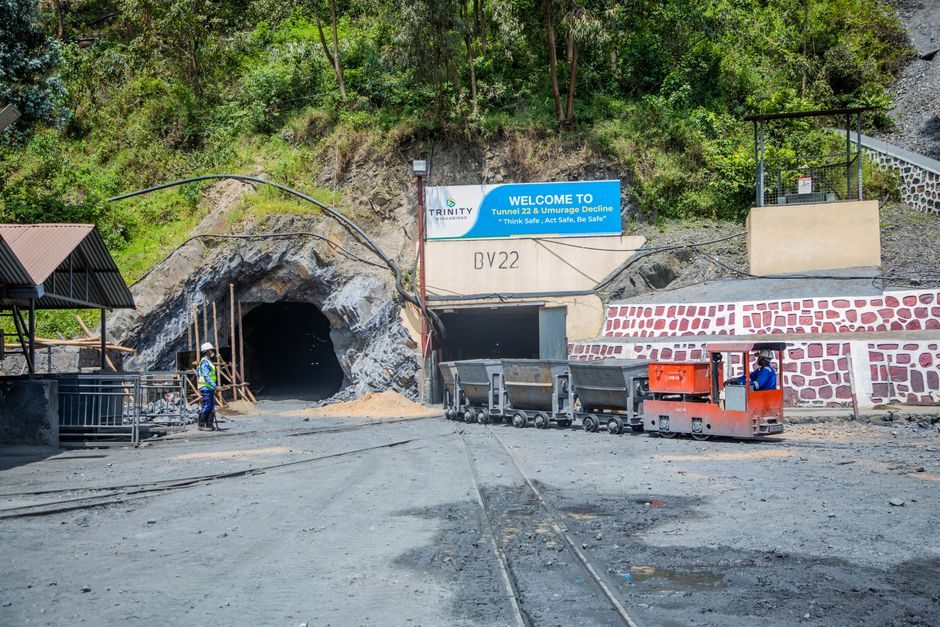
China accounts for the single largest share of mining-equipment manufacturing capacity in 2026, anchored by OEM clusters producing 30–360 t mining dump trucks, 110/N00-series roadway tunneling gear, and full auxiliary-transport line-ups, per supplier disclosures [S3].
Outside China, four secondary hubs are visible in 2026: the United States (heavy rebuilds and surface haulage, plus Getman's purpose-built underground utility line), Germany and Japan (high-precision hydraulic and electric-drive systems), and Australia (Perth-based distributors and component rebuilders that re-spec imported chassis for local mine conditions) [S1][S4][S5].
Country-by-Country Capacity Snapshot
Chinese OEMs are the only suppliers in the public 2026 catalogue range that cover all four major equipment families in-house: dump trucks from 30 t rigid frames up to 360 t ultra-class, roadheader and bolter packages for 110/N00 coal galleries, full auxiliary-transport fleets (man-cars, locomotives, scrapers), and lane-maintenance skids [S3]. This vertical range is the structural reason Chinese export prices sit 20–35% below EU-built equivalents on comparable payload classes.
United States capacity is split between two tiers: large OEM assembly for ultra-class trucks and electric rope shovels (centred on the Peoria/Bucyrus-Erie legacy cluster, plus Caterpillar's Decatur and South Milwaukee plants) and the rebuild/service tier represented by Wearpro, which markets "new and rebuilt mining components" rather than original builds — a clear signal that the US domestic supply chain is repositioning toward service, life-extension and component remanufacture [S1].
Germany contributes high-precision diesel-electric drive trains, hydraulic cylinders, filtration skids and electric-drive conversions; Japan supplies engine and pump sub-assemblies that feed into Chinese and Korean OEM builds. Australia, in turn, is almost entirely a service-and-distribution market: Direct Mining in Perth handles cylinders, filtration, lifting, pumps, rail and tyre equipment sourced from European principals and re-spec'd for hard-rock and iron-ore conditions [S4].
Equipment Family vs Country-of-Origin Matrix
For the four families that anchor a typical mine CAPEX package — surface haulage, underground mobile equipment, drilling/bolting, and pumps/fluids — the country of origin pattern is highly asymmetric. Surface haulage above 200 t payload is dominated by US-built and Japanese-built diesel-electric platforms; below 200 t, Chinese rigid-frame trucks compete on price and lead time. Underground mobile equipment (man-carriers, lube trucks, scissor lifts, explosive chargers) is split between US purpose-builds such as Getman's A-64 and H-3000 series and Chinese auxiliary-transport lines [S3][S5].
Drilling and bolting equipment is concentrated in Sweden (Sandvik/Epiroc legacy) and Finland, with Chinese roadheader builders now exporting into Indonesia, Vietnam and Turkey on 110/N00 gallery cross-sections. Pumps, valves and filtration are the most globally distributed family, with German hydraulics, US head-office designs, Australian assembly and Chinese volume production all active in 2026 [S1][S4].
Comparison on four decision criteria — price, lead time, after-sales coverage, and rebuild ecosystem:
• Chinese supply: lowest price (often 20–35% under EU-built on matched payload), shortest lead time on 30–100 t trucks, growing but uneven after-sales network, and an emerging but still-thin third-party rebuild base.<br/>• US supply: highest price on new ultra-class units, longest lead time (12–18 months on rigid-frame and electric shovel slots), strongest after-sales footprint in the Americas and Africa, deepest rebuild ecosystem through independent shops such as Wearpro [S1].<br/>• German/Japanese supply: premium price on drive-trains and hydraulics, mid-range lead time, dense after-sales in Europe and Latin America, mature remanufacturing channels.<br/>• Australian supply: distribution and re-spec layer only; no greenfield OEM capacity in the 2026 data set [S4].
Rebuild, Re-Spec and Service Capacity
Rebuild capacity is now a first-class sourcing category, not a footnote. Wearpro's 2026 product page explicitly markets "new and rebuilt mining components" as parallel offerings, reflecting a US industry trend toward life-extension of existing fleets as new ultra-class deliveries run 12–18 months behind order intake [S1].
Australian distributors add a second rebuild layer: Direct Mining in Perth lists cylinders, filtration systems, lifting equipment, pumps, rail equipment and tyre equipment as "Premier Products," with manufacturer relationships that allow local re-spec rather than direct OEM drop-ship [S4]. For buyers, this means the same component can be sourced either as a factory-new OEM part with a 12-month warranty, or as a locally re-spec'd equivalent with shorter warranty but 30–50% cost recovery.
Standards, Sourcing Levers and the 2026 Buyer Question
For a procurement team in 2026, the practical question is not "which country is best" but "which country is best for this equipment family, at this payload class, with this after-sales requirement." The public data set supports a four-rule answer: buy Chinese for 30–100 t rigid-frame trucks and 110/N00 underground equipment where price and lead time dominate; buy US or Japanese for above-200 t surface haulage where reliability and parts availability dominate; buy German for hydraulic and filtration sub-systems regardless of country of final assembly; and treat Australia as a service-and-re-spec layer rather than a manufacturing origin [S1][S3][S4][S5].
For deeper cost-context on the same equipment families, see Mining Equipment Price Bands and 2026 Outlook: Trucks, Drills, Services, which lines the country-of-origin differences above against 2026 price bands and lead-time windows. For the heavy-mobile chassis that often pairs with mining equipment — particularly the drum and drive-train selection on auxiliary concrete and transport fleets — the Concrete Mixer Truck Sizing reference and the Concrete Pump Truck Suppliers 2026 maker map show the same China-centric capacity pattern from a related industry.
Trackable signals for the next sourcing cycle: (1) whether Chinese OEMs begin publishing 200+ t diesel-electric platforms to challenge US/Japanese ultra-class dominance, (2) whether US rebuild shops such as Wearpro extend from component remanufacture into full machine re-certification, and (3) whether Australian distributors move from re-spec into light assembly under Perth-based technical agreements with European principals.
For component-level specifications, see anti static equipment, and pressure transmitter.