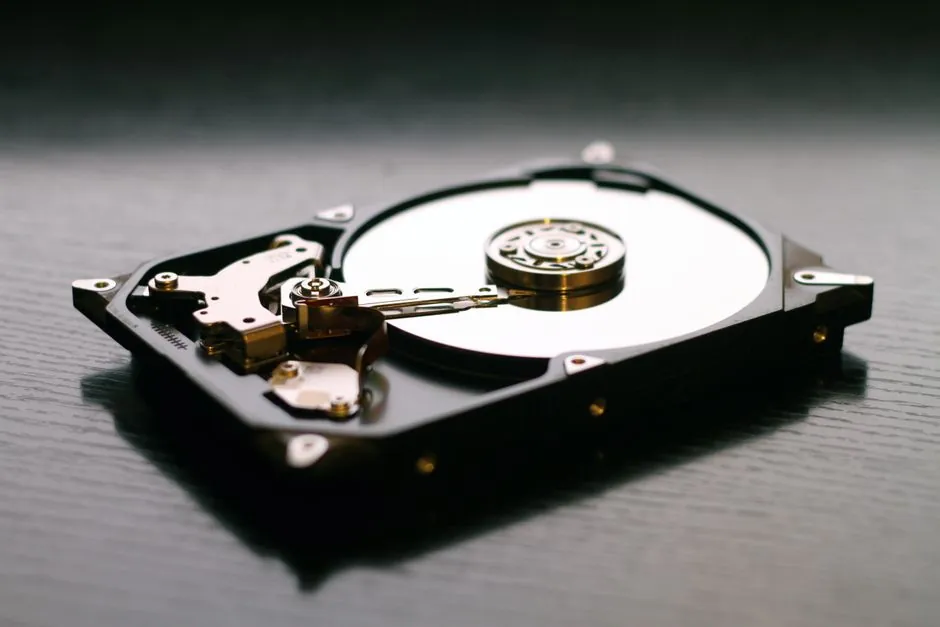
What an EOL notice changes in a long-life system
An end-of-life notice means the manufacturer no longer intends to sustain normal production or support for the affected part, not that the installed component fails that day. In asset management, EOL can cover hardware or software that is unsupported, no longer maintained, or no longer usable for its intended purpose [S3].
For a 20-year industrial asset, the notice creates a mismatch between component life and system life. The published component-obsolescence analysis identifies products requiring 15–30 years of production or service, including industrial controllers, medical devices, automotive systems, and aerospace electronics, as structurally exposed when components age out sooner [S5].
The practical trigger is the date from which replacement supply, qualification, and installation cannot be deferred. That date must be calculated from the remaining asset life, not from the notice publication date alone. A 20-year design remaining in service for 12 years needs a component plan covering at least 8 years, while the installed asset approaching 20 years may instead require a controlled retirement, modernization, or spare-part strategy [S3][S5].
Build the asset and dependency inventory first
The first control is a complete inventory of every component and subassembly entering retirement, because unidentified equipment cannot be assigned a disposition, security state, or replacement route [S3][S4].
Assets entering the retirement process should first be identified.
Inventory age, functionality, and maintenance history are established screening factors for assets approaching EOL [S3]. Unsupported hardware and software may no longer receive updates or patches, exposing systems to threats.
For a 20-year asset, include three downstream layers: the obsolete part, the module containing it, and the system dependent on that module. A low-cost replacement is not viable if it changes a form factor, firmware, safety behavior, communications protocol, environmental rating, or maintenance procedure. The guide's seven steps for managing IT asset EOL include creating an IT asset inventory, adding EOL dates to the inventory, and performing a risk assessment.
Quantify the remaining 20-year demand
Demand must cover both installed population and planned builds, not only immediate repairs.
Add a contingency only where failure history or field conditions justify it; an arbitrary percentage creates excess inventory without reducing technical risk.
Before placing the final order, test the total against storage life, shelf-life restrictions, calibration requirements, and obsolescence risk for the replacement components themselves. If the asset family is expected to remain in service for 15–30 years, engaging specialized aftermarket suppliers that maintain legacy inventory may be necessary [S5].
The related question of How Much Does Last-Time Stock Cover a 10-Year Life? becomes a lifecycle exercise here: stock should cover the calculated need for the remaining life, not the original qualification certificate or a generic five-year assumption.
Act inside the discontinuation timeline
The usable response window is short.
The buying decision should therefore be complete before the last-time-buy deadline, not when stores become difficult to source.
Notification is itself a weakness. This makes supplier monitoring, resale-market intelligence, and scheduled design reviews part of the control system, not optional administrative work.
For products that need to remain in production or service for 15–30 years, component aging may require mitigation because components are reaching end of life faster than the systems that depend on them. That route still requires documented traceability, electrical and mechanical equivalence, regulatory review, and customer approval where the equipment is safety-critical or contract-controlled.
Compare continuation, replacement, and retirement

Continue only when residual life, failure trend, and supportability justify it. Replace when the remaining demand can be covered and a qualified alternative removes the obsolete dependency. Retire when compatibility, security, maintenance cost, or component availability makes continued operation indefensible [S3].
On remaining service life, an existing 20-year asset with many years left generally favors a planned last-time buy or qualified replacement because deferring creates a second EOL event. An asset near retirement may favor controlled decommissioning if spare stock would exceed demand. On qualification burden, an exact drop-in replacement is preferable to a redesign, but no alternate should be approved without verification. On operating risk, unsupported parts lose access to security patches and can introduce exploitable vulnerabilities, while remaining hardware can create compatibility conflicts during upgrades [S2].
The economic comparison should include component price, engineering labor, testing, spares, shelf life, downtime, cybersecurity exposure, and the labor cost of retaining obsolete equipment. This is not limited to IT assets: the same lifecycle principles apply to controllers, communications hardware, power electronics, sensors, and embedded equipment, provided each item is assessed against its specific failure and support conditions.
Qualify replacements before the buying deadline
A proposed alternate must close every functional gap exposed by the EOL notice. The engineering file should compare electrical ratings, package dimensions, pinout, operating temperature, storage temperature, shock and vibration limits, moisture sensitivity, EMC behavior, tolerances, and lifecycle certification. [S5]
For firmware, software, and field-programmable components, qualification also covers bit and byte compatibility, configuration files, boot behavior, watchdog behavior, communication integrity, and rollback capability. For safety-related assets, the change process must follow the applicable customer, engineering, and regulatory requirements without assuming that a generic “equivalent” label provides approval.
Qualified alternates reduce obsolescence exposure only after approval. Organizations need traceability from the notice, through engineering deviation or alternate-part approval, to procurement release and installed serial number. The related control on How OEMs Control Customer Approval for Alternate Parts is directly relevant when a replacement changes a controlled configuration.
Control retirement, spare use, and residual risk

Every retired unit needs a documented disposition: redeploy, repurpose, recycle, or securely dispose. Secure retirement requires asset identification before removal, removal control, data sanitization where applicable, and evidence that the unit has left the active maintenance inventory [S4].
Spare use should follow the same configuration discipline as the installed population. Do not mix revisions, firmware levels, or unapproved substitutes in one spare pool. Record each issue against the component’s serial or lot information, installation date, failure mode, and remaining calibration interval.
Retirement cannot close the risk while unsupported equipment remains connected. EOL hardware and software can become entry points for attackers after vendor updates and security patches stop [S2]. Isolate retired assets from operational networks, remove unnecessary control paths, and document any device that must remain connected because a safety or continuity function still depends on it.
Financial-accounting treatment is separate from engineering retirement. IRS Publication 946 explains that depreciable property has a determinable useful life and is retired from service when no longer used in the same manner; land improvements have a 20-year class life, with a 15-year GDS recovery period or 20 years under ADS [S1]. An accounting life change does not reset the physical component’s obsolescence schedule, so depreciation and technical lifecycle records should remain linked but governed by separate decision rules.
What trackable signals should remain open
The control plan should leave four measurable signals open: days remaining to last-time buy, years of demand covered by secured stock, number of affected installations without an approved disposition, and percentage of obsolete critical parts with a qualified replacement [S5].
A 20-year asset remains manageable when every EOL notice produces a dated response before the final-order window closes. The first checkpoint is procurement confirmation that remaining demand has been calculated, funded, and placed. The second is engineering approval of the replacement or retirement route, with no unreviewed alternate left inside the safety or operating baseline.