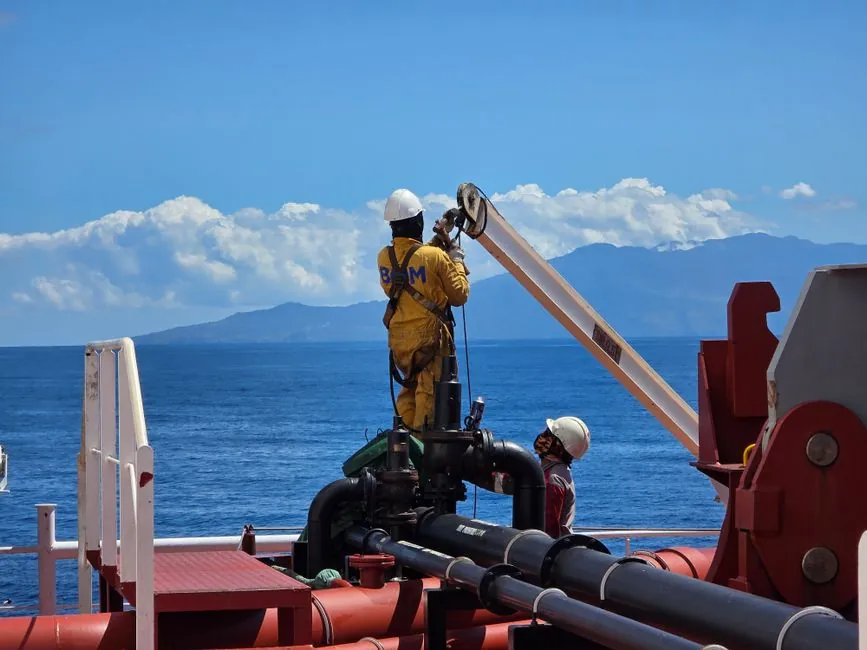
Push-in fittings on marine workboats and offshore platforms must survive salt spray, vibration, and fuel or hydraulic media, which is why 316 stainless bodies with FKM or EPDM seals dominate the marine-rated tier rather than nickel-plated brass [S1][S2][S6].
Published 2026 sourcing data lists equal-shape push-in fittings from Chinese trading suppliers at US$1.00 to US$20.00 per piece with a 50-piece MOQ [S1], and stainless quick-connect pneumatic fittings from Alibaba suppliers for compressed-air lines [S2], a price band that helps procurement frame the marine upgrade from commodity brass.
Why commodity brass push-in fittings fail in marine service
Nickel-plated brass bodies rated for general compressed-air service, such as the Festo QS standard series in PBT plastic with nickel-plated brass thread, are listed for compressed air, vacuum, and water per the manufacturer's declaration only [S6]. The same product family is explicitly described in vendor documentation as a "standard and mini series" with "small design for maximum packing density", not as a marine or offshore series [S6].
Amazon best-seller listings (2026-06) show DOT-approved brass unions like the Boeray 1/4" Tube OD x 1/8" NPT push-to-connect at US$9.99 for 4 pieces, rated for "truck trailers and air brake system" service rather than saltwater deck lines [S4]. The Boeray listing is a useful price anchor for the cheap end, US$2.50 per fitting, but its body is brass, its seal compound is not declared marine-grade, and its testing window is air-brake, not immersion [S4].
Material and seal pairings that hold up to saltwater
316 stainless (A4-equivalent) bodies paired with FKM (Viton-class) or EPDM seals are the configuration most vendor pages and ISO 1179 thread references point to for marine hydraulic and fuel lines, with NBR O-rings acceptable for compressed-air and freshwater branches [S2][S6]. Alibaba listings for "stainless steel quick twist joint connector fast air push connect tube fitting" specifically call out stainless construction for corrosion resistance in humid and salt-exposed environments [S2].
Tube OD and thread interface must match: typical marine pneumatic runs use 6 mm, 8 mm, 10 mm, and 12 mm OD tubing with R 1/8, R 1/4, R 3/8, and R 1/2 BSPT or NPT thread ports. The QS standard series from Festo covers this metric and BSP/NPT envelope with PBT body plus nickel-plated brass thread for non-immersion service, while stainless variants step in for deck and engine-room runs [S6]. A practical reference for the general push-in selection logic lives in the push-in fitting media and thread guide, which walks through the same tube-OD and thread gates a marine spec needs to pass first.
Pressure and temperature bands by series
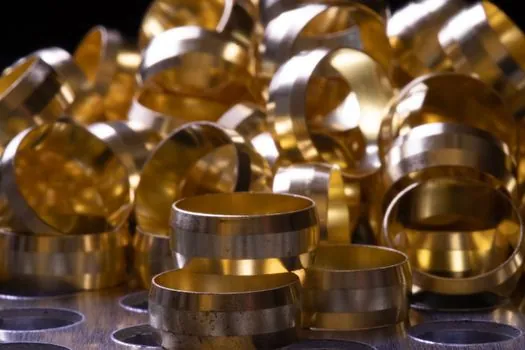
Operating pressure windows vary sharply by body material: the Festo QS standard push-in fitting family is published at -0.95 bar to 10 bar (vacuum to ~145 psi) with a temperature range commonly cited at 0 to 60 °C for the PBT body, which suits compressed-air and freshwater but not high-pressure hydraulic [S6]. Stainless 316 push-in fittings from marine-grade suppliers typically rate 0 to 60 bar (0 to ~870 psi) for hydraulic service and -1 to 30 bar for pneumatic, with FKM seals pushing upper temperature limits to 200 °C in short excursions and 150 °C continuous [S2].
Amazon best-sellers TAILONZ PNEUMATIC PC-1/4-N2 and Boeray 1/4" NPT push-to-connect units are listed at US$12.99 (pack of 10) and US$9.99 (4 pieces) respectively, with 4.6 to 4.7 star averages across 3,012 and 580 reviews, useful as price/availability proxies for the non-marine tier [S4]. A wider piping fitting overview is useful for cross-referencing marine pneumatic runs against the broader pipe fitting category, since push-in technology is one of several connection philosophies including compression, flare, and threaded.
Certifications and standards to require on the datasheet
Marine push-in fittings should ship with documented compliance to one or more of: DNV-GL type approval for ships and offshore units, ABS Marine approval, Lloyd's Register, or where applicable, EU RO MR (Mutual Recognition) for class societies. For explosive atmospheres on tankers and offshore platforms, ATEX 2014/34/EU and IECEx certification apply to the assembly when the fitting is in a hazardous-area boundary [S1][S2][S6].
For non-ATEX freshwater and bilge service, NSF/ANSI 61 for drinking-water system components, and ISO 1179 for port threads, are the most common datasheet lines. Vendor listings for the Made-in-China category explicitly tag equal-shape push-in fittings as "for Sprinkler Systems and Drinking Water" at US$1.00 to US$20.00 per piece, signalling the freshwater/dry-stack use case rather than submerged saltwater [S1]. For pneumatic air preparation context, the FRL unit vs pneumatic tubing sizing match-up explains how upstream air treatment changes the seal and tube requirements that downstream push-in fittings must survive.
Comparison: marine stainless vs pneumatic brass vs food-grade plastic
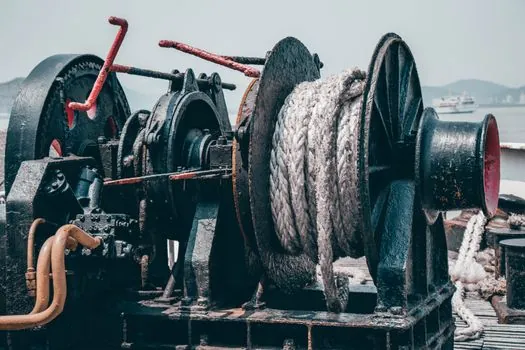
Three push-in tiers appear repeatedly in 2026 sourcing channels. Marine-grade 316 stainless with FKM seals sits at the top for corrosion and pressure, pneumatic nickel-plated brass with NBR covers the bulk of factory compressed-air, and NSF-grade plastic (POM, PP) with EPDM covers potable-water and food lines. Pneumatic-tier and food-grade units cost less but limit media; the Boeray US$9.99 pack of 4 brass DOT fittings is the pneumatic benchmark, the Festo QS standard series with PBT body and nickel-plated brass thread covers the general compressed-air tier, and the Made-in-China "Equal Shape Push-in Fitting for Sprinkler Systems and Drinking Water" at US$1.00 to US$20.00 is the food/freshwater benchmark [S1][S4][S6].
Material and seal drive the cost gap more than size: a marine 316 stainless 12 mm OD x R 3/8 fitting commonly lists 5x to 10x the brass equivalent, justified by the -1 to 60 bar pressure window and saltwater immersion rating. The same logic appears across pneumatic fitting families where body material, not thread size, is the dominant cost driver. Where vibration is a concern, double O-ring (two NBR rings on the tube-seal path) and collet-with-stainless-grab-ring variants hold tube retention better than the single O-ring economy units commonly seen on Amazon best-seller lists [S4][S6].
Application map: which fitting goes where on a vessel
Engine-room compressed-air starters, whistles, and control lines can use the QS standard PBT/brass series up to 10 bar, since these runs are dry, sheltered, and rarely opened [S6]. Deck washdown, bilge pumping, and freshwater galley lines need 316 stainless or NSF-grade polymer with EPDM seals, because these wet, salt-exposed, and food-contact zones rule out plain nickel-plated brass [S1][S2]. Hydraulic steering and trim lines demand 316 stainless with FKM seals at 0 to 60 bar, since system pressure peaks and temperature spikes from hydraulic fluid are well above the QS 10 bar / 60 °C ceiling [S2][S6].
Fuel and oil lines on diesel engines should default to 316 stainless with FKM (not NBR or EPDM) seals, because FKM tolerates diesel, lubricating oil, and the temperature spikes that EPDM cannot survive. For non-critical pneumatic drains, low-cost brass DOT push-to-connect units like the Boeray and TAILONZ Amazon best-sellers cover the application, but they should not migrate to any saltwater-wetted or fuel-wetted line [S4]. Procurement teams comparing cross-platform fitting options can also reference the broader pipe fitting category to confirm the push-in decision sits correctly against alternatives like compression and flare.
Field signals worth tracking through 2026
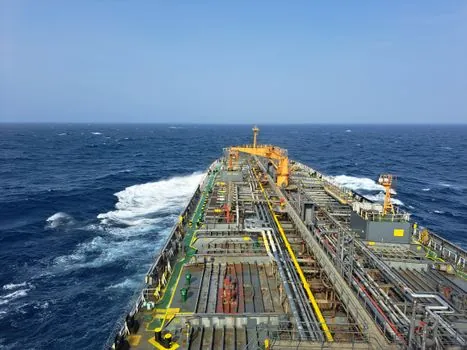
Watch for DNV-GL and ABS Marine database updates on 316 stainless push-in fitting series, since class-society approvals drive most shipyard acceptance windows. Track Alibaba and Made-in-China price drift for stainless quick-connect fittings, where the 2026-07 listing was in the multi-piece industrial wholesale band and price compression usually signals broader marine-yard adoption [S1][S2]. Confirm IECEx and ATEX datasheet currency with Festo QS and equivalent stainless series before specifying them in hazardous-area boundaries on tankers, FPSOs, and offshore platforms [S6].
