
Marine valve limit switch boxes can provide open and closed position signals from pneumatic or electric quarter-turn actuators using mechanical switches or proximity-sensor outputs, with IP67 enclosures available for outdoor or washdown environments [S4].
The selection must cover actuator interface, output voltage, contact rating, salt-corrosion exposure, enclosure protection, and hazardous-area classification, because a properly moving valve still fails its control function if its position cannot be confirmed [S1][S3].
Marine limit switch box function and scope
A valve limit switch box is mounted on a pneumatic or electric actuator and converts shaft movement into discrete electrical signals for a PLC, DCS, or local panel [S4]. In a typical quarter-turn installation, the actuator rotates the valve stem through 90 degrees, mechanically actuating a cam-operated switch or triggering a proximity sensor at the selected travel points [S4].
The standard marine package normally provides separate open and closed contacts, an adjustable or mechanically set switching point, a terminal block for field wiring, and local visual position indication [S1][S3]. The visual indicator may use red for open and green for closed, although the project legend must define the colors rather than relying on a generic convention [S4].
The primary outputs are end-of-travel confirmation, interlock and permissive logic, and local operator indication [S1]. An open/closed box is appropriate for on/off valves. It is not the correct device for a modulating control valve requiring continuous position feedback; that duty requires a valve positioner or separate position transmitter [S1][S2].
Actuator motion and mechanical interface
Start with the actuator, not the switch box. Pneumatic and electric quarter-turn actuators expose different shafts, couplings, mounting interfaces, and travel arrangements, while linear actuators require a mechanism suited to linear motion [S2][S4]. The limit switch box must be mechanically compatible with the actuator output, and its adjustment range must cover both fully open and fully closed positions without operating beyond the permitted travel.
For quarter-turn valves, the operating sequence is direct: a 90-degree actuator stroke rotates the switch-box cam shaft, and the cam actuates the switch at each selected position [S4]. Adjustable cams allow the switching points to be fine-tuned after installation [S4]. On linear valves, the sensing arrangement and mounting hardware must match the actuator rather than imposing a quarter-turn cam arrangement.
Orientation also determines the reported meaning of each contact. Before installation, define whether the first switch means open, closed, or a permissive state, then verify it against actual valve movement [S1]. This matters because a limit switch may remove actuator power at end of travel, while a position switch is used specifically for open and closed status reporting [S9].
Mechanical, inductive, reed, and NAMUR options
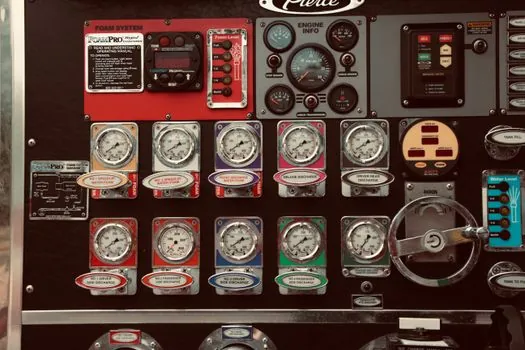
For exposed marine machinery, vibration resistance and enclosure integrity are more important than a low component price.
Proximity sensors provide an alternative to mechanically operated switches in a valve limit switch box and can produce electrical feedback to a PLC or other control system [S4].
Marine enclosure, material, and wiring requirements
For outdoor valves and washdown zones, specify an IP67 enclosure where it matches the installation condition [S4]. The enclosure, shaft, fasteners, cable entries, and indicator must be compatible with salt-laden marine air. The supplied research establishes the suitability of IP67 for outdoor and washdown environments, but does not provide a universal alloy grade or coating thickness, so those values must come from the selected manufacturer's product data rather than being assumed [S4].
For wiring, each dry-contact channel may require a common, normally open, and normally closed terminal, with the PLC input connected to the required contact [S4]. The switch contacts must be rated for the actual input voltage and load. A common 24 VDC input arrangement can suit dry contacts, but the supply, input current, and contact rating must be checked rather than inferred solely from the nominal control voltage [S4].
Certification and hazardous-area constraints

The hazardous-area requirement is a separate selection gate. The mechanical enclosure, switch or sensor construction, terminal arrangement, and installed wiring configuration must all fall within the certification applicable to the valve location. Inductive and NAMUR options require particular attention because their power supply, barrier arrangement, and entity parameters determine safe installation [S1].
For a normal marine deck application without a classified hazardous area, IP67 enclosure integrity, corrosion resistance, and correct electrical output are the primary requirements [S4]. For fuel, cargo, or chemical systems, request the exact product certificate and verify the marked type of protection, approval system, gas group or dust qualification, temperature class or surface-temperature limits, and ambient-temperature range against the installation.
The research identifies NAMUR output to IEC 60947-5-6 for intrinsically safe loops [S1]. It does not establish a general ATEX, IECEx, or marine type-approval code for every switch box, so no such certificate should be claimed without product-specific documentation. Marine approval requirements must also be checked against the vessel, flag state, class society, and project specification.
Marine applications and unsuitable applications
Typical uses include ballast valve confirmation, deck cargo valves, fire-main or firefighting systems, fuel-transfer isolation, cooling-water service, and machinery interlocks where open and closed confirmation is required [S1][S2]. The box is particularly useful when a PLC or local control panel must prove that the valve reached the commanded end position before another machine starts [S1].
Do not select the mainstream two-switch box for a modulating control valve that requires an analog position value. A 4–20 mA output is continuous feedback and is not the native function of a standard open/closed limit box [S1][S4]. Similarly, a limit switch should not be treated as a complete hazardous-area safety system, a torque diagnostic, or a substitute for an interlock relay and fail-safe actuator design.
The box also has limits as a wear monitor. The interval between command and limit confirmation can provide a useful indication of seat wear, packing friction, low air supply, or actuator degradation, but it is a diagnostic trend rather than a direct measurement of those conditions [S1].
Procurement checklist for a marine package
Require the supplier to state the actuator model and mounting method, valve stroke, number of switches, output type, contact rating, supply voltage, enclosure rating, materials, cable-entry type, indicator arrangement, operating-temperature range, and approval certificates [S1][S4]. For linear service, include the stroke, link geometry, and adjustment limits rather than describing the actuator only as "linear" [S2].
For commissioning, verify that the limit switch box provides open and closed position feedback and that its electrical output is suitable for the connected PLC or control system [S4]. Confirm that the local indicator and the position-feedback mechanism are driven by the actuator shaft so that the reported valve position comes from the valve rather than only from the command signal [S1][S4].
Reject a package when the output type conflicts with the PLC input, the enclosure is unsuited to washdown or salt exposure, the adjustment range does not cover the valve stroke, or approval documentation does not match the installed location. The limit switch box is appropriate for discrete valve-state verification; the pneumatic valve actuator determines the mounting and travel interface that the box must match [S2][S4].
For related actuator sizing, compare marine pneumatic actuator selection by motion and duty with the final valve stroke and operating environment before fixing the switch-box mechanical interface.
Close the procurement file only after five items are traceable: actuator compatibility, two-channel position logic, marine environmental protection, PLC electrical compatibility, and location-specific certification, each supported by a datasheet, wiring diagram, or certificate [S1][S2][S4].