Select a limit switch box for pulp and paper service by matching the sensing method to the valve motion, the enclosure to the installation environment, and the electrical output to the PLC or DCS.
The package must also withstand stock preparation, bleaching, papermaking, and chemical recovery duties while providing discrete open and closed confirmation, normally one limit switch per controlled end position.
Define the Valve and Feedback Duty
A valve limit switch is a device used to prove a valve's open or closed position, and it sends that confirmation to a PLC or DCS [S3]. A limit switch box houses this switching equipment and provides the mechanical or electrical interface to a quarter-turn or linear actuator [S1][S2].
Mechanical and proximity switches are the two principal sensing options [S3]. Mechanical switches use mechanical actuation, while proximity switches detect position without direct mechanical contact. Valmet offers limit switches for on/off valve applications [S2].
Specify one channel for each position that the control system must confirm, normally open and normally closed. Do not infer switch quantity from the visual beacon alone. A beacon indicates field position, while separate limit switches provide discrete confirmation to the control system [S3].
The selection document should identify the valve type, actuator type, open and closed stop positions, mounting orientation, cable-entry direction, and required fail-safe state. Valmet's product scope covers quarter-turn and linear discrete applications, confirming that the switch box cannot be selected independently of actuator motion [S2].
Match the Pulp and Paper Service Area
Pulp and paper mills contain separate selection environments, including pulping, bleaching, stock preparation, papermaking, recycling, and chemical recovery, each with different pressure, temperature, flow, and chemical-compatibility requirements [S4]. The switch box enclosure should be selected for the installed location rather than for the entire mill as one homogeneous zone.
Stock preparation demands stable flow and accurate valve sizing for fiber concentration and dewatering performance, while bleaching and recovery areas can introduce chemical compatibility constraints [S4][S6]. Valve selection in these operations must account for design features, wetted trim, metallurgy, and abrasion resistance, although the limit switch box itself normally remains dry [S6].
For washdown-prone areas, request an enclosure with a documented ingress-protection rating. NEMA 4, NEMA 4X, and NEMA 7 are cited as examples of classifications that may be appropriate for a limit-switch installation [S3]. NEMA 4 addresses protection against water ingress, NEMA 4X adds corrosion resistance, and NEMA 7 addresses hazardous locations, but the required classification must be confirmed from the installation's governing area document.
Do not use the fact that pulp and paper is a wet process as justification for a low-grade enclosure. Chemical zones, outdoor platforms, washdown zones, and hazardous areas require separate enclosure, material, and certification decisions. The enclosure should also prevent fiber dust, slurry mist, wash water, and cleaning chemicals from entering the switch chamber.
Compare Mechanical and Proximity Designs

Mechanical limit switches suit applications where direct cam or lever interaction is acceptable, while proximity switches suit applications requiring contactless position detection [S3]. The comparison should consider contact life, contamination resistance, adjustment range, actuator travel, diagnostic capability, and replacement cost rather than treating either technology as universally superior.
A practical mechanical switch package should provide adjustable cams or stops that positively actuate the switch without overtravel. A practical proximity package should provide target position, sensor operating gap, and repeatability defined for the actual actuator and mounting geometry. The research identifies the two sensing families but does not establish universal cycle-life or accuracy figures, so those values must be taken from the selected manufacturer's product data [S3].
Select the Enclosure and Electrical Platform
Industrial limit-switch packages are offered as inductive-sensor valve monitors, technopolymer limit switches, boxes with 5/2 NAMUR valves, proximity boxes, explosion-proof boxes, and basic manual-valve limit switches [S5]. This product range maps the enclosure choice to the sensing method, solenoid interface, and hazardous-area requirement.
For a pneumatically actuated valve, a box with a 5/2 NAMUR valve can combine position switching with solenoid control, but it is not the default for every installation [S5].
For a modulating valve, a continuous smart valve positioner is generally the better functional match than a two-position limit-switch box. A limit switch provides discrete open or closed confirmation [S3], while a positioner supports continuous position feedback and control. This distinction prevents an unnecessary attempt to infer valve travel from two switches.
Deka Proses offers pneumatic actuators, actuators and accessories, and limit switch boxes [S5].
Verify Hazardous-Area and Installation Constraints
The limit switch must be appropriate for the area classification in which it operates, including examples such as NEMA 4, NEMA 4X, and NEMA 7 [S3]. Explosion-proof limit-switch boxes are a distinct product category [S5], but the designation alone does not establish suitability for a mill zone.
Obtain the certified product data and identify the exact applicable certification marks before purchase. Compare the certified enclosure against the installed zone, gas group if applicable, temperature class if applicable, and the required service conditions. Do not infer hazardous-area approval from the presence of an indicator beacon, stainless housing, or a vendor's generic process-industry product range.
Installation design should also address conduit or cable entries, maintenance approach, door swing, conduit reach, and the space needed to remove the actuator cover. The selected switch must operate through the valve's complete open and closed positions without contact at an unintended extreme [S1][S2].
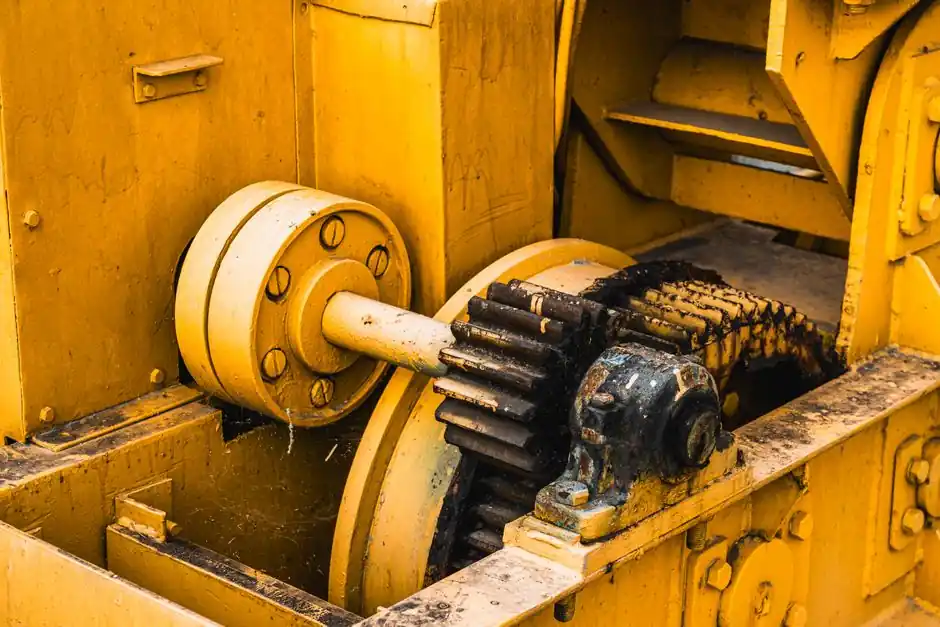
For quarter-turn ball, butterfly, and plug valves, define the actuator's clockwise or counterclockwise open-close orientation. For linear valves, define the stem or yoke movement and whether one switch represents fully open, fully closed, or an intermediate trip. The rack-and-pinion actuator arrangement, where applicable, requires a defined travel relationship between rack motion and the limit switch target.
Plan Commissioning and Maintenance
Commissioning should prove both discretes independently by actuating the valve to each mechanical stop, rather than relying on the actuator command. A PLC or DCS indication that follows a command is not proof that the valve reached the corresponding physical position [S3].
Record the final switch settings for open and closed, the direction of travel, the visual beacon indication, and the field wiring response. A magnetically actuated target can remain in the wrong position after a mechanical adjustment, so the switch setting and target position must be checked together [S1][S2].
For pulp and paper maintenance planning, allow for stock preparation, bleaching, papermaking, recycling, and chemical recovery inspection routes [S4]. Keep the internal switch layout accessible without removing valve internals or disturbing the actuator. Spare switch modules should be mechanically interchangeable with the installed model and electrically compatible with the existing field wiring.
The enclosure material must be checked against the location's atmosphere, including chemical exposure, washdown, and salt or moisture conditions. In a mill where valve metallurgy and trim must address abrasion and chemical compatibility [S4][S6], the switch box also needs a credible external corrosion strategy. Stainless construction should be selected only when its grade and finish are documented for the expected exposure.
Match the Option to the Application

A basic mechanical limit switch is appropriate for a straightforward open/closed confirmation where the actuator is accessible, the environment is nonhazardous, and direct switching meets the required adjustment and service life [S1][S3]. A proximity-based box is preferable where contactless detection, compact mounting, or the manufacturer's validated target arrangement provides a practical maintenance advantage [S3][S5].
Do not choose a proximity box merely because it uses inductive sensing. The target material, sensing gap, environmental exposure, and switching function must match the selected product. Do not choose an explosion-proof box for a nonhazardous washdown area unless a specific corrosion, ingress, or lifecycle requirement justifies the added cost and maintenance burden [S5].
A limit switch box with a 5/2 NAMUR valve is suitable when the application needs integrated solenoid control and discrete feedback, but it adds pneumatic signal-path considerations beyond basic position indication [S5]. An integrated unit is not appropriate for a modulating valve where continuous travel feedback is required; use the appropriate positioner architecture instead [S2][S3].
Valve and actuator condition remain part of the decision. A valve that stalls between commanded and physical positions can produce valid-looking switch changes at the wrong time, while a loose shaft, linkage, or target can create unstable feedback. The selection package should therefore define valve maintenance access and actuator adjustment procedures as part of the feedback system.
Shortlist the Purchase Specification
A complete purchase specification should contain six controlled items: valve and actuator model, sensing method, enclosure rating, hazardous-area requirement, electrical interface, and installation orientation. It should also state the required open and closed channels, visual indication, cable entries, pilot-valve requirement, and maintenance access. [S1]
For screening, reject any offer that leaves area classification or enclosure material undefined. Request a model-specific datasheet showing switch type, operating principle, electrical ratings, actuator interface, ingress protection, hazardous-area markings if claimed, and installation dimensions. A generic claim that the product is suitable for pulp and paper is insufficient.
The final shortlist contains the simplest unit that meets all four controlling criteria: position method, environmental protection, hazardous-area status, and actuator compatibility. A separate reference on smart valve positioner selection for pulp and paper covers continuous-feedback applications where two discrete limit switches are the wrong architecture.