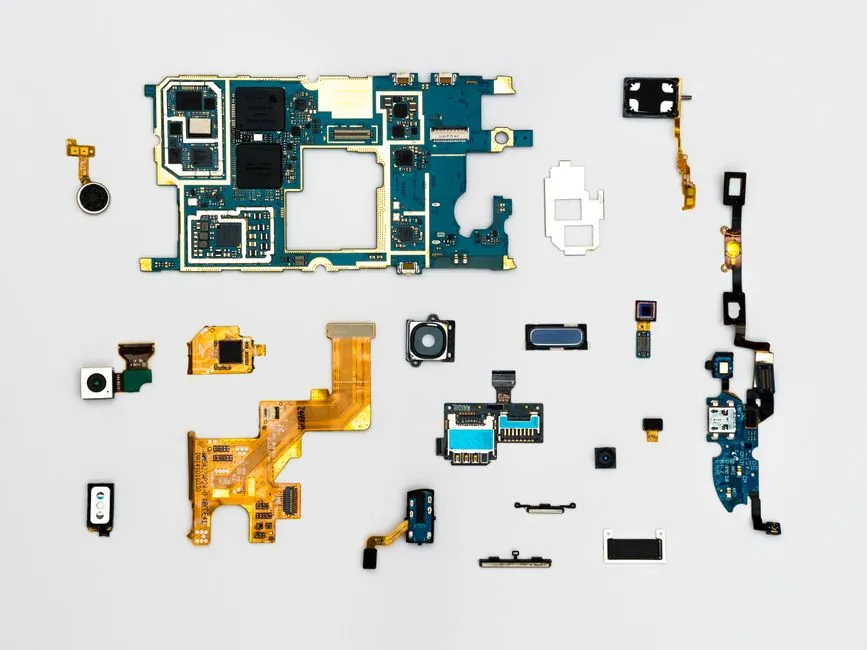
Medical-device manufacturers are facing memory-chip shortages, longer lead times, allocation limits, and sharp price increases [S3].
AdvaMed estimates that 75% to 80% of medtech products, excluding personal protective equipment and consumables, use memory chips [S3].
Three component markets with different failure modes
Memory demand from artificial intelligence, cloud computing and data centers is competing with medical equipment for the same components.
Polymer supply risk must be separated from electronic-component risk. A synthetic resin failure can affect housings, fluid paths and molded components, but its qualification path depends on the exact resin grade, application and validated design.
Cost and lead-time thresholds for procurement
A 2 GB LPDDR5X memory die that cost around USD 6.8 in January was priced at about USD 30, according to Smart Analytics Global [S5].
Procurement teams should distinguish quoted component lead time from total schedule exposure, which also includes qualification, firmware compatibility, validation, regulatory review and finished-device acceptance testing.
For sensors, buyers should specify measurement range, accuracy, repeatability, drift, electrical interface, environmental rating and media compatibility rather than treating all sensor shortages as interchangeable. The same discipline applies to chemical reagents and assay reagents: the catalog number, intended use and validated substitution status matter more than a broad product-category alert [S1].
Comparing chips, sensors and engineered polymers

For semiconductors and memory, the principal decision criteria are allocation security, unit price, lead time, software compatibility and change-control effort. Memory is especially exposed because 75% to 80% of medtech products use it, yet medtech accounts for only 1% to 2% of global demand [S3].
For sensors, the relevant criteria are measurement performance, calibration method, material compatibility, electrical output, environmental endurance and qualification status. An alternative sensor with a narrower range, different drift behavior or different output protocol cannot be treated as a drop-in replacement until the complete device has been evaluated.
For engineered polymers such as PEEK, POM and engineering plastics, the comparison shifts to mechanical properties, chemical resistance, sterilization compatibility, molding process and traceability. A resin that meets a generic specification may still fail the device-level control plan because filler content, pigmentation, sterilization cycles and extractables can change performance.
The FDA shortage list is not an automatic stop-use notice. Category presence does not prove that patient care has already been affected, so buyers must verify the product code, model, intended use, installed base, substitute availability and remaining inventory [S4].
Who needs shortage controls and where they do not fit
These controls apply to device manufacturers, hospitals, clinical engineering teams and procurement organizations that depend on constrained electronic or molded components. The FDA records show why item-level review matters: on 26 October 2026, Abbott listed five CPS DIRECT catheter catalog numbers, 410175, 410214, 410217, 410218 and 410224, for manufacturing discontinuance, while comparable products remained on the market [S1].
The approach does not fit every procurement event. A commodity with multiple qualified sources, stable specifications and no regulated design impact may need ordinary buffer-stock controls rather than a formal quality review for each allocation. By contrast, a component embedded in a life-support, diagnostic or monitoring system needs documented traceability and engineering approval before substitution.
Substitution is a regulatory and engineering gate

Long product lifecycles make this constraint more severe. Hospitals may continue using a device for many years, while its original mature chip, sensor or resin becomes difficult to source. Suppliers that disappear after sale can therefore affect service parts, calibration equipment and obsolescence planning even when new production remains possible [S3].
For elastomer sealing and fluid-handling parts, qualification should consider compound grade, compression set, aging, sterilizer compatibility and extracted substances. EPDM rubber and fluororubber should be compared against the actual chemical, temperature and sterilization exposure rather than selected from generic temperature ratings alone.
FDA signals require three levels of review
The FDA Medical Device Shortages List identifies categories determined to be in shortage using supply and demand information. The separate 506J Device List identifies product codes associated with manufacturer notification requirements during a declared public health emergency; inclusion there does not establish that a device is currently scarce [S4].
On 26 October 2026, the FDA shortage list also recorded discontinuance of Abbott CELL-DYN Sapphire Systems catalog numbers 08H00-01 and 08H00-03, CELL-DYN Immuno PLT reagent 03H05-01, and CELL-DYN Immuno T-Cell reagents 07H22-01 [S1]. These examples show why catalog number and reagent role must be checked before inventory or treatment decisions are made.
Operational escalation should connect the public signal to item-level stock, clinical priority, supplier capacity and authorization. Procurement, clinical engineering, infection prevention, quality, finance and care teams should use one verified dataset, assign decision owners and record why each allocation or substitution was approved [S4].
Building a resilient component-control loop

A defensible response requires four measurable controls: supplier-specific lead time, current and safety-stock coverage, qualification status for each alternative, and price variance against the approved component baseline. For critical chips, the schedule should be planned against the 16-week upper range documented for some computing components rather than an ideal 4-week quotation [S5].
Design teams should identify single-source parts, mature components, proprietary firmware dependencies and resin grades linked to validated molding processes. Long-term agreements should define allocation notice, lead-time commitment, change notification, traceability and continuity-of-supply obligations. The component end-of-life control approach is directly relevant to medical systems that may remain deployed for decades.
The closing trigger is objective: an allocation notice, lead time moving beyond the approved baseline, or an FDA shortage or discontinuance entry affecting an installed catalog number should trigger a documented revalidation and sourcing review. These signals are more useful than waiting for a finished-device shipment to fail.