
Spec sheets in 2026 draw a hard line: a melting furnace is the heat source that takes solid metal to liquid, while a crucible furnace is a metal-handling sub-class where the charge sits in a refractory pot and the heat source is wrapped around it. Century Dictionary defines the latter as "a gas-furnace used to melt gold, silver, copper, nickel, or other hard metals placed within it in a crucible" [S1].
On 2026-06-13 listings, IGBT medium-frequency 30 kg gold-melting units (model JLZ-35) ranged from USD 100 to USD 10,000 per piece [S3]; medium-frequency 1-ton induction units from APS Induction Furnace (Taizhou) for aluminum, copper, brass and stainless scrap listed at USD 35,000–79,000 per set [S5]. Crucibles themselves are consumable: induction-grade graphite crucibles with ceramic shields sell for around USD 59.99 each on retail channels, with monthly throughput in the tens of pieces [S6].
Heat Source and Process Architecture
A gas aluminum melting furnace burns fuel over a fixed hearth or rotary chamber; the radiant and convective flux transfers through the refractory lining into the bath. The Century Dictionary entry pins the original melting-furnace concept to a gas-fired chamber with a crucible placed inside [S1] — a clear hybrid, but a "melting furnace" without the crucible prefix means the metal sits directly in the heated shell.
An induction furnace generates eddy currents inside a graphite or clay-bonded crucible; the crucible is the load-bearing wall between coil and melt. IGBT medium-frequency units (JLZ-35) target 30 kg gold batches in the lower price tier [S3], while 1-ton medium-frequency units from APS handle mixed non-ferrous scrap [S5]. A cupola furnace, by contrast, charges pig iron and coke from the top and taps iron from the bottom — no crucible, continuous feed.
Capacity, Power and Price Bands in 2026
Capacity on 2026-06 wholesale listings spans 30 kg to 1 t per batch. The 30 kg IGBT gold unit (JLZ-35) shows a USD 100–10,000 spread — the low end reflects stripped OEM units, the high end reflects turnkey packages with water cooling [S3]. The Luoyang Ruixinsheng 100 kg small smelting furnace, marketed explicitly for scrap aluminum, lists at USD 20,000–25,000 per set with 1-set MOQ and 300-set/month supply [S2]. The 1-ton APS medium-frequency induction unit lists USD 35,000–79,000 per set for aluminum, copper, brass, bronze and stainless [S5].
Batch size dictates crucible geometry, not just kW rating. A 30 kg gold melt uses a small clay-bonded SiC pot; a 1-ton aluminum melt needs a heavy-wall graphite crucible with a ceramic radiation shield to slow oxidation — the exact SKU on retail at roughly USD 59.99 with 6 in stock and 26 sold [S6]. Consumable cost therefore scales with melt cycles, not just with furnace capex.
Alloy Coverage and Operating Limits
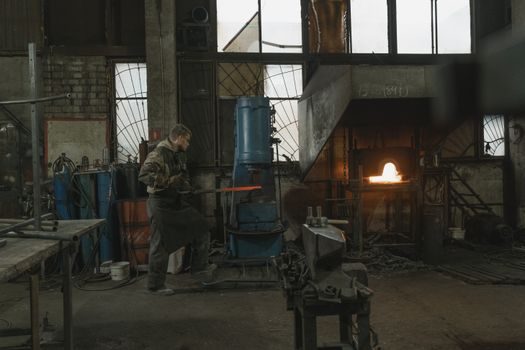
Crucible furnaces are dominant for precious metals (gold, silver, platinum-group) and for small-batch specialty alloys, because the pot isolates the melt from refractory contamination and is easy to swap between alloys. The Century Dictionary entry cites gold, silver, copper, nickel and other "hard metals" as the historical application set [S1]; 2026 retail listings of 30 kg IGBT units and 1-ton rotary brass/bronze/copper units confirm the same alloy family remains the core market [S3].
For high-volume ferrous work, the cupola furnace and large channel/medium-frequency induction units dominate; for non-ferrous tonnage, holding furnaces (reverberatory or bath-type) keep the melt at temperature between casting shots. Crucible furnaces are rarely used as holders because the pot is sized for the charge, not for steady-state level control.
Decision Criteria: Melting Furnace vs Crucible Furnace
Use the four-axis comparison below when choosing equipment for a new foundry line: [S1]
1) Heat source — direct-fired gas or large induction coil (melting furnace) vs coil/flame wrapped around a removable pot (crucible furnace). The 1-ton APS medium-frequency unit is the first archetype; the 30 kg JLZ-35 induction crucible rig is the second [S3][S5]. 2) Charge handling — bulk scrap charged by bucket or conveyor (melting furnace) vs pre-weighed ingot or shot loaded into a preheated pot (crucible furnace). The 100 kg Luoyang Ruixinsheng is the bulk archetype; jewelry and lab gold melting is the pot archetype [S2][S3]. 3) Atmosphere and contamination control — open hearth with dross skimming (melting) vs closed pot that protects alloy from oxidation (crucible). Ceramic-shielded graphite crucibles for induction explicitly serve this role [S6]. 4) Capex and consumable ratio — USD 35,000–79,000 per 1-ton set with multi-year lining life (APS induction) vs USD 100–10,000 per 30 kg unit with USD ~60 crucible replacement cycles (JLZ-35 + consumable pot) [S3][S5][S6].
Who Should Choose Which — and Who Should Not
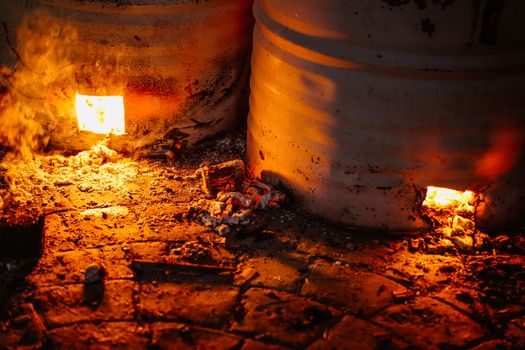
Choose a crucible furnace if: alloy changeover is frequent (gold, silver, copper, nickel all in one shop), batch size is small (≤ a few hundred kg), melt cleanliness matters more than throughput, or the operator lacks a charging crane. A 30 kg induction unit at under USD 10,000 with a USD 60 graphite pot fits a jewelry workshop or refinery pilot line [S3][S6]. A 100 kg gas crucible furnace from Luoyang Ruixinsheng at USD 20,000–25,000 fits a small aluminum recycler [S2].
Choose a dedicated melting furnace (gas hearth, large induction, or cupola) if: throughput is 1 t/batch and upward, the alloy is one grade for an entire shift, or downstream casting needs a holding furnace for level control. The APS 1-ton medium-frequency unit at USD 35,000–79,000 per set is the entry point for that class [S5]. A crucible furnace is the wrong tool when metal throughput exceeds 1 ton/hour, when the alloy is cast iron or steel at full tonnage (use a cupola or large channel induction), or when the operator is buying a melting furnace for in-line casting without a holding stage.
Standards, Sourcing and Spec Discipline
No single IEC or ISO number governs "which furnace to buy" — safety and energy rules are layered. ATEX/IECEx zone classification applies wherever flammable gas burners are used; refractory lining, water-cooling coil dielectric rating, and lifting lug SWL apply on the mechanical side. The 2026 wholesale data on Made-in-China.com and ECVV is the primary market signal: prices for medium-frequency induction melting furnaces span USD 100–79,000 across a 30 kg-to-1-ton capacity band [S3][S5], while small gas crucible smelting units cluster at USD 20,000–25,000 per set for 100 kg aluminum [S2].
Verify each OEM's IGBT frequency (typically 1–20 kHz for medium-frequency gold units), coil water-cooling flow in L/min, crucible material grade (clay-bonded SiC for non-ferrous, graphite for induction, ceramic-shielded graphite for high-temperature aluminum), and refractory lining temperature rating. The retail listing for a 30 kg induction furnace with a ceramic-shielded graphite crucible at roughly USD 59.99 per pot is the lowest-cost consumable reference point currently on the open market [S6]; a 1-ton furnace pot is typically 100–300× that figure, so ask the OEM for the consumable amortisation curve before signing a PO.
For a broader selection frame covering type, capacity, price and selection gates, the Melting Furnace 2026 Buying Guide lays out the upstream decision tree; for downstream casting cells tied to a melting furnace, the Gravity Die Casting Machine Buying Guide 2026 and Zinc Die Casting Machine Selection cover the next node. Two trackable signals into Q3 2026: 1-ton medium-frequency induction list prices from APS and its Jiangsu peers [S5], and the next Made-in-China.com price refresh on 30 kg IGBT gold-melting units (JLZ-35) [S3].