
Demand for metal powders used in additive manufacturing is estimated at USD 7.0 billion in 2026, up 20.8% from USD 5.8 billion in 2025 [S2].
The supply decision spans powder composition, particle-size control, lot qualification, storage, safety, and long-term capacity, rather than a simple purchase-price comparison [S1][S5].
Market scale and demand drivers
Metal powders for additive manufacturing reached an estimated USD 5.8 billion in 2025 and USD 7.0 billion in 2026, with annual demand projected at USD 20.5 billion by 2032 and a 19.6% CAGR for 2026–2032 [S2].
Demand is extending across aerospace and defense, automotive, medical devices, and industrial production, where complex geometry, lightweight design, customization, and rapid prototyping support metal AM adoption [S2]. The broader metal powder market is projected to grow from USD 9.01 billion in 2026 to USD 14.58 billion by 2034, so buyers should define market boundaries before using forecast figures [S4].
What powder buyers are actually sourcing
Additive manufacturing powder supply covers feedstock chemistry, particle-size distribution, morphology, chemistry controls, test methods, packaging, and lot traceability. A qualified powder lot must consistently deliver the intended mechanical properties and build behavior, because nominal alloy designation alone does not control the finished component [S1][S7].
Buyers also need to distinguish virgin powder, reused powder, and blended lots. Reuse can reduce material consumption, but it introduces questions about powder history, accumulated fines, contamination, chemistry shifts, and lot-to-lot consistency. Those questions belong in the supplier qualification and process-control plan, not in a nominal price comparison [S1][S5].
The broader additive manufacturing material category includes the powder characteristics that affect deposition or fusion, while the supplier assessment must remain process-specific. A powder selected for powder bed fusion cannot automatically be treated as interchangeable with feedstock designed for directed energy deposition or another metal AM process [S7].
Selection criteria for AM powder suppliers
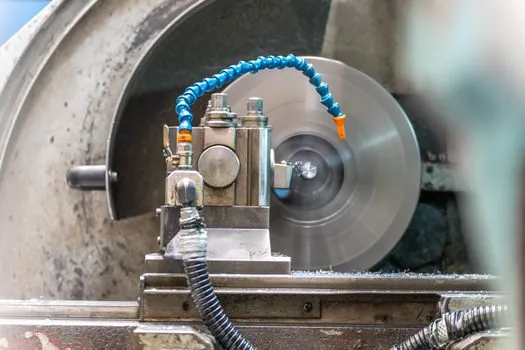
Supplier selection should combine chemical composition, particle-size distribution, apparent density, flowability, morphology, oxygen and nitrogen limits, and supplied test data. Where the build system and application require them, the buyer should also define powder circulation limits, aging controls, packaging specifications, and evidence from the intended build platform [S5][S7].
For operational fit, the supplier must document lot size, lead time, minimum order quantity, release testing, certificate format, change-control process, and the location of retained samples. These fields become procurement controls for qualification, production transfer, and interruption recovery. They also create measurable supplier scorecards rather than relying on a generic statement that a powder is suitable for AM [S1][S7].
Price should be evaluated per accepted kilogram or per qualified part, not only per kilogram purchased. Lot rejection, machine cleaning, powder aging, handling losses, build interruption, and nonconformance recovery can change the effective cost. The lead-time volatility as a supply-risk KPI framework is useful here because stable schedule performance and interruption exposure are procurement outcomes, not only logistics details.
Comparison of powder supply models
Virgin, specialist, and blended supply options differ across consistency, flexibility, qualification burden, and cost. Virgin lots generally offer the clearest material history, while specialist AM grades may command a price premium because of tighter chemistry and particle controls. Blended or reused material can lower consumption and unit cost, but it needs controlled powder-life data and a defined disposition process [S1][S5][S7].
Table: Metal powder sourcing options compared
Handling and storage determine delivered powder quality
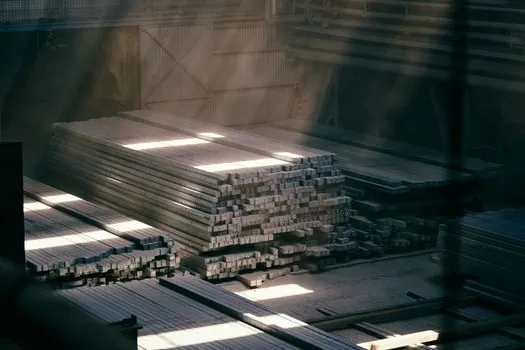
Metal powder must be transferred under controlled conditions because exposure to air, humidity, and contaminants can degrade flow and metallurgical performance. Controlled conditioning can restore consistent flow behavior, while integrated sieving supports a uniform particle-size distribution for AM and compaction operations [S5].
Storage and transfer systems may use sealed gas or vacuum paths to reduce exposure, inert gas cabinets, humidity and climate control, and intelligent inventory management. Reactive powders require electrostatic discharge protection, non-spark-inducing materials, explosion venting, and, where justified, inert-gas suppression [S5].
Precision feed systems matter downstream because interruptions at the powder-delivery stage stop the build and can increase material loss. A supply agreement should therefore cover packaging, sealed transfer interfaces, conditioning, sieving, inventory records, and the responsibilities of powder producers, distributors, and AM operators [S5].
Who benefits from diversified metal powder sourcing
Multi-supplier sourcing fits AM service bureaus, aerospace and defense organizations, medical-device manufacturers, and industrial users that need continuity across multiple alloys or machines. It is also appropriate where approved powder lots are consumed in sufficient volume to justify the qualification and inventory burden [S2][S7].
Single-source purchasing may be defensible for a validated, low-volume application where the material set is narrow and process stability has priority over multi-sourcing flexibility. It is less suitable where a build cell cannot tolerate long interruption periods, where critical alloys have qualified alternative sources, or where the buyer lacks resources to verify each replacement lot [S1][S7].
A military portable-system topic illustrates a distinct requirement: the AM system must support complex metal components in expeditionary environments, adding logistics, equipment, and material availability constraints beyond ordinary factory supply [S8]. Such applications need system-level qualification, not only a certificate showing that powder matches an alloy designation.
Supply risks, failure modes, and quality checks
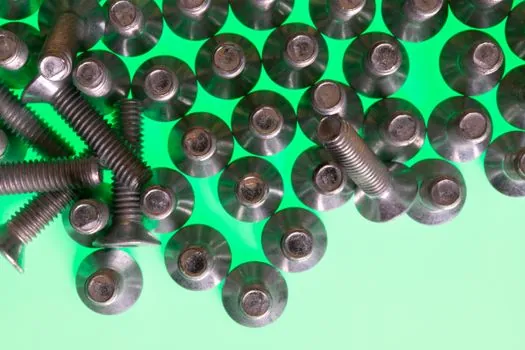
The principal supply risks are chemistry variation, particle-size drift, poor flowability, contamination, powder aging, inconsistent documentation, forced supplier changes, and contractual price disruption. The 2026 North American PM outlook identifies tariff volatility and trade disruptions as forces reshaping conventional press-and-sinter, MIM, and metal AM supply chains, leading companies to renegotiate agreements and reassess sourcing strategies [S1].
Powder handling adds safety and continuity failure modes. Uncontrolled dust exposure can harm personnel, flow interruption can stop production, and reactive powders can create combustible-dust hazards [S5]. Inert storage, sealed transfer, grounding and electrostatic controls, dust collection, and qualified emergency procedures must be treated as production controls rather than warehouse accessories.
Incoming inspection should compare each lot against the purchase specification and retain enough information to investigate a build failure. At minimum, the record set should connect the supplier certificate and lot identity to test results, packaging condition, storage history, powder-cycle history, equipment used, and the resulting build record [S5][S7].
Standards and procurement clauses to control supply
Procurement language should specify the alloy standard, material condition, particle-size band, test methods, sampling rules, certificate content, packaging, shelf-life basis, storage conditions, change notification, and lot-acceptance criteria. The research does not identify one universal AM powder standard that can replace the buyer’s process-specific material specification, so standards references must be matched to the exact alloy, test, or safety requirement being invoked [S7].
Supply contracts should also distinguish qualification from general purchase approval. Requiring a sample does not establish production equivalence; the buyer must evaluate the proposed lot on the intended machine, with the intended parameters, and retain acceptance criteria before commercial release. Tariff-driven repricing and contract renegotiation make dual-source approval, allocation rules, and documented change control more important [S1].
The defensible buying strategy is a qualified primary powder source, at least one technically viable alternative for critical alloys, defined acceptance testing, and controlled handling from supplier vessel to build chamber. Market growth is strong, but usable supply depends on powder behavior, safety, documentation, and repeatability, not on headline market value alone [S2][S5][S7].
Track powder supplier lead times, rejected-lot rates, powder-cycle performance, alloy-specific allocation, and inventory coverage against the approved supplier list. Those five measures expose whether powder supply remains compatible with production commitments as the 2026 market expands [S1][S2].