
Almost all of the world’s primary magnesium comes from China, posing supply-chain risks for manufacturers and the downstream economy.
Why Magnesium Supply Concentration Matters
More than 85% of world primary magnesium production comes from China, with much of that output concentrated in Shaanxi and Shanxi provinces [S5]. The dominant Pidgeon process is energy-intensive and coal-dependent, so power restrictions, pollution controls and local infrastructure interruptions can remove supply independently of customer demand [S5].
Magnesium strengthens aluminum and, when combined with silicon, makes heat-treatable alloys that can be strengthened dramatically.
A specification drawn around unqualified primary magnesium can therefore combine three exposures: concentrated geographic origin, energy and policy shocks upstream, and a combustible material format downstream. For comparison, the broader context of aluminum procurement and premium exposure is covered in Low-Carbon Aluminium Supply and Premium Outlook for 2026.
How Magnesium Changes Aluminum Alloy Performance
Magnesium dissolves in the aluminum crystal lattice, distorts it and raises resistance to deformation; this solid-solution mechanism strengthens the 5xxx wrought alloys and 5xx casting alloys without heat treatment [S3]. When silicon is also present, heat treatment creates fine Mg2Si particles, strengthening the 6xxx wrought alloys and 3xx aluminum-silicon-magnesium casting alloys such as A356, A357 and C357 [S3].
The performance distinction is measurable. At the same stress, the transmission electron microscopy subgrains in aluminum–magnesium alloys are about one-fifth the size of those in aluminum, consistent with a stress about five times higher, and the transient response includes softening as the stress declines. Those values describe mechanism-specific behavior, not a universal design allowance, but they demonstrate why temperature and deformation history must accompany an alloy designation.
Magnesium additions above 0.3 weight percent can increase cracking risk, although the outcome depends on the complete alloy chemistry and process [S6]. Additions can improve saltwater corrosion resistance in some aluminum-containing alloys, so a lower magnesium level cannot be treated as automatically safer or less demanding [S6].
Selecting a Magnesium Addition Route
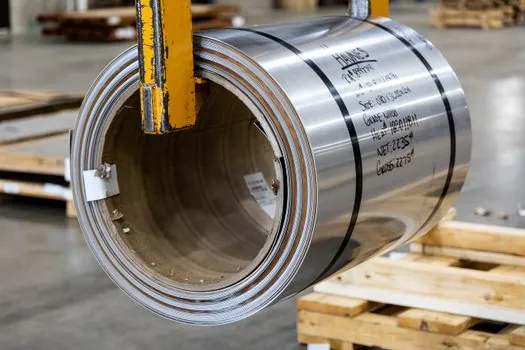
Pure magnesium, a magnesium-aluminum master alloy and a return-stream magnesium source each address different priorities. Magnesium is one of the most important additions used to strengthen aluminum, and magnesium combined with silicon makes heat-treatable alloys that can be strengthened dramatically.
The comparison must include yield, oxidation loss, handling safety, chemistry control and supply availability.
For 5xxx wrought alloys, magnesium supports solid-solution strengthening without relying on a precipitation-hardening route [S3].
Magnesium Supply vs Magnesium Component Supply
A magnesium alloy producer is not the same risk as a magnesium-component producer. AZ31 has about 3% aluminum and 1% zinc, and a trailing letter such as the “B” in AZ31B marks a version of the base alloy. In the ASTM magnesium-alloy naming system, E denotes rare earths and W denotes yttrium.
These grades also differ in the broader material substitution case. AZ31B-H24 sheet at roughly 1.77 g/cm3 is about 34% lighter than 6061-T6 sheet at 2.70 g/cm3 at equal volume, but magnesium's elastic modulus of about 45 GPa is below aluminum's 69 GPa, so stiffness-controlled parts can require larger sections [S4]. For a grade-, temper- and thickness-specific comparison such as AZ31B-H24 sheet versus 6061-T6 sheet, aluminum generally shows higher absolute strength in the grades compared, while magnesium can compete on specific strength and offers useful intrinsic damping.
That comparison rules out a simple policy of replacing aluminum with magnesium to eliminate supply risk. Magnesium can reduce weight or improve corrosion performance, while aluminum may remain preferable for stiffness, absolute strength, thermal management, qualification history or broader supplier availability [S4].
Fire Risk and Traceability Controls

Traceability also has to cover the actual alloy specification and temper. Common requirements include AMS 4375 and AMS 4377 for AZ31B sheet and plate, ASTM B107 for AZ31B bar and extrusions, AMS 4350 for AZ61A extrusions, and QQ-M-40 for AZ61A and AZ80A forgings [S1]. A procurement record that identifies only “magnesium” or “recycled magnesium” does not establish chemistry, temper, product form or conformity to the drawing.
At the melt shop, magnesium oxidation creates dross and burn-off, making addition timing, submerged introduction and chemical verification critical controls [S3]. The same sample history used for incoming inspection should support mass-balance accounting and, where recycled content is claimed, segregation of production scrap from machining swarf [S3][S5].
Building a Resilient Alloying Supply Strategy
Diversification requires more than replacing one Chinese shipment with another concentrated source. European projects include a proposed Romanian facility with planned annual capacity of 90,000 tonnes, alongside initiatives in Bosnia-Herzegovina and Serbia; North America and Australia are also examining alternatives [S5]. Capacity announcements do not eliminate qualification time, processing limits or logistics exposure, so buyers should track operational output rather than project headlines alone [S5].
The decision test is whether a proposed magnesium source reduces single-source dependence without increasing fire risk, chemistry variation or unverified environmental claims.