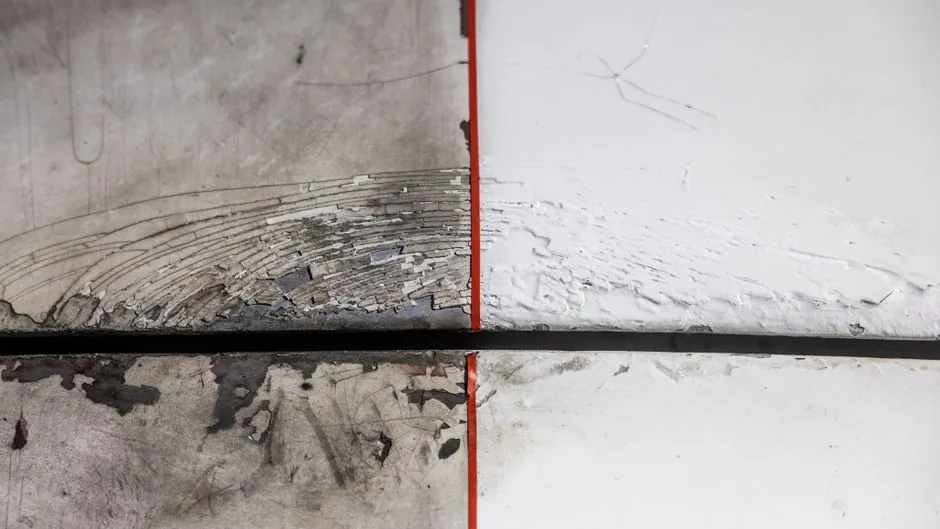
Metal scrapers on linear guide blocks are non-contact steel wipers that ride with a small gap, typically under 0.3 mm, to knock off chips, weld spatter, and wood fragments before they reach the elastomer lip seals [S1][S2]. Double seals, in contrast, are two stacked lip seals on the same end face that lift dust-holding capacity and grease retention without changing the block footprint [S3][S4].
Both options sit in the same physical slot on the end face of a recirculating linear guide block, and the part-number suffix is what tells you which combination you actually bought: NTN-SNR uses SS for side and end seals, DD for double-lip end seals, and ZZ for end + side + inner, while THK's option codes stack end, side, inner, and double seals plus a metal scraper add-on [S3][S4].
What the metal scraper actually does
A metal scraper is a thin stainless plate mounted ahead of the elastomer end seal, set with an engineered gap of around 0.3 mm to the rail surface so it does not drag on every stroke [S1]. Because the plate does not contact the rail, friction rise is small, but it physically blocks large debris such as iron filings, wood chips, and welding slag from ever touching the soft lip seal, which is the part that would otherwise be cut and torn [S2].
CPC's patented reinforcement plate combines the scraper function with a structural end cap that allows its carriages to run at 10 m/s with Amax above 450 m/s², and the plate "totally scrapes external objects above 0.3 mm" from the rail surface, per the manufacturer's technical write-up [S1]. For a 25 mm block running a 1 m stroke at 2 m/s, that gap is wide enough to miss a sheet-metal shaving but narrow enough to flick off a swarf chip, which is the use case the design was sized for.
What the double seal actually does
Double seals are simply two lip seals in series on the end face, often with the inner lip flipped or stepped so the second barrier catches what the first lets through [S2]. They are contacting seals running on the rail, which means they add measurable drag, but they also raise dust exclusion by one ISO 4406 class in well-documented bearing tests on crossed-roller carriages [S2].
NSK groups its upgrades into reference designators that include a Double Seal along with protector plates, plastic caps, and brass caps for rail mounting holes, all of which can be ordered separately to retrofit a standard carriage [S8]. Misumi's configurator for a 24 mm high, 160 mm long standard carriage lists "Double-Sealed With Metal Scrapers" as a single seal-type option, priced from $100.54 per block-and-rail set, which is the cleanest evidence that the two upgrades are commonly ordered together rather than as alternatives [S5].
Comparison: standard lip, double seal, and metal scraper

Standard end seals, double-lip end seals, and metal scrapers solve different contamination problems, and the part-number convention makes the trade-off explicit. NTN-SNR's suffix table is the clearest: SS gives side + end seals, EE adds an inner seal, DD stacks the end seal into a double lip, and GG stacks end + side + inner + metal scraper into a single block [S3].
On the four criteria that drive the spec, the three options line up roughly as: standard lip seals score high on drag cost, low on coarse-chip protection; double seals double the fine-dust barrier at the cost of higher running torque and slightly more grease throw; metal scrapers add almost no drag, protect the lip seals from mechanical damage, but are non-contact so they cannot stop fine dust or coolant mist on their own, which is why every catalog adds them on top of a lip seal, never in place of one [S1][S2][S4]. THK's option matrix lists metal scraper as an add-on to any base seal package, confirming it is treated as a supplement, not a substitute [S4].
When to specify, and when not to
Metal scrapers belong on linear axes that share the floor with swarf, weld spatter, or wood chips, so CNC mills, lathes with chip conveyors, woodworking CNC routers, and press-shop transfer lines are the obvious fits [S2]. Double seals are the right call where the contaminant is fine powder (ceramic, glass, mineral dust) or where the machine runs vertically or upside-down, since gravity then pulls debris straight onto the seal lip and a single lip is not enough retention [S2].
The upgrades are wrong for cleanrooms, where seal drag particles are the contamination source rather than the operator, and where low-friction seals with reduced lip preload are the documented solution [S2]. They are also wrong for very short-stroke, high-precision axes (optics stages, wire-bonders) where every micrometre of seal stack adds starting friction and parasitic moment, and where the rails live in a sealed enclosure anyway. BWC's profile-rail configurator offers the same metal-scraper and double-seal upgrades but flags them under "Dust Resistance," which is the same engineering message in distributor language [S7].
Materials, lubricants, and block-length penalty
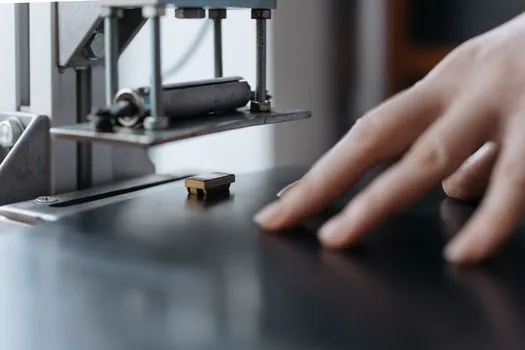
Standard lip seals are thermoplastic elastomers such as DuPont Hytrel (TEEE), with optional FKM/FPM fluoroelastomer (Viton-class) for chemical compatibility and a wider temperature window, including both high-heat and cold-cell operation [S2]. Metal scrapers are typically stainless steel, sized so the plate's edge geometry scrapes rather than ploughs, and the plate is mounted in a small pocket machined into the end cap of the carriage, which adds 1–3 mm of block length depending on manufacturer [S1].
Grease choice interacts with the seal stack: lithium-base grease is the default on Misumi's standard block and rail assembly, with a self-lubricating oil-pad option for low-maintenance cells, and that choice does not change with the seal package [S5]. NSK's reference guide warns that adding a Double Seal and protector plate increases the carriage length and therefore the moment load on the rail, so the block-size selection must be re-checked rather than copied from a standard-lip drawing [S8].
Failure modes and field signals
Metal scrapers fail by being bent or chipped on impact with a stray fixture or a frozen chip, after which the plate stops scraping and the lip seal beneath it takes the abuse and wears in a single localised patch, an early indicator the operator can hear as a rhythmic tick at the end of each stroke [S1][S2]. Double seals fail by grease pumping out past the inner lip, which shows up as a black ring of contaminated grease on the rail near the block ends rather than the clean film a healthy seal leaves behind.
Snap-in EXT scraper seals for closed linear bearings, pillow blocks, and flange blocks exist as a field-replaceable option for damage recovery without a full block swap [S6]. Once a crossed-roller guide or ball-rail carriage has been run dry past its seal life, the recovery path is usually a full block exchange, not a seal retrofit, because the internal rolling elements have already been scratched by the debris the seal was supposed to stop.
Sourcing and standards notes
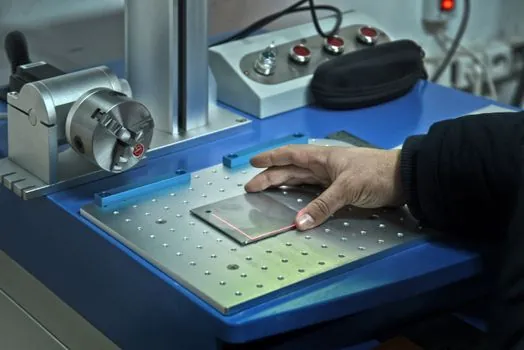
Part-number conventions are not standardised across makers, so a "GG" on NTN-SNR is not the same string as a "GG" on Hiwin or THK, and the only reliable read is the option matrix on each maker's configurator [S3][S4]. THK's options page explicitly lists Seal and Metal Scraper combinations from end-only through "double seals + side seal + inner seal + metal scraper," which is the most aggressive stack in the public catalogs surveyed [S4].
ISO 14728 covers linear-bearing testing but does not dictate seal materials or scraper geometry, so contamination ratings (ISO 4406 code claims, IP ratings when claimed) come from each maker's test report rather than from a third-party standard, and that report is the document to ask for during sourcing [S3]. For background on the metal materials used in the scraper plate itself, the relevant metallurgy lives in the stainless-steel and spring-steel sections of the standard materials reference, not in any rail-specific standard.
For applications where the linear axis sits in a corrosive washdown cell, the next decision after seal stack is coating system, and the ISO 12944 corrosivity category choice drives whether the block body, the rail, and the scraper plate all need the same upgrade or just the rail. On a ball-spline-driven axis the seal stack matters more than on a plain linear guide because the spline shaft brings its own debris path, and the same scraper + double-seal logic carries over, with one extra inner-seal stage to cover the rotating interface.