
Manufacturing-site microgrid controls must maintain instantaneous real and reactive power balance in island mode, dispatch resources over longer intervals, and sequence grid connection or disconnection [S1].
The scope spans generators, batteries, controllable loads, switchgear, utility protection, renewable resources, communications, cybersecurity, and manufacturing processes, with controller validation performed across electromagnetic-transient, dynamic, and steady-state models [S1][S4][S5].
Control Layers for a Manufacturing Microgrid
A microgrid operates as one controllable entity in grid-connected or island mode, while its internal resources remain distributed across the site [S1]. Its control architecture therefore has at least 3 functional layers: protection, real-time balance, and resource dispatch, with grid-connected and islanded transitions coordinated as a separate sequencing function [S1].
At the electrical level, controls must maintain real and reactive power balance instantaneously when the utility is unavailable and determine resource dispatch over longer time scales [S1]. At the production level, the same architecture can coordinate manufacturing demand with onsite generation, storage, and grid exchange rather than treating every load as an equal priority [S5].
This architecture also defines the boundary between electrical resilience and process continuity. Electrical control can prevent a blackout, but it cannot guarantee that a sensitive machine retains acceptable voltage quality, frequency, ride-through behavior, or restart sequence. Those requirements must be translated into plant-specific load priorities before controller settings are accepted.
Options Compared by Speed, Scope, and Complexity
Controller choices differ less by feature checklist than by control authority and test depth. The main comparison is between centralized site control, distributed control of individual resources, and joint manufacturing-microgrid dispatch [S1][S2][S5].
Centralized control is the practical choice for a campus with one utility point of common coupling, several DERs, and a defined production load hierarchy because one supervisory controller can balance energy flows and issue coordinated commands [S2]. Distributed control is more suitable where resources are geographically separated or independently owned, but it requires more coordination logic and a dependable communications layer [S1]. Joint manufacturing-microgrid control is appropriate where production schedules, energy prices, and available storage materially change dispatch value, though it adds process-model and data-integration work [S5].
For hardware validation, software simulation alone does not exercise the complete control chain. National Laboratory of Renewable Resources conducts controller hardware-in-the-loop testing, where a physical controller interacts with a modeled microgrid and its associated power devices, and it also tests power hardware against emergency scenarios [S1]. NLR develops and evaluates microgrid controls at multiple time scales using software modeling and hardware-in-the-loop evaluation platforms [S1].
Selecting Loads, Storage, and Dispatch Priorities

Manufacturers should classify site demand into at least 3 operating categories: interruption-sensitive processes, deferrable production load, and noncritical facility load. This classification becomes the basis for fast load shedding, storage reserve, and dispatch rules rather than a generic peak-demand objective. [S1]
Batteries are valuable for subcycle response, outage ride-through, and shifting energy away from peak-price periods, while generators provide longer-duration energy and may carry different fuel, maintenance, and emissions constraints [S3][S4]. Solar photovoltaic arrays can serve daytime load, with excess generation directed to storage or other AC-coupled resources [S3]. A manufacturing schedule that shifts energy-intensive work can improve microgrid economics only if the production system can actually move that work without violating delivery, quality, or equipment constraints [S3][S5].
The 2021 article identifies power failures caused by poor weather, accidents, equipment malfunctions, and other causes among the issues facing manufacturers [S3]. Those figures justify dedicated investment in critical-load ride-through and restoration testing, but they are historical rather than a design guarantee for an individual plant.
Islanding, Protection, and Grid Reconnection
Grid-connected and islanded operation require deliberate protection coordination because the point of common coupling, transformers, controllable switchgear, generators, and inverter-based resources create different fault and power-flow conditions in each mode [S1][S4].
SEL powerMAX microgrid control systems are described as seamlessly islanding onsite generation sources and reconnecting with the bulk electric system as needed [S4]. These are vendor-defined capabilities, so acceptance testing must reproduce the site’s load steps, generation mix, protection settings, and islanding sequence.
Manufacturing plants can also contain nested control zones, such as a building or process area requiring uninterrupted power inside a larger campus microgrid [S4]. That arrangement increases complexity because several events may overlap inside adjacent zones. It also creates a clean operating rule: define the required critical loads, place them within an explicit protection hierarchy, and test nested islanding with the production system disconnected from the wider site.
Cybersecurity, Communications, and Commissioning
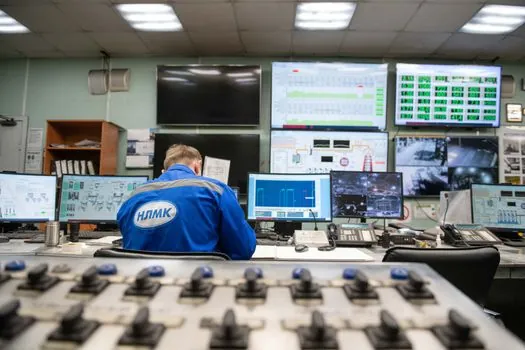
Microgrid control systems combine electrical protection, cybersecurity, real-time controls, integration with existing infrastructure, and communications, making commissioning a multidisciplinary test rather than a controller-only exercise [S4]. Secure networking is integral to SEL powerMAX control systems, which carry a 10-year factory warranty on their control-system components [S4].
For manufacturing deployments, network segmentation should align with the control hierarchy: utility or enterprise ingress points must not share unrestricted paths with protection, generation, storage, and production-control devices. Operational technology monitoring also needs a defined response path for loss of communications, stale measurements, unauthorized commands, and failed grid-reconnection sequences. The cybersecurity requirement is therefore continuous operating logic, not a one-time IT checklist.
Commissioning should progress from model validation to controller hardware-in-the-loop testing and then field operating tests [S1]. The test set should include utility loss, unplanned DER trips, simultaneous critical-load starts, storage depletion, communications interruption, protective trips, and controlled resynchronization. Historical dispatch and event data then support forecasting, cost-impact estimation, and refinement of peak-shaving and storage strategies [S4].
Where Joint Production Dispatch Adds Value
A joint control model using a Markov Decision Process establishes coordinated operation between manufacturing systems and onsite microgrids, linking production decisions to electrical dispatch rather than treating the factory as a fixed electrical load [S5]. This is most useful where the site has flexible production windows, multiple energy resources, and a measurable economic or resilience benefit from shifting demand.
The method is not a substitute for protection or real-time electrical control. It operates at a broader decision layer, where the controller evaluates production status, resource availability, energy conditions, and operating objectives [S5]. Implementation is justified when manufacturing constraints can be represented reliably and the resulting dispatch signal remains actionable for both plant operators and equipment owners.
Joint dispatch is less compelling for a site with one continuous, nondiscretionary production line, few dispatchable assets, and no meaningful price or outage-risk difference between operating schedules. In that case, a smaller controller architecture focused on protection, islanding, critical-load support, and straightforward resource dispatch is usually easier to validate and operate.
Acceptance Criteria for a Working System
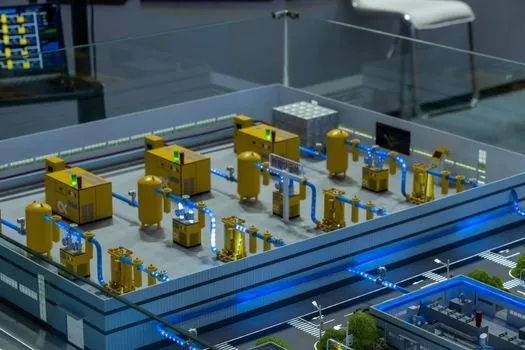
A manufacturing microgrid is control-ready when 4 conditions are met: the utility interconnection and internal protection boundaries are defined, critical loads have measured ride-through requirements, every DER has a defined dispatch and fallback mode, and the control network has tested failure behavior [S1][S4].
Model-based verification should cover electromagnetic transients, dynamic behavior, and steady-state operation before physical testing begins [S1]. Hardware-in-the-loop validation should then include controllers, controllable switchgear, advanced batteries, and other distributed energy equipment across emergency scenarios [S1]. Factory acceptance should also demonstrate automatic islanding, controlled resynchronization, load shedding, and restoration sequencing.
Performance acceptance is best written around outcomes instead of vendor feature labels: maximum acceptable interruption for each production class, required battery reserve duration, permitted frequency and voltage limits, restoration sequence time, and loss-of-communications behavior. These metrics link the electrical control design to factory output and give operators a defensible basis for accepting a system or rejecting a setting that works only in simulation.
The next procurement checkpoint is a traceable test plan: map every controller output to a grid or plant event, assign an acceptance measurement to each event, and identify which tests will use electromagnetic-transient simulation, controller hardware-in-the-loop equipment, or the live plant [S1][S4].