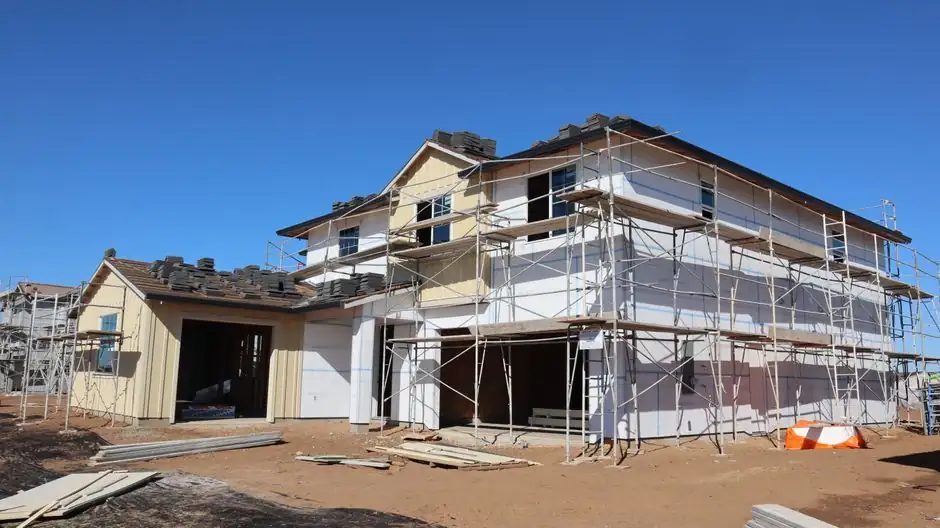
Mineral wool held 50.51% of the building thermal insulation market by material in 2026, making it the largest segment in that product definition [S1].
Precedence Research valued the global insulation market at USD 69.84 billion in 2026, while Grand View Research estimated the 2026 market at USD 79.0 billion.
Market scope explains conflicting insulation share data
The building thermal insulation market, in which mineral wool held 50.51% in 2026, is narrower than the global insulation market covering buildings, industrial equipment, transportation and other applications [S1][S3]. Share figures therefore cannot be transferred between reports without checking product scope, geography and measurement basis.
Grand View Research valued the broad insulation market at USD 74.0 billion in 2025, estimated USD 79.0 billion for 2026 and forecast USD 127.7 billion by 2033, a 7.1% CAGR for 2026–2033 [S2]. Precedence Research estimated USD 69.84 billion for 2026 and USD 136.84 billion for 2035, with a 7.60% CAGR for 2026–2035 [S3].
The two published 2026 market estimates are USD 69.84 billion and USD 79.0 billion, a difference of USD 9.16 billion. Procurement teams should treat these figures as scenario bounds rather than interchangeable point estimates because the underlying market definitions are not uniform.
Material share depends on whether the market is building-only
Mineral wool held 50.51% of the building thermal insulation material segment in 2026, while the broader market data identifies EPS as the leading material type in 2025 [S1][S3]. EPS held a 28.1% product share in the broad insulation market in 2025 [S2].
Mineral wool held the largest material segment with a 50.51% share in 2026, while EPS held a 28.1% market share in 2025 across the broader insulation market. They measure different markets rather than contradicting one another.
Demand is distributed across several construction and industrial routes. Infrastructure represented 33.6% of the broad insulation market by end use in 2025, while building and construction was the largest end-use segment in the Precedence market definition [S2][S3]. Material selection consequently depends on whether the installation is a wall, roof, below-grade assembly, pipe or equipment layer.
Thermal performance makes PIR the thinnest board option
For roofs requiring U ≤ 0.15 W/m²·K, the cited comparison lists approximate thicknesses of 27 cm for EPS 040, 25–27 cm for stone mineral wool and 15 cm for termPIR AL.
A 2026 designer comparison gives declared thermal conductivity values of 0.036–0.040 W/(m·K) for glass mineral wool, 0.037–0.041 W/(m·K) for stone mineral wool, 0.040 W/(m·K) for EPS 040, 0.031 W/(m·K) for graphite EPS 031, 0.033 W/(m·K) for XPS, 0.022 W/(m·K) for termPIR AL and 0.019 W/(m·K) for termPIR MAX 19 AL [S5].
For the cited roof target of U ≤ 0.15 W/m²·K, the comparison calculates approximately 24–27 cm for glass mineral wool, 25–27 cm for stone mineral wool, 27 cm for EPS 040, 21 cm for graphite EPS 031, 22 cm for XPS, 15 cm for termPIR AL and 13 cm for termPIR MAX 19 AL [S5]. For walls at U ≤ 0.20 W/m²·K, the corresponding thicknesses are about 18–20, 19–20, 20, 15, 16, 11 and 10 cm [S5].
PIR suits restricted build-ups, but a lower conductivity value does not resolve every assembly issue. Board joints, thermal bridging through fixings, air leakage and installation continuity still affect delivered U-value, while fire classification and facade combustibility must be assessed for the complete system [S5].
EPS, XPS, PIR and mineral wool fail different constraints
EPS 040 was priced at approximately PLN 45–55/m² for a 27 cm roof build-up in the cited Q2 2026 comparison, while XPS at 22 cm was PLN 80–95/m², facade mineral wool at 25 cm was PLN 90–120/m², termPIR AL at 15 cm was PLN 75–90/m² and termPIR MAX 19 AL at 13 cm was PLN 95–115/m² [S5].
On the four criteria most relevant to envelope design, EPS 040 wins first cost, PIR wins thickness and declared conductivity, mineral wool provides the established non-combustible option identified by the comparison, and XPS occupies the moisture-exposed below-grade position where resistance to water absorption is a defining requirement [S5].
Mineral wool is therefore not automatically the economical choice despite its 50.51% building-segment share, while EPS is not automatically the lowest-cost envelope solution once thickness, labor and fire requirements are included [S1][S5].
Fire, acoustics and assembly detail separate the four materials
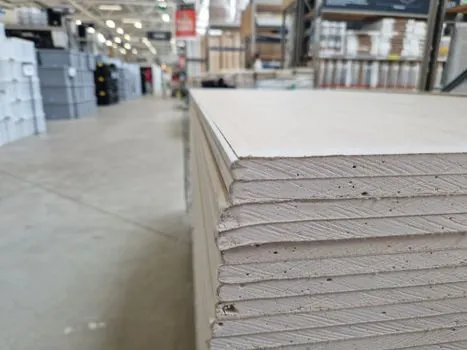
Mineral wool is normally selected where non-combustible performance, acoustic absorption or dimensional stability governs, while EPS and XPS are used where cost and low thermal conductivity support conventional boards [S5]. PIR requires particular attention to the fire class of the board, facings, adhesives and complete assembly rather than reliance on a product label alone [S5].
For acoustic applications, the comparison identifies mineral wool as the only acceptable choice in some cases, while EPS remains the economic benchmark in others and PIR can win over a life-cycle horizon [S5]. This makes acoustic intent a selection criterion rather than a generic property of the market.
PIR and mineral wool prices were both identified as rising during 2026, while a separate supplier article argued that natural-fibre insulation was gaining attention because of price pressure [S8]. That market commentary does not displace the quantified EPS, XPS, PIR and mineral-wool comparisons, but it reinforces the need to price complete systems rather than extrapolate a board’s purchase cost.
Industrial buyers should separate commodity boards from engineered insulation
The broad insulation market covers heat-transfer control and noise reduction in residential, commercial, industrial and transportation applications, with thermal insulation accounting for 64.80% in 2025 [S3]. Building boards such as EPS insulation, XPS insulation and polyurethane insulation should therefore be compared against industrial service requirements, not selected solely from building-market share.
For industrial equipment, pipework and process vessels, operating temperature, exposure, moisture, fire exposure, mechanical durability and maintenance access can outweigh a 30–40% thickness advantage [S3][S5]. Board products with low thermal conductivity are not interchangeable with high-temperature mineral wool, and neither is a substitute for corrosion barriers or waterproofing where those functions are required.
Where acoustic and thermal duties overlap, mineral wool remains the baseline for comparison, while EPS and XPS provide lower-cost board options and PIR provides the lowest cited thickness [S5]. The material choice should be recorded against the design U-value or heat-loss target, assembly depth, fire strategy, acoustic criterion, exposure condition and installed cost.
Sourcing and standards require project-specific verification
Product standards, fire classifications and assembly testing must be checked for the jurisdiction and construction type, because a board’s share or thermal conductivity does not establish compliance of the completed wall or roof [S5]. The cited comparison uses WT 2021 roof and wall targets of U ≤ 0.15 and 0.20 W/m²·K, while the source also references fire classes, EPBD 2030 and acoustic requirements; those references are design inputs, not universal acceptance thresholds [S5].
Continuous insulation was a distinct market estimated at USD 56.98 billion in 2026 and projected to reach USD 67.74 billion by 2031, a 3.5% CAGR [S4]. Its narrower category definition further demonstrates why total insulation values should not be used as direct proxies for mineral wool, EPS, XPS or PIR share.
For project tendering, the next trackable checks are declared conductivity at the specified thickness, board density and compressive strength, water absorption where relevant, fire classification for the complete assembly, verified installation labour rates and the total installed cost per square metre. These five fields convert market data into a defensible material selection rather than a share-based purchasing decision.