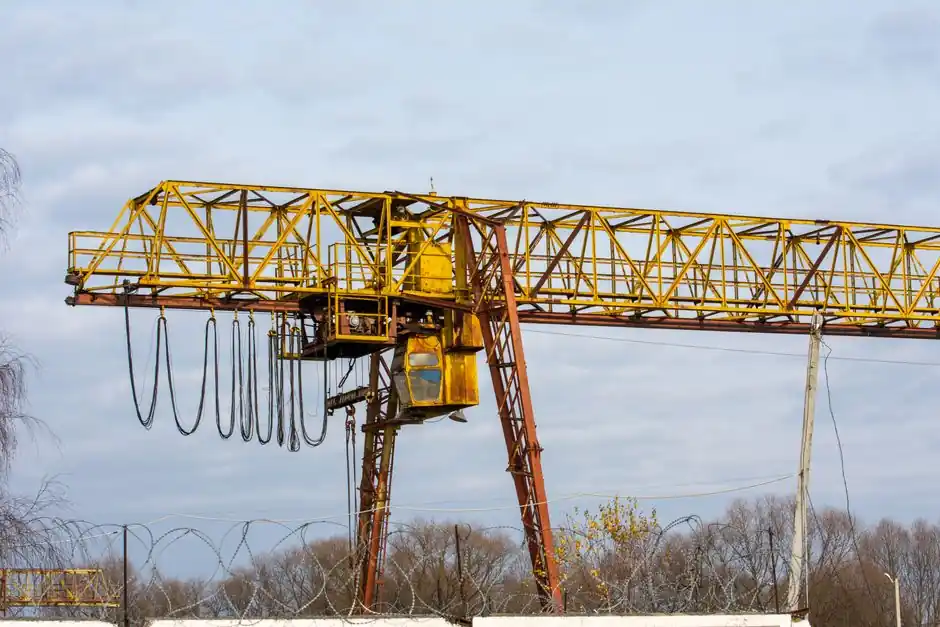
Miniload stacker cranes are built for bins, trays, and totes under roughly 45 kg in aisles as narrow as 1 m and at heights up to about 40 m, while unit-load stacker cranes move 550-2,500 kg pallets on twin-mast chassis with telescopic forks reaching 148 ft (about 45 m) [S3][S4]. The split is load weight and aisle geometry, not speed: a single-mast pallet crane like the Interlake Mecalux MT-1 lifts 1.65 t to 59 ft, and the MT-5 lifts 1.1 t to 148 ft, all at 722 ft/min travel and 217 ft/min lift [S4].
For selection, the rule of thumb circulating across the 2026 vendor literature is straightforward: a stacker crane is the right call when SKU count is high, ceiling height exceeds 8 m, and order lines measure in totes or cases rather than full pallets [S1][S5]. Daifuku's miniload variant uses aluminum masts and urethane wheels to hit the high travel speeds that totes require, and the current generation is 15% lighter than its predecessor, with a smaller motor cutting electricity use on the same duty cycle [S1].
Load Capacity and Unit-Load Class Envelope
Unit-load AS/RS systems carry 550-2,500 kg per load, with the single-mast MT-class capped at 1.65 t in single-deep racks and 1.1 t in double-deep, regardless of height class [S3][S4]. Nova Racking's 2024 market data places unit-load AS/RS at 21.8% of the AS/RS installed base, reflecting its dominance in automotive, food, and chemical pallet handling [S3]. The taller the crane, the lighter the permitted pallet: an MT-3 reaches 108 ft at 1.65 t, but an MT-4 of equal 118 ft class drops to 1.1 t, because mast sway and rope drum torque scale unfavorably with height [S4].
Miniload systems sit at the opposite end of the envelope, with the commonly cited "under 100 lb" (about 45 kg) limit per tote covering the majority of pharmaceutical, e-commerce, and spare-parts SKUs [S5]. Daifuku's miniload handles plastic containers, carton boxes, trays, and circular-shaped loads such as paper rolls or car wheels via a roll-handling extractor, with single-deep and double-deep fork variants [S1]. For projects that need to mix tote and pallet flow, ULMA's miniload line uses a robot stacker configured for case-level picking on a narrower aisle than a unit-load crane can tolerate [S2].
Aisle Width, Height, and Footprint
Miniload cranes run in aisles roughly 1.0-1.5 m wide, versus 2.5-3.5 m for unit-load cranes, which is the single biggest contributor to miniload storage density gains in greenfield builds [S4][S5]. Stoka's 2026 reference describes a miniload as the case/tray/tote equivalent of a unit-load crane, optimized for taller structures and narrower aisles, with the case delivered to a pick station rather than a pallet lane [S7]. Unit-load cranes are typically paired with 26-148 ft (8-45 m) tall rack structures and use bottom rail plus upper guide rail to absorb lateral fork forces [S4].
Daifuku's miniload configuration uses load extractors that are "fork", "side-hook", or "roll handling", and the same aisle can host dual stacker cranes for throughput and redundancy on the same rail [S1]. This dual-crane topology is largely a miniload play; unit-load aisles rarely justify the second crane because pallet cycle times dominate over travel acceleration. The decibel output is low enough (urethane wheels, aluminum masts) that miniload installations can sit next to offices or on upper floors, which is rarely specifiable for a heavy unit-load mast [S1].
Speed, Acceleration, and Throughput Profile
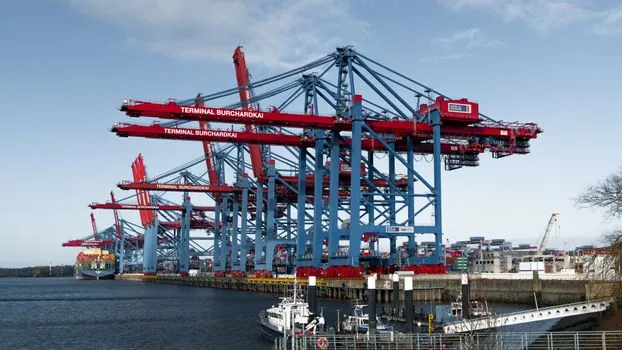
Interlake Mecalux publishes max travel of 722 ft/min (about 3.7 m/s) and max lift of 217 ft/min (about 1.1 m/s), with both axes capped at 2 ft/s² (about 0.6 m/s²) acceleration on the MT-class unit-load cranes [S4]. Miniload cranes match or beat the travel number on the horizontal axis and run higher acceleration on the vertical because the load inertia is roughly 1/30th of a pallet. A pallet stacker variant, by contrast, is typically a manual or semi-automatic floor machine and does not enter this comparison; it sits below the automated stacker-crane class on both speed and height.
For order-picking throughput, miniload systems use pick-to-light and gravity-rack replenishment to feed the operator, with Daifuku's gravity-rack add-on pairing one or two stacker cranes with a downstream pick-to-light face [S1]. Nova Racking reports light-directed picking accuracy of 99.9% on AS/RS-fed stations, against 60-65% labor time recovered by bringing the tote to the operator rather than sending the operator to the rack [S3]. The throughput math favors miniload only when each pick is one tote; a pallet pick favors unit-load regardless of speed because the fork cycle is the same regardless of crane class.
Decision Matrix: Tote Flow vs Pallet Flow
Three decision criteria separate the two classes cleanly. First, load: under 100 lb (about 45 kg) per pick unit goes to miniload, 550-2,500 kg per pallet goes to unit-load [S3][S5]. Second, aisle: under 1.5 m aisle width and over 8 m height is the miniload envelope, while unit-load needs 2.5-3.5 m aisles and typically 26-148 ft rack structures [S4][S7]. Third, throughput shape: high SKU count, high pick frequency, and goods-to-operator picking favor miniload; low SKU count, pallet-in/pallet-out, and bulk storage favor unit-load [S5].
A practical per-use-case rule: e-commerce fulfillment, pharmaceutical pick-face, and small electronics kitting go to miniload; automotive pallet buffer, beverage bulk storage, and chemical drum palletizing go to unit-load [S3][S5]. Stoka's 2026 framing is that the miniload is the "case/tray/tote" variant of the same stacker-crane architecture, sharing the mast-and-rail topology with the pallet crane but scaled to a lighter extraction device [S7]. The 2024 Raymond West guide adds one more criterion: maintenance burden. Miniload systems carry more moving parts (shuttles, conveyors, extractors) and need more frequent service, while unit-load systems are simpler in the field but slower to ROI in low-turnover environments [S5].
Cost, Maintenance, and Integration Constraints
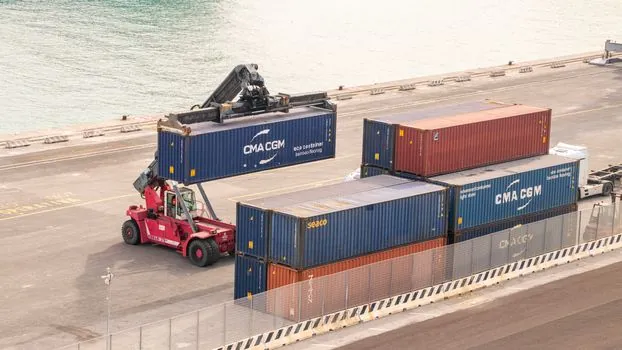
Miniload projects carry a higher initial ticket and higher ongoing maintenance line, but they return capital faster in high-turnover pick operations, while unit-load projects carry a lower maintenance line and a slower ROI when turnover is low [S5]. Daifuku's 15% mass reduction on the latest miniload mast, plus a downsized motor, is a direct response to that cost-of-ownership question, and the urethane wheel/aluminum mast combo is what keeps noise low enough for office-adjacent installs [S1].
Integration constraints differ in kind, not just degree. Miniload cranes tie into WMS/WCS via pick-to-light, sorting transfer vehicles, and gravity-rack replenishment, while unit-load cranes integrate to pallet conveyors, AS/RS shuttle interfaces, and PIT or AGV handoff at the aisle end [S1][S3]. The Inform International 2024 guide notes that the unit-load stacker crane is the workhorse for pallet flow, and the miniload is the workhorse for high-speed small-load picking; a typical greenfield that needs both will spec two aisles rather than try to force one crane class to do both jobs [S6].
Next signal to track: dual-stacker-crane miniload topologies in cold storage (-22 °F / -30 °C) and the roll-handling extractor variant for paper and film, both of which are documented as available today and likely to expand as tire and paper distributors automate their case-level flow through 2027 [S1][S4]. Vendor disclosures on max travel acceleration past 0.6 m/s² and on miniload dual-crane handover protocols are the next spec-sheet items to watch.
The underlying component specifications are covered under electronic load.
See also our earlier report, Optical vs Digital Theodolite Reading Methods: How Angle Readout Actually Works.