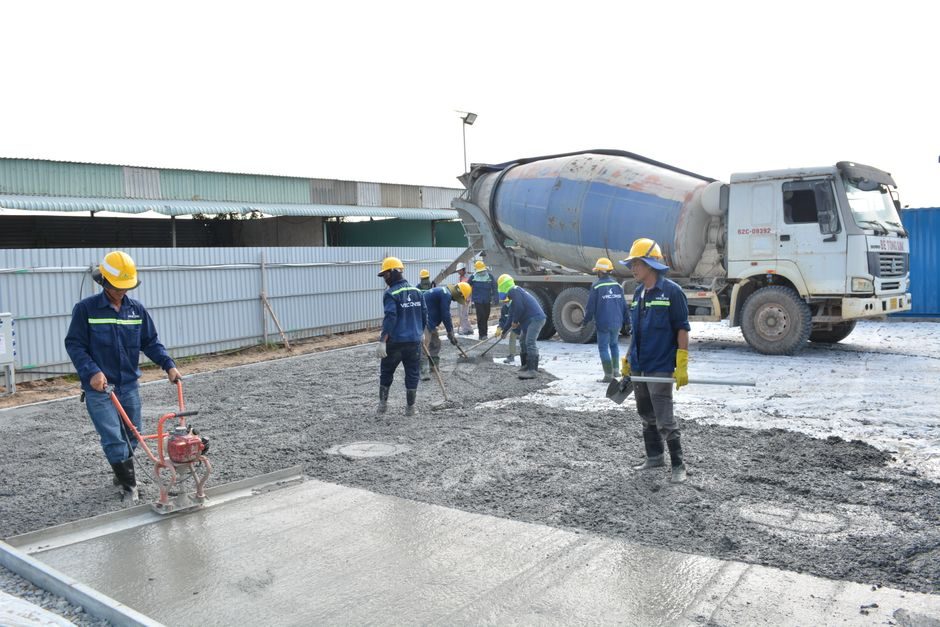
Most 3-axle on-road concrete mixer trucks ship in a 6-9 m³ drum band; CIFA's HD series extends the heavy-duty hydraulic envelope to 15 m³ on multi-axle chassis [S2].
Output is split into two distinct categories: diesel-mechanical units such as the SANY SY306C-8(R) at 5 m³/min and 6 m³ [S1], and hydraulic-drive heavy units like the CIFA HD at 560 l/min (147.9 us gal/min) output and 7-15 m³ drum [S2].
Drum capacity bands and what they buy on the road
SANY's SY306C-8(R) diesel mixer ships with a 6 m³ (211.89 ft³) drum and 5 m³/min (176.6 ft³/min) output, sized for urban delivery and 3-axle chassis [S1].
CIFA's HD hydraulic series covers 7-15 m³ (247.2-529.72 ft³), with the upper end requiring multi-axle configuration to stay within legal axle loads [S2].
Semix's SM9 hydraulic/lightweight line sits at 7-12 m³ (247.2-423.78 ft³), aimed at operators who need to lift payload within regional GVW limits [S3]. Below this band, the Putzmeister Mixkret 6 (diesel, 6 m³) targets narrow-vein mining and shotcrete support, not highway pours [S5].
Diesel-mechanical versus hydraulic drive: matching to duty cycle
Diesel-mechanical mixers like the SANY SY306C-8(R) and Putzmeister Mixkret 6 dominate urban and underground applications, with the SANY model citing a 15% shorter braking distance and 50% lower brake-lining wear from exhaust-valve brake assist [S1][S5].
Hydraulic-drive units (CIFA HD, Semix SM9) are specified for high-payload, heavy-duty or off-road use, with the CIFA HD using single or double rollers with a sling bar for off-road support and bolted components for service access [S2].
Output is not directly comparable across drive types: a 5 m³/min diesel-mechanical unit [S1] moves roughly the same drum volume per minute as a 560 l/min hydraulic circuit at 9:1 mix ratio, but the hydraulic system decouples drum speed from engine RPM, which matters for slump retention on long hauls [S2].
Mixer drum internals: blade geometry, Archimedes spirals and feed orientation
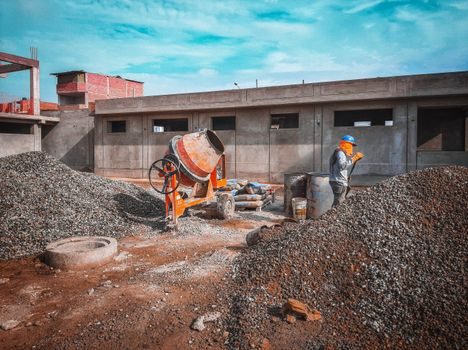
On a 6 m³ retrofit, practitioners working in Autodesk Fabrication CADmep pointed to CID968 (Archimedes screw) as the canonical component for the auger flight inside the drum, with the 2023 thread still cited as the reference for in-house blade fabrication [S6].
For OEM drum builds, EMSUNTOUR's WC6BJ places the engine at the rear of the underground mixer, away from concrete contamination, and uses a front inlet/outlet to let a single operator feed the drum [S4].
Wear-protected blades on the CIFA HD drum and a reinforced basic frame are the two design moves most vendors list when selling into abrasive aggregate or high-cycle mining service [S2][S4].
Chassis, GVW and bridge-formula constraints
Selection pivots on regional bridge-formula axle limits: a 6 m³ mixer on a 3-axle chassis with diesel drive typically leaves 1-2 t of payload headroom for water and additive tanks, while a 12-15 m³ hydraulic unit on a 4- or 5-axle chassis consumes most of that margin [S1][S2][S3].
Hangzhou Special Purpose Vehicle Co. groups mixers alongside tank trucks, semi-trailers and concrete pump truck variants on the same multi-product line, which is the typical sourcing pattern for fleet buyers that want one OEM for both drum and boom units.
For buyers who already own a truck-mounted concrete pump, matching the mixer's hydraulic flow rate to the pump's demand curve avoids sizing a second engine-driven PTO circuit; the CIFA HD's 560 l/min output is on the high end of what a single chassis can supply [S2].
Comparison: 6 m³ diesel, 9-12 m³ hydraulic, 15 m³ heavy-duty
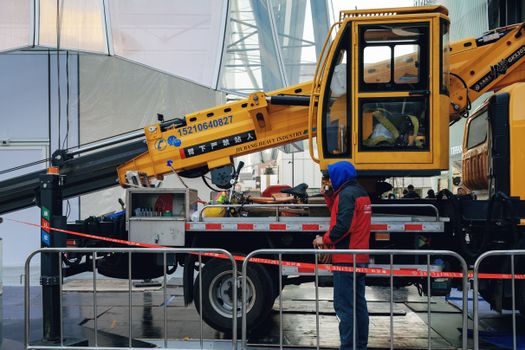
Three reference points cover most purchase decisions: a SANY SY306C-8(R) 6 m³ diesel at 5 m³/min, a Semix SM9 7-12 m³ hydraulic lightweight unit, and a CIFA HD 7-15 m³ hydraulic heavy-duty model with 560 l/min output [S1][S2][S3].
On drum capacity the order is 6 m³ → 12 m³ → 15 m³; on output the diesel unit is rated in m³/min while the hydraulics are rated in l/min, so a direct 1:1 comparison requires assuming mix ratio (typically ~0.9 m³ of concrete per 1,000 l of slurry) [S1][S2].
On application fit, the 6 m³ diesel fits urban and underground, the 7-12 m³ hydraulic fits regional ready-mix with GVW constraints, and the 15 m³ hydraulic fits heavy civil and mining where axle count is not the binding constraint [S1][S2][S3][S5].
Sourcing, MOQ and aftermarket support
MOQ on Chinese OEM lines such as Jidong sits at 1 set with a stated 500 sets/year capacity and automatic-robotic welding on all drum seams, which is the standard quality gate for export mixer drums. [S1]
Typical lead-time and pricing data on concrete mixer truck platforms such as Alibaba's harga index cluster around the same 6-12 m³ band seen in OEM catalogues, with price discovery still dominated by direct RFQ rather than posted list pricing.
For buyers also specifying a concrete pump truck on the same fleet, cross-checking hydraulic reservoir sizing, PTO ratio and chassis frame section modulus against the mixer's loading curve prevents the most common retrofit failure: a chassis that is stiff enough for a 9 m³ drum but not for a 15 m³ unit on the same wheelbase [S2].
For related upstream decision-making, Concrete Fiber Sizing and Selection: Spec-Driven Guide for 2026 Mixes covers the reinforcement side of the same pour, while Hydraulic Power Unit Buying Guide 2026: Spec Bands, Source Types and Sourcing Levers gives the spec bands that govern the hydraulic-drive mixers above.