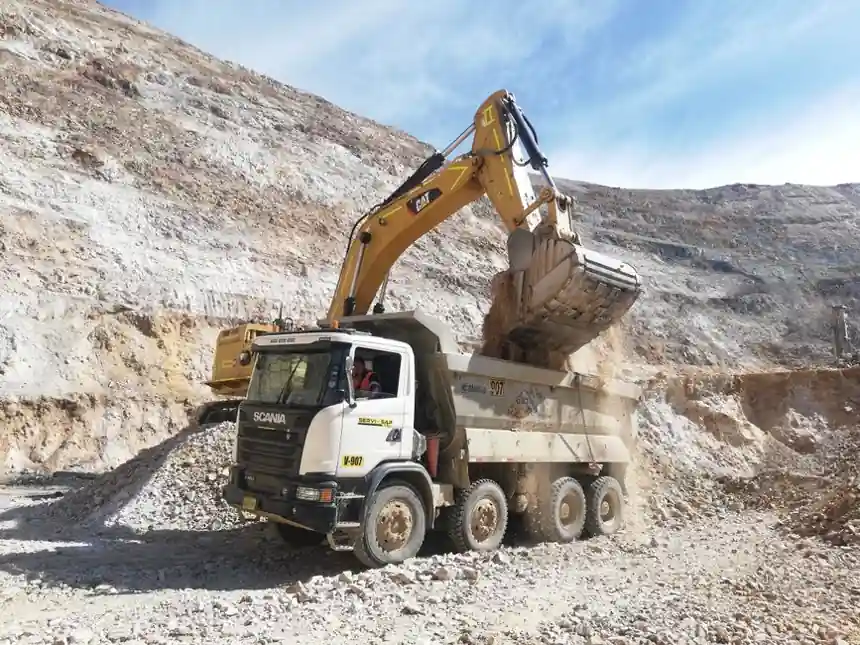
Mining PPE in 2026 is no longer generic leather, with mechanized and underground operations requiring EN 388 abrasion level 4, cut D–F, puncture 3+, and TPR "P" impact back-of-hand protection as the default specification baseline [S4].
Hand injuries remain the single most common recordable in extractive work, and procurement has shifted from price-per-dozen to a hazard-mapped spec sheet covering abrasion cycles, gram scores, and impact force attenuation, with the safety gloves category now treated as engineered PPE, not commodity workwear.
What Hazards Drive the Mining Glove Spec
Mining gloves are evaluated against four primary hazard vectors: abrasion from mineral-bearing rock, cuts from sharp ore and steel mesh, puncture from rebar and tooling, and crush impact from falling material or rotating equipment [S7].
A typical 2026 German procurement spec calls for EN 388 mechanical ratings of 4 (abrasion), D through F (cut, ISO 13997), 3 or 4 (puncture), and a separate EN 388 impact pass with TPR exoskeleton coverage rated "P" for back-of-hand, knuckle, and finger protection [S4]. The mining workforce represents only 1% of global labor but accounts for 8% of fatal occupational injuries, a disparity that drives the regulatory push behind these mechanical minimums [S4].
Material Construction: Coatings, Liners, and Leather
Three material families dominate the 2026 mining glove catalog, each with a distinct strength profile, with coated-knit (nitrile or latex palm over HPPE/Kevlar liner) the volume leader for general extraction, full-grain leather (cow, pig, or goat hide) for welding and hot-surface zones, and chainmail or SuperFabric-reinforced gloves for blade and puncture extremes [S1][S2][S3].
Leather naturally provides flame resistance and abrasion durability but loses dexterity as the hide softens, while HPPE and Kevlar liners hold cut scores at the D–F level without bulk, with gauge typically 10G (heavier, more durable) or 13G (lighter, more dexterous) depending on whether the task is haul-truck cab maintenance or hand-mucking underground [S2][S4]. Mechanix's mining catalog lists 12 of 14 SKUs with abrasion resistance and 11 of 14 with cut resistance, reflecting how layered specs are now baseline rather than premium [S1].
Wet, Cold, and Impact: Specialized Use Cases
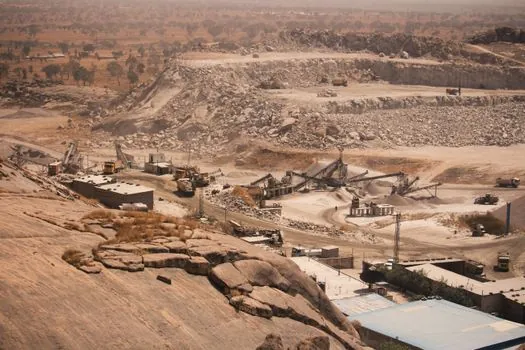
Wet underground environments demand a hydrophobic shell, with 3M Thinsulate insulation in cold-weather variants and DMF-free coatings to avoid dermatological reactions during long shifts, and Mechanix's wet-condition mining gloves pair nitrile full-coat palms with water-resistant shells rated for sustained immersion [S1].
For impact-heavy tasks such as jacklegging, scaling loose rock, or working near crusher pinch points, TPR (thermoplastic rubber) exoskeletons on the back of the hand have largely replaced simple padding, and the "P" rating under EN 388:2016 indicates the glove passes the standardized impact test at all knuckles and fingers [S4]. The case study of a Montana miner whose hand was crushed during routine jacklegging in 2010 is the frequently cited operational trigger for replacing legacy cotton-dotted and basic leather gloves with purpose-built impact-rated alternatives [S5].
Comparing Main Glove Types on Decision Criteria
The four common mining glove types, lined up against four decision criteria, present a clear selection matrix: coated-knit offers the lowest cost and highest dexterity but the lowest cut and impact score; full-grain leather wins on heat and abrasion but fails modern cut and impact tests; TPR-impact hybrids hit the best all-around mechanical score but cost 2-3x a basic leather pair; and chainmail/SuperFabric variants deliver maximum cut and puncture resistance at the expense of weight and tactile feedback [S2][S4][S5].
In practice, most large operators run a tiered system: coated-knit for general surface work, TPR-impact for underground and equipment maintenance, leather for welding and hot-surface zones, and chainmail-reinforced for shotcrete nozzle work and cable handling. The selection of mining dump truck cab maintenance, for instance, typically pairs a TPR-impact glove with a high-visibility shell to maintain hand protection during pre-shift walk-arounds.
Standards, Certifications, and Sourcing Realities
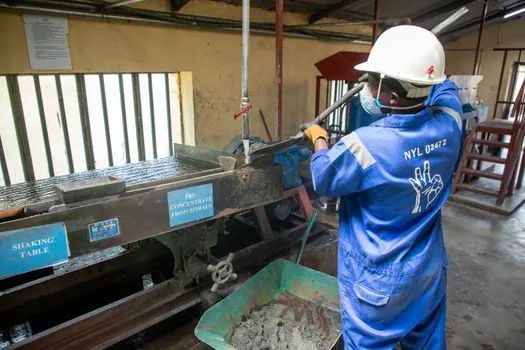
The dominant European mechanical standard is EN 388, with the 2016 revision adding ISO 13997 cut scores (letters A through F, replacing the legacy 1–5 numeric scale) and the optional impact pass, and German mining procurement additionally enforces the Bundesberggesetz (Federal Mining Act) plus BG (Berufsgenossenschaft) carrier rules on documented certification [S4].
Outside Europe, MSHA in the U.S. and CAN-CSA Z195 in Canada govern mining PPE, while ANSI/ISEA 105 remains the U.S. cut and abrasion reference, and many OEM catalogs cross-list both EN 388 and ANSI scores on the same SKU for global fleet procurement [S1][S2]. For buyers sourcing from overseas, the credibility question of safety certification hinges on whether the test report traces to an accredited EU Notified Body, and the German supply-chain analysis notes that ISO 9001 plus CE EN 388 is the floor, not the ceiling, for serious mining contracts [S4].
Selection Workflow for a Mining PPE Buyer
The 2026 workflow moves from hazard mapping to spec sheet to field trial, starting with a site-specific risk register that names the dominant hazard (abrasion, cut, puncture, impact, chemical, or thermal), then matching the EN 388 four- or six-digit mechanical code to that hazard, then narrowing by gauge and material, and finishing with a 30-day field trial before fleet rollout [S4].
Buyers should also account for machine safety interaction: gloves worn near rotating shafts require snug cuffs and no loose fabric, and EN 388:2016 added a section addressing this directly. Skip gloves that fail to publish both the legacy and revised EN 388 scores, since ambiguous ratings are a red flag during BG or MSHA audits, and for fire safety crossover zones such as underground diesel refueling or welding repair, specify leather or flame-resistant treated liners separately from the cut-impact glove layer.
Linked Purchasing Signals and Watch-Items
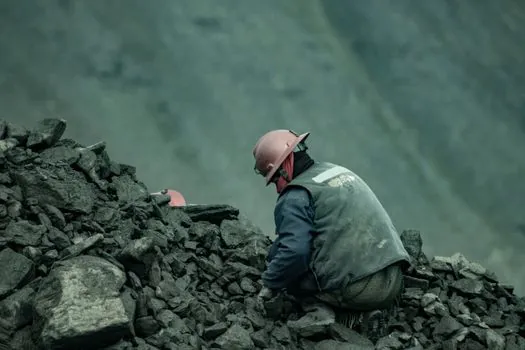
The Germany safety gloves market is projected to grow from USD 1,068.97 million in 2023 to USD 2,100.86 million by 2032, a 7.78% CAGR, while the German mining equipment market sits at USD 1.56 billion in 2025 and is forecast to reach USD 1.86 billion by 2030 [S4]. Germany's 2023 output included approximately 12.5 million tonnes of rock salt and 5.8 million tonnes of potash, and the abrasive mineral profile of those operations is what drives the German spec bias toward high abrasion and high impact ratings [S4].
Two trackable signals for the rest of 2026: first, whether more EN 388:2016 impact-rated SKUs appear in the under-EUR 15 price band, which would indicate the spec is becoming commoditized; second, how often operators publish field-trial injury data comparing coated-knit to TPR-impact gloves, since the Montana mining company case study is the most-cited public benchmark but is now over 15 years old [S5]. Buyers specifying respirator and hand protection together should align APF and cut-impact ratings to the same hazard zoning, since hand and respiratory injuries track each other underground.