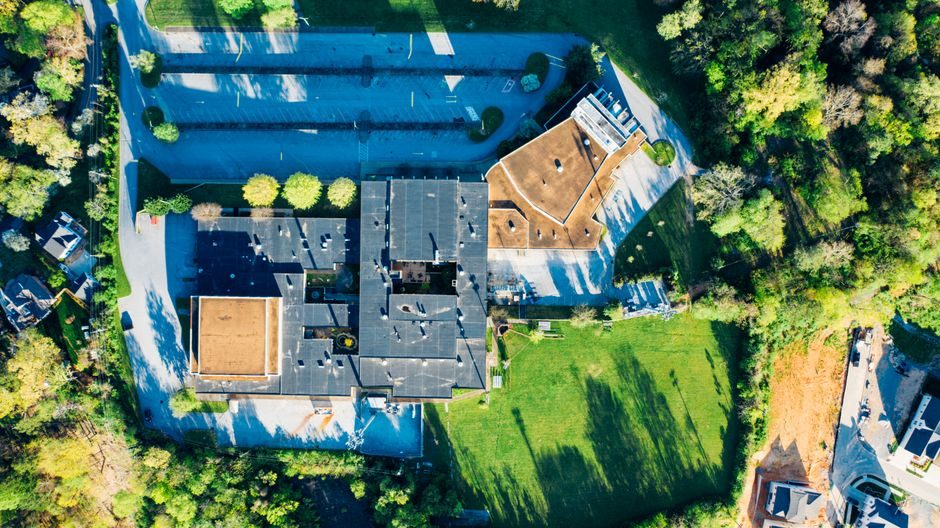
Heat-welded multi-ply modified bitumen membrane systems are installed in two main variants — torch-applied SBS (Styrene Butadiene Styrene) and torch-applied APP (Atactic Polypropylene) — over primed, structurally sound concrete decks per ASTM D7693/D7693M-15, with standard roll dimensions of 3-5 mm thickness, 1 m width, and 7.5-15 m length [S3][S2].
Common 2026 market pricing for 4 mm polyester-reinforced SBS/APP rolls sits in the US$2.00-2.80 per m² band on 1,000 m² MOQ terms, with self-adhesive variants starting near US$1.50-2.20 per m² [S1][S7]. Per-ply supply capacity from tier-one Chinese lines reaches 60,000,000 m²/month on okorder listings, indicating that field installation — not material availability — is the controlling bottleneck on most Chinese export projects [S3].
Substrate Prep and Primer Specs (ASTM D41, D5295, D5957)
ASTM D7693/D7693M-15 Section 1.2 requires the substrate to be structurally sound, sloped to drain, and able to accept the membrane plus overburden weight before any roll is torched down [S2]. Surface preparation follows ASTM D5295 for adhered (bonded) membrane waterproofing systems — the deck must be cured, dry, and free of laitance, with primer applied at the coverage rate specified by ASTM D41 (asphalt primer used in roofing, dampproofing, and waterproofing) [S2].
Concrete cure is the single most common field failure: most specifiers require a minimum 28-day cure before primer application, though D41 does not fix a numeric moisture limit — project specs typically call for a moisture meter reading under 5% by mass or a passing ASTM D4263 polyethylene sheet test. On new concrete bridge decks, project specifications also commonly reference a flood test per ASTM D5957 before the wearing course goes down, providing a 24-hour hold to confirm watertightness [S2].
Priming mistakes show up as blisters within weeks: a thin, even coat at roughly 0.2-0.4 L/m² is correct, while puddles trap solvent and create vapor pressure under the membrane when torched. If the deck is too wet or under-cured, the correct call is to stop — let the slab dry, re-test, and resume — not to torch over the problem.
Reinforcement and Material Selection (D6162, D6163, D6164, D6222, D6223)
ASTM D7693/D7693M-15 Section 2 lists six reinforcement/specification pairings: SBS over polyester (D6164), SBS over glass fiber (D6163), SBS over polyester+glass (D6162), APP over polyester (D6222), APP over polyester+glass (D6223), and self-adhesive/bitumen tape variants commonly used at upstands and details [S2][S8]. Reinforcement choice governs puncture resistance, dimensional stability, and tensile strength: polyester offers the highest elongation (typically 30-60%), while fiberglass gives the best dimensional stability and fire rating at the cost of cold-bend performance [S3].
For a SBS vs APP vs IPP modified bitumen membrane types specs selection decision, the practical rule is: APP for hot-climate, torch-only, exposed-finish roofs (better UV and heat resistance), SBS for cold-climate or detail-heavy projects (better low-temperature flexibility down to roughly -20 °C), and self-adhesive peel-and-stick rolls for detailing, vapor-control layers, and substrates where open flame is not permitted. Comparing the three against four decision criteria — temperature range, install method, UV/aging resistance, and cost (2026 spot): APP covers -10 °C to +150 °C, torch-only, high UV, US$2.00-2.80/m²; SBS covers -20 °C to +120 °C, torch or cold adhesive, medium UV, US$1.50-2.20/m²; self-adhesive SBS covers -20 °C to +80 °C, peel-and-stick only, low UV (must be covered), US$1.50-2.50/m² [S1][S3][S7].
Surface finish matters: PE film, fine sand, and mineral slate (granule) caps each carry different function — PE for sandwich layers, sand for bonding next ply, mineral granules for UV-exposed cap sheets. A 4 mm polyester-reinforced APP roll with slate finish from Chinese suppliers is the most common export SKU, with Nanjing EFG perforated fiberglass tissue at US$0.10-0.50/m² often going in as the substrate carrier [S7][S8].
Torch Application, Lap Geometry, and Two-Ply Stagger
Heat-welded installation under ASTM D7693/D7693M-15 requires a multi-ply build (typically two or three plies) with staggered side and end laps to avoid four-layer overlaps at any single point [S2]. Standard side laps are 75-100 mm, end laps 100-150 mm, with the upper ply offset by roughly 300-500 mm from the lower ply's end laps so that no seam is directly over a seam below — this stagger pattern is the difference between a leak-tight and a leak-prone field.
At a side lap, the torch flame should be applied to the overlap edge of the upper roll until the polyethylene burn-off film melts and a uniform bead of bitumen (~5 mm wide) squeezes out along the seam — that bead is your witness mark. End laps on APP sheets are typically heat-welded twice (a strip-weld plus a final cap weld) because end laps carry the highest shear stress. The torch operator should keep a 300-500 mm standoff and never let the flame dwell — scorching the polyester reinforcement drops tensile strength by 30-50% and is the most common rework item on Chinese export jobs.
Self-adhesive rolls are not a substitute for torched cap sheets in any exposed-finish application; the modified bitumen membrane page on the encyclopedia spells out the SBS/APP thermoplastic difference, and the same rule applies in the field — peel-and-stick goes on details, vapor layers, and under torched plies, never on top as a UV-exposed finish.
Detail Work: Upstands, Corners, and Penetrations (D5898, D3019, D4586)
ASTM D7693/D7693M-15 references ASTM D5898 for adhered sheet waterproofing details and ASTM D3019 / D4586 for lap cement and asphalt roof cement at terminations — and field experience is that roughly 80% of leaks start at a detail, not in the field of the sheet [S2]. At upstands, base flashings are turned up a minimum 200 mm above the finished roof surface and sealed into a reglet or counter-flashing; inside corners get a 100×100 mm reinforcement piece torched in first, outside corners get a double-layer reinforcement.
Penetrations (pipe sleeves, HVAC supports) are wrapped with a separate reinforced piece cut to a "target" pattern, with each concentric ring of the target torched individually. Drain sumps are depressed 20-30 mm below the deck to prevent ponding right at the drain throat. Cold-applied lap cement per D3019 is used only where torching is unsafe (near combustible substrates, occupied spaces below) and never as the primary seam closure in torched two-ply systems.
Common detail failures: under-turned upstand (less than the spec'd 200 mm — wind-driven rain wins), missing corner reinforcement (stress concentration cracks the field sheet at the corner fold), and unprimed metal — the bitumen cannot bond to dirty/oxidized metal flashings. If a detail has to be re-done, the correct sequence is to cut out the failed section back to dry, sound membrane, let the substrate cool, prime again, and patch in a new piece that laps the existing membrane by at least 150 mm in all directions.
Equipment, Output, and 2026 Supply Benchmarks
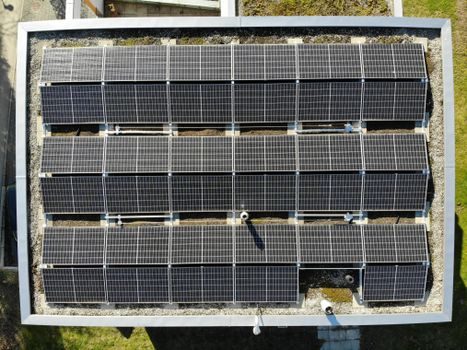
Production lines for SBS/APP membrane are quoted at 10 sets/month supply capability with monthly output of 60,000,000 m² on tier-one lines per Okorder listings dated 2026-06-01 and 2026-07-07, loading from Qingdao port on TT or LC terms [S3][S4][S5]. Sichuan Shuyang Waterproof Materials Co. advertises 30,000,000 m²/year supply ability on 1,000 m² MOQ across modified bitumen, self-adhesive, polymeric, and root-resistant variants — a useful baseline for the kind of mid-tier volume a regional contractor should expect to source [S10].
For the 2026 sourcing view, see the wider waterproof membrane reference and the waterproof coating trade-off map — both link into the same substrate-prep logic. Field crews should also pre-stage a torch (gas pressure 50-80 kPa on propane), a roller for lap compaction, a moisture meter, and a probe thermometer for substrate checks; and per ASTM D7693/D7693M-15, no torch work below 4 °C substrate temperature without a cold-applied alternative or a manufacturer-approved winter-grade formulation [S2].
On the manufacturer's line, APP lines run roughly 5-15 m/min and SBS lines 8-20 m/min depending on thickness and calender configuration, which sets the delivery horizon for a 50,000 m² job at 7-15 days of production plus sea freight — useful when the spec calls for delivery against a project schedule rather than spot stock. Watch the spot price band: US$1.50-2.80/m² on 4 mm rolls has been the 2026 export range, with the price differential between polyester-reinforced and fiberglass-reinforced SKUs typically running 10-20% on the same nominal thickness [S1][S7][S9].
Two trackable signals for the next 90 days: ASTM committee ballot activity around D7693/D7693M (any reapproval or revision) and the GB 55030-2022 enforcement line on Chinese domestic jobs that require E-class wet-installed sheets per GB/T 35467-2017 [S9] — both will shift the substrate-prep and detail-discipline sections on any project spec'd after the change.
Spec-level background on the components involved: linear guide.