
Polymer-modified bitumen membranes are manufactured in three principal classifications — SBS, APP, and IPP — with base mats of polyester, fiberglass, or polyester-fiberglass composite, thicknesses spanning 2-5 mm, and surface finishes including PE film, aluminum foil, mineral flakes, and colored sand [S1].
Standard roll geometry is 1 m wide by 10 m long, with custom lengths available, and modified-asphalt production lines run at 0-50 m/min with annual capacities from 1 to 20 million square meters per year [S1]. Torching and self-adhesive variants share the same polymer-modified bitumen compound but differ in installation method and field safety requirements [S1].
Modifier Chemistry: SBS, APP, and IPP
SBS (styrene-butadiene-styrene block copolymer) is an elastomeric thermoplastic that gives the bitumen a rubber-like elastic recovery, and the polymer-modified bitumen (PMB) blend keeps SBS as the dominant phase once concentration exceeds roughly 6% by weight of the blend [S3]. At that threshold, SEM imaging and dynamic shear rheometer data show a continuous elastic network forming in the bitumen, which raises viscosity, softening point, toughness, and complex modulus simultaneously [S3].
APP (atactic polypropylene) and its close relative IPP are plastomeric modifiers that raise the bitumen's softening point and stiffness without the same elastic recovery SBS delivers, making them better suited to torch-applied membranes in warm-climate roofs [S1]. Practical SBS, APP, and IPP modifications all fall under the broader "polymer modified asphalt waterproofing membrane" family, with SBS being a sub-class, and the production line accepts all three modifier families interchangeably [S1].
Base Mat, Thickness, and Surface Finish Options
Base mat selection drives the mechanical performance of the finished roll, and the four standard carriers are polyester mat (highest elongation, good for moving substrates), fiberglass mat (high tensile, low elongation), compound mat, and polyester-fiberglass mat (balanced properties) [S1]. Thickness is offered from 1 mm up to 5 mm, with the 2-5 mm range being the commercial norm for roofing and below-grade waterproofing [S1].
Surface finish is a functional choice, not a cosmetic one: PE film is the standard release face for torch application, aluminum foil adds solar reflectivity and a vapor barrier for exposed roofs, mineral flakes (slate or colored granules) provide UV protection and walkability, and colored sand is used on lighter exposed systems [S1]. The combination "polyester mat + 4 mm thickness + mineral granule surface" is the dominant exposed-roof specification, while "fiberglass mat + 3 mm + PE film" is the common buried or covered-system build [S1].
Production Equipment, Capacity, and Speed
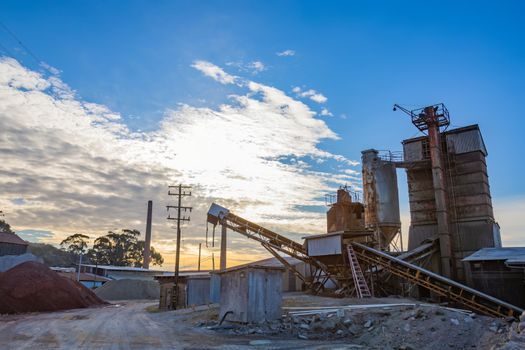
A complete modified bitumen membrane line integrates 21 device stations from roll-unfolding through auto-winder, including asphalt coating, sand-scattering, cooling/embossing, smoke purification, and a horizontal storage tank farm [S1]. Lead time for a full line is 30-40 days, with monthly supply capability of 10 sets and 20 sets per year production capacity quoted across major Chinese OEMs [S1][S2].
Production speed is rated 0-50 m/min, with line width and length settable to match regional roll formats [S1]. Automatic and semi-automatic machine tiers exist, and the line can be configured for both torch-applied and self-adhesive product families without retooling the coating station [S1]. For context on how membrane capacity scales against other industrial product lines, see the related coverage on filling machine automation tiers and metering principles.
Selection Criteria: Climate, Substrate, and Installation Method
Specifying the right modified bitumen membrane is a three-variable decision: expected temperature range, substrate movement, and installation method. SBS-modified membranes deliver elongation typically 30-40% higher than APP, making them the default on substrates prone to thermal cycling or minor cracking [S1]. APP-modified membranes carry a higher softening point and resist heat flow on dark, sun-exposed roofs in tropical and subtropical climates [S1].
Substrate moisture governs primer choice: base surface water content must be below 8% before any SBS or APP membrane is laid, with the substrate clean, solid, smooth, dust-free, and oil-free, and internal corners pre-treated with a fillet [S1]. Self-adhesive variants eliminate torch-on fire risk in confined spaces but sacrifice some bond strength, while torch-applied rolls deliver the highest lap-seal integrity in field practice [S1]. Standard PE-film-faced rolls are the budget option, aluminum-faced rolls are the higher-performance exposed choice, and mineral-granule rolls sit at the top for UV and foot-traffic durability [S1].
Polymer Content Control and Storage Stability
Optimum SBS content in modified bitumen is determined by rheological properties and the formation of the critical elastic network, with good polymer-bitumen compatibility producing a stable structure up to about 6% polymer by weight of the blend [S3]. Beyond that concentration, the polymer and bitumen phases begin to separate, which is monitored through a storage-stability test: the softening point temperature difference between the top and bottom samples must be held within 2°C to confirm PMB stability [S3].
Adding polymer increases viscosity, softening point, toughness, and complex modulus, but the gain plateaus and reverses once phase separation starts, so production-line dosing and tank residence time are the two controllable variables [S3]. For waterproofing-membrane production, this means the mixing-weighing system, horizontal storage tanks, and impregnation tension control device on the production line are the critical stations for membrane consistency, not the coating head [S1].
Limitations and Failure Modes
Modified bitumen membranes fail at the laps and the substrate interface far more often than in the field of the sheet, and laps account for the majority of leak callbacks on torch-applied roofs. Overheating the bitumen compound during torching degrades the SBS or APP modifier, dropping elongation and softening point, and the resulting membrane embrittles within a few seasonal cycles. Substrate moisture above 8% at laydown causes blistering under solar gain, and the surface preparation rules (dry, clean, solid, smooth, dust-free, oil-free) exist because primer adhesion cannot compensate for a wet slab [S1].
Mineral-granule loss on exposed roofs is a normal wear mode driven by foot traffic and freeze-thaw, not a manufacturing defect, and granule surfacing should be specified at 4 mm base thickness rather than 3 mm for any roof with regular maintenance access [S1]. A useful adjacent reference for substrate-prep decisions and field-acceptance criteria is the waterproofing coating installation spec map, which complements the membrane-side details covered here.
Standards and Sourcing Reference
Polymer-modified bitumen membrane production lines are sourced primarily from Chinese OEMs in Jiangsu and other eastern provinces, with typical MOQs of 1 set for the production equipment and 5,000 square meters for the finished membrane roll stock [S1][S2]. Pricing on finished APP-modified membrane rolls ranges from roughly US$2.00 to US$5.00 per square meter at 1,000 square meter MOQ, with the 4 mm thickness tier at US$2.00-2.80 per square meter [S4]. Payment terms are L/C or T/T, and shipping ports are mainland China container ports [S1][S2].
For encyclopedia-level background on the broader membrane category, see the modified bitumen membrane reference page and the waterproof membrane classification guide. Trackable signals to watch: continued consolidation of Jiangsu-based OEM production capacity (10 sets/month, 20 sets/year supply rates), and incremental movement of polymer dosing toward the 6% SBS threshold where phase separation begins, which sets the upper bound for safe PMB formulation [S1][S2][S3].
Spec-level background on the components involved: pressure transmitter.