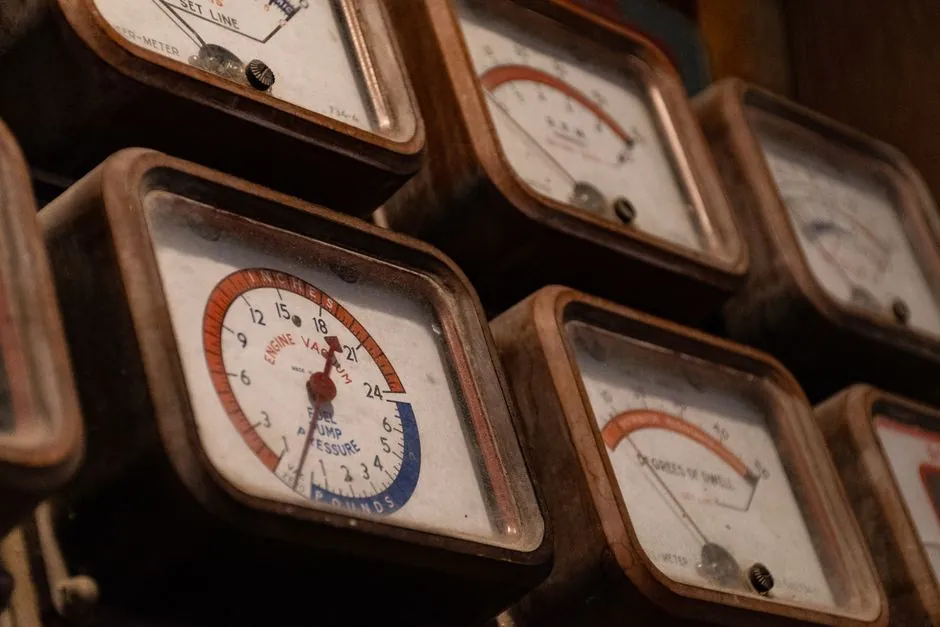
A moisture analyzer reports water content as %MC, ppm or dew point; a conductivity meter reports ionic current flow as µS/cm, mS/cm or %TDS.
Specifying one for the other's job is a common procurement error. Moisture in non-conductive oil cannot be read with a conductivity cell, and ionic strength in pure water gives no usable indication of trace organics. The two-meter overlap is narrow, mostly limited to clean water, CIP rinse verification, and some boiler feedwater loops where both parameters matter independently.
Measurement Principles and What Each Instrument Actually Reads
A moisture analyzer quantifies water molecules specifically, through loss-on-drying gravimetric, halogen IR drying, capacitance/conductivity, near-infrared (NIR) absorption, FT-NIR, or tunable diode laser absorption spectroscopy (TDLAS) [S1][S2][S3]. Halogen IR bench units such as the METTLER TOLEDO HX204 specify a minimum recommended %MC of 0.01 with 0.01 %MC readability and internal calibration [S9][S10]. TDLAS portable units, including the Panametrics Aurora TransPort, target low-ppm moisture in natural gas and non-aqueous liquids, with response times on the order of seconds [S3].
A conductivity meter applies an AC voltage across electrodes immersed in solution and reports the resulting current as conductance, normalized to cell constant K into µS/cm or mS/cm [S4]. Three cell topologies dominate: 2-cell (amperometric, suited to mid-range 10 µS/cm to 200 mS/cm), 4-cell (potentiometric, accurate from <1 µS/cm pure water to >200 mS/cm concentrates), and toroidal/electrodeless (immune to fouling, used on slurries, acids, and >500 mS/cm brines). Ady Water's Indonesian channel lists Hanna, Lutron and Apera portable/bench conductivity meters for water-treatment and lab use, alongside pH/DO/TSS kits [S4].
Decision Criteria: Which Instrument for Which Job
Selection starts from the analyte, not the technology. A water-in-oil ppm reading requires a moisture analyzer (capacitance, TDLAS, or Karl Fischer titration), because the oil matrix is itself an insulator. A sodium hydroxide or sulfuric acid concentration check needs a conductivity meter with a toroidal probe, because the matrix is fully conductive and trace water is the wrong question. For clean-water streams where both parameters matter (demineralized boiler feed, HPLC-grade water, RO permeate), running both instruments in series is standard practice: the conductivity cell verifies ionic purity while the moisture analyzer (or ppm O2, or TOC) verifies organic or dissolved-gas content. [S3]
Five criteria separate the two classes cleanly. (1) Analyte phase: moisture analyzers cover solids, powders, sludges, gases, and non-aqueous liquids; conductivity meters cover aqueous electrolytes only. (2) Reporting unit: %MC, ppm, dew point vs µS/cm, mS/cm, %TDS, salinity (PSU). (3) Range: halogen IR LOD covers 0.01–100 %MC; TDLAS covers 1 ppb to 1000 ppm depending on path length; conductivity cells cover <0.05 µS/cm (pure water) to >1000 mS/cm (concentrated brine). (5) Calibration regime: moisture analyzers use temperature/time-programmed gravimetric reference or certified gas standards; conductivity meters use KCl reference solutions at defined µS/cm (e.g. 84 µS/cm, 1413 µS/cm, 12.88 mS/cm, 111.8 mS/cm) and cell-constant verification.
Comparison: Moisture Analyzer vs Conductivity Meter Across the Four Selection Criteria
Lining the two side by side makes the procurement choice mechanical. Halogen IR moisture analyzers (e.g. METTLER TOLEDO HX204) cost roughly $4,000–$12,000 for a bench unit, with 0.01 %MC readability and 0.01 %MC minimum recommended range [S9][S10]. Portable TDLAS units (Aurora TransPort) run higher, in the $18,000–$35,000 band, justified by ppb-level gas-phase moisture and intrinsic safety ratings for hazardous areas [S3].
Conductivity meters span portable handhelds (Lutron, Hanna, Apera) from roughly $150 to $2,500, bench laboratory meters with 4-cell support at $1,500 to $5,000, and industrial toroidal in-line units from $3,000 to $12,000 with hygienic or NEMA 4X heads [S4]. Integration is easier on the conductivity side: pH/ORP/ISE multi-parameter units commonly share RS485, Modbus RTU, or 4–20 mA backbones with online water analyzers for cooling-tower and RO skids. Moisture analyzers usually require Ethernet (LabX), OPC UA, or vendor-proprietary buses, and bench units rarely expose analog output. Lifetime on a properly maintained conductivity sensor is 2–5 years; halogen IR weighing modules typically outlast 10 years with annual balance service [S6][S9].
Real Use Cases: Where Each Tool Is Indispensable
Food and feed production: high-quality animal feed moisture is checked in minutes with a halogen moisture analyzer, replacing 2–4 hour drying-oven protocols, which is a productivity win for QC labs and at-line production checks [S8]. Drying-oven vs halogen cross-checks are still run as primary reference to validate new analyzer calibrations, because the oven method remains the gravimetric baseline (typically 103 °C for 2–4 h depending on sample matrix) [S6].
Natural gas processing: TDLAS-based Aurora series analyzers measure moisture from low-ppm to high-percentage levels, used to verify TEG dehydration performance upstream of pipeline custody transfer and downstream of cryogenic NGL recovery [S3]. Conductivity meters are not used here, since natural gas is non-polar and any electrode reading would be meaningless.
Water treatment and RO: conductivity meters paired with pH and ORP sensors form the standard monitoring stack for RO/NF permeate quality, with portable and bench units covering everything from field checks on brackish wells to USP <645> compliance in pharma water [S4]. Inline vibration analyzers and conductivity loops are typically co-deployed on cooling-tower skids, but they report on completely independent phenomena (mechanical health vs ionic load). Moisture analyzers in water treatment are reserved for trace organics or ppm-level water-in-solvent applications, not bulk ionic strength.
Limits, Failure Modes and Sourcing Standards
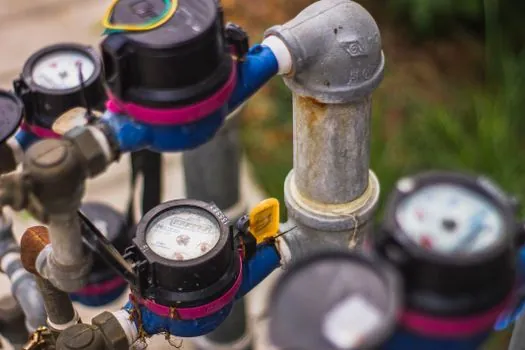
Conductivity meter pitfalls include: polarization error on 2-cell probes at high ionic strength, temperature compensation ambiguity (linear vs natural-water, 20 °C vs 25 °C reference), and zero-drift on pure-water 4-cell probes from CO2 ingress or sensor aging. [S2]
Standards to anchor sourcing: ASTM D6304 (Karl Fischer) and ASTM D6869 (capacitive) for oil moisture; ISO 712 (oven method, 130 °C, 2 h) and ICC 110/1 for cereal moisture; ISO 7888 and ASTM D1125 for aqueous conductivity; USP <645> for water conductivity; and ASTM D5391 for cooling-water scaling tendency. For signal and safety, look for IEC 61010-1 on the analyzer electronics, ATEX 2014/34/EU or IECEx for hazardous-area TDLAS, and NEMA 4X/IP66 on field conductivity heads. Buyers evaluating gas analyzers for the same facility should ensure analog output ranges and update rates match the DCS, a frequent retrofit obstacle. Traceable calibration certificates with stated uncertainty (typically ±0.2 %MC for halogen IR and ±1–2 % of reading for conductivity) belong on every PO.
Procurement Checklist Before You Buy
Three questions settle most of these specs on the first pass. What phase is the sample (solid, powder, non-aqueous liquid, aqueous, gas)? What range and accuracy does the process need, in engineering units that operations actually use? Is the unit lab-bench, portable, or inline with a specific output protocol (4–20 mA, HART, Modbus, Ethernet/IP, Profinet)? Flow meter selection criteria sits one level up in the same instrument tree and often gets specified in the same project review. If the line also needs level measurement, radar vs ultrasonic level runs in parallel and is the next engineering decision. [S3]
Trackable signals to watch: vendor firmware release notes for HX204-class halogen analyzers (METTLER TOLEDO publishes LabX updates quarterly); new IEC 60079-0/1 alignment certificates for TDLAS portable units entering Zone 1; and price-list moves on toroidal conductivity sensors as hygienic (EHEDG) variants compete against traditional threaded 2-cell designs. None of these is a buying trigger on its own, but the convergence of one, two, or all three is a reasonable point to requote.