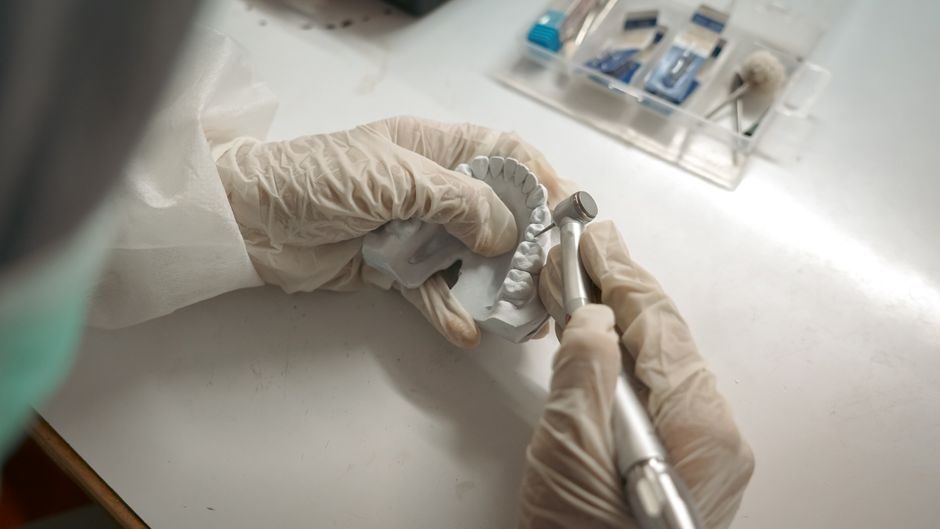
Most China-tier mold base factories catalogue S50C / P20 standard frames in a 30%-40% gross-margin band and slot custom build-to-print frames into a 4-5% die-steel (P20, H13, S136, NAK80) upcharge tier, with CNC rough + finish lead times clustering around 30 working days for 500x600 mm-class sets [S1].
The buying decision pivots on four levers — frame type (LKM-standard vs HASCO/DME vs BTP), plate steel grade, machining tolerance, and cavitation match — all of which propagate downstream into sand casting mold and die casting die life cycles.
Frame Type and the LKM-vs-Built-to-Print Split
China-tier catalogs split into three families: LKM-standard (Chinese GB-equivalent of HASCO/DME pattern), HASCO/DME-pattern imports, and BTP (build-to-print) custom frames [S1]. LKM-standard pulls from a stocked component pool — A/B plates, support pillars, ejector pins, return springs — and ships faster because the factory already owns the rough-cut billet inventory. The supplier catalogue operated by Mudebao exposes this three-tier pricing logic directly to overseas buyers, with the LKM-standard line dominating the export mix on price and the BTP line dominating on application fit [S1].
HASCO/DME-pattern frames cost 15%-25% above the LKM line because the component pool is thinner and the bolt-circle, ejector-pin and sprue-bushing geometries are re-machined to European conventions. BTP frames carry the highest unit price but absorb the entire design freedom — non-standard plate thickness, custom cavity pocket, integrated cooling channels — and are the only path when the casting mold needs a non-standard parting line or ejector layout.
Steel Grade Selection and the Die-Steel Upcharge
Plate steel is the largest single cost lever below frame type, and the S50C / P20 / H13 / S136 / NAK80 ladder is the standard menu in every China-tier quote sheet [S1]. S50C (AISI 1050 equivalent, 0.47%-0.53% C) is the default for non-critical LKM-standard frames where the cavities are machined into an inserted die steel rather than the frame plates themselves. P20 (1.2311, pre-hardened 30-32 HRC) is the workhorse for plastic-injection and die-cast frames. H13 (1.2343, 48-52 HRC after heat treatment) is reserved for hot-work dies where surface temperature exceeds 400 deg C. S136 (1.2083, 48-52 HRC) and NAK80 (pre-hardened 38-42 HRC) cover corrosion-prone or high-polish cavity inserts.
Factory pricing typically expresses the steel upcharge as a single percentage on top of the S50C base — commonly 4-5% for P20, 8-12% for H13 or S136, and 6-9% for NAK80 — because the billet cost and forging lead time rise in lockstep with the alloy content [S1]. The same logic is visible in related buying guides such as the die casting die cost-band reference, where shot-life, not frame cost, is the downstream financial driver.
Tolerance, Cavitation and the Machining-Lead Cluster
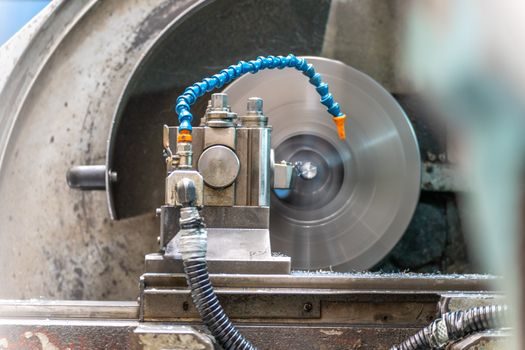
China-tier mold base factories routinely quote +-0.01 mm positioning tolerance on cavity pocket, +-0.005 mm on guide-pin and bush bore concentricity, and Ra 0.8 surface finish on parting lines, with the 30 working-day lead clustering around 500x600 mm-class LKM-standard sets [S1]. Tolerance below +-0.005 mm and surface finish below Ra 0.4 push the supplier into the EDM + hand-polish cell and roughly double the cycle time, which is why quotes for tight-tolerance frames read in the 60-75 working-day band.
Cavitation match is a quieter lever: an over-sized frame adds steel cost and machining time without adding cycle-time benefit, while an under-sized frame forces the sand casting mold into a non-standard parting line. The Mudebao catalogue and similar exporters expose a 4-5 cavity range as the comfort zone for the LKM-standard line; outside that range, the quote slides into the BTP column and the unit cost climbs with the size rather than the cavity count [S1].
Standards, HS Codes and Cross-Border Sourcing
Cross-border sourcing into North America hits HS 8480.79 (molds for rubber or plastics) and HS 8480.41 (molds for metal or metal carbides) for the frame itself, while finished car-bumper mold bases on the China export side fall under HS 8480 and carry the same duty envelope as the broader mold family [S2]. EU-bound shipments add the CE machinery envelope and REACH declarations for any surface treatment; the customs reference for car-bumper mold bases shows that the line item itself is generic enough to attract standard mold duty rather than a tool-specific tariff.
The LKM-standard pattern itself is a de-facto convention rather than a published international standard — it tracks the GB / Hasco / DME dimensional grid, but each factory interprets corner radii, ejector-pin patterns and bolt-circle call-outs slightly differently [S1]. Buyers who need a real cross-vendor interchangeable frame should pin to the HASCO or DME catalogues and accept the 15%-25% premium for the wider component pool.
Decision Matrix: LKM-Standard, HASCO/DME, or BTP

On a four-criterion comparison, LKM-standard frames win on cost and lead time (cheapest line, 30 working-day lead), lose on cross-vendor interchangeability (factory-specific grid) and design freedom (cavity pocket and parting line fixed within the standard pattern) [S1]. HASCO/DME-pattern frames win on interchangeability (any HASCO/DME component fits) and lose on cost and lead time. BTP frames win on design freedom (any plate thickness, any parting line) and lose on cost and lead time — typically the highest line, with CNC + EDM cycles pushing the lead into the 60-90 working-day range.
Engineers should pick LKM-standard when the frame hosts standard plastic-injection or non-critical die-cast cavities, HASCO/DME when the mould will be maintained by a European or North-American tool room with HASCO/DME stocking, and BTP when the mold base carries a non-standard parting line, ejector layout or cooling circuit. The magnesium die casting machine spec reference walks the matching machine-side decisions, and the vacuum die casting spec cut covers the process variant where frame stiffness and vacuum-seal groove tolerance dominate the build.
Who Should NOT Buy LKM-Standard
Buyers running multi-cavity production for automotive bumper-class or structural-injection tooling, where the part has to clear an OEM dimensional layout owned by a HASCO/DME-spec tool room, will inherit rework the day the first ejector pin wears. The same warning applies to any application where the mould has to dock into a standardized moulding machine platen grid — LKM-standard frame corner radii and bolt circles are not guaranteed to be HASCO/DME interchangeable, even when the overall plate dimensions look identical [S1].
Engineers working on hot-work die-cast frames where the parting surface temperature exceeds 400 deg C should not buy S50C-class LKM-standard frames for the cavity plate — the hardness drop at temperature will erase any tolerance gained at the machine. Spec H13 or S136 inserts and accept the 8-12% die-steel upcharge [S1].
Both signals feed directly into the next quote cycle for buyers sourcing mold base sets from China-tier factories.