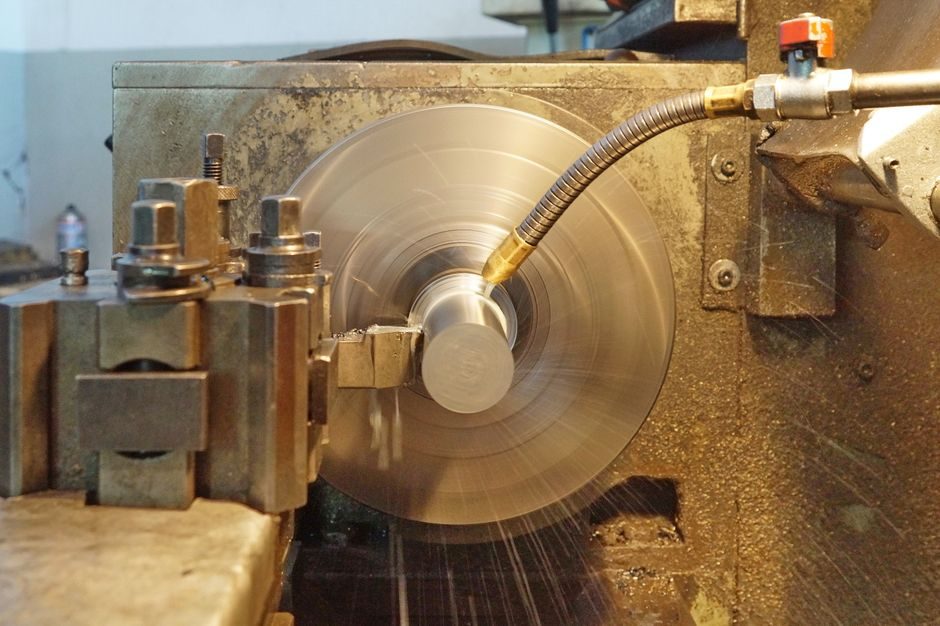
For magnesium structural parts, machine choice is dominated by clamping force band, hot-chamber versus cold-chamber architecture, and Mg-specific melt handling — not by tonnage headline alone.
Magnesium at 1.8 g/cm³ is the lightest structural metal, 100% recyclable, and offers the best strength-to-weight ratio of any structural material on the production line [S1]. A correctly specified magnesium die casting machine delivers thinner-wall, lighter parts that directly trim vehicle mass in EV battery housings, steering columns, and seat frames.
Clamping Force (kN) and Shot Weight Bands by Part Family
Clamping force for magnesium work sits in the 1,000–14,000 kN band; thin-wall EV battery trays and laptop housings commonly land at 6,000–9,000 kN with shot weights of 4–10 kg, while structural automotive nodes push 10,000–14,000 kN with shot weights beyond 15 kg [S2].
Die projection area × magnesium-specific injection pressure (typically 40–70 MPa for cold-chamber Mg) is the actual sizing equation; tonnage must be sized for the part at the projected area, not for the alloy on its own. For higher-volume thin-wall programs an aluminum die casting machine converted to Mg is technically possible but rarely optimal — Mg-specific screw and barrel geometry (higher compression ratio, lower throughput) is the differentiator that controls melt quality.
Hot-Chamber vs Cold-Chamber Architecture for Mg
Magnesium alloys (AZ91D, AM60B, AM50A) are most often run on hot-chamber machines because the melt stays sealed in a magnesium-tight gooseneck — eliminating air ingress and reducing oxidation risk that is far more aggressive than in aluminum work [S1][S2].
Cold-chamber is reserved for larger structural parts where shot weight exceeds the practical hot-chamber limit (typically above ~7–9 kg in current production machines) or where aluminum-style melt furnaces are already integrated. Selection logic: hot-chamber for thin-wall, high-volume parts under ~6 kg shot; cold-chamber for large structural nodes and any program that needs to share melt furnaces with die casting machine cells running aluminum. A side-by-side pass for planning:
1) Cycle time — hot-chamber: 30–90 s typical; cold-chamber: 60–180 s. 2) Melt protection — hot-chamber: enclosed Mg-safe gooseneck; cold-chamber: open ladle pour, higher SF6/SO2 cover-gas demand. 3) Shot weight ceiling — hot-chamber: ~7–9 kg practical; cold-chamber: 15–30+ kg. 4) Typical parts — hot-chamber: instrument panels, laptop frames, steering column brackets; cold-chamber: battery trays, subframes, large structural nodes.
Melt Handling, Safety and Mg-Specific Cell Design

Magnesium melt reacts with water and oxidises aggressively; a proper Mg cell demands dry-chamber hydraulic, SF6/SO2 cover-gas or Novec™-class alternatives on the melt, and dedicated steel tools that avoid copper-bearing inserts (copper forms low-melting eutectics with Mg and is a documented fire trigger) [S1].
For high-volume automotive programs an IATF 16949 certified Chinese die casting supplier is the typical sourcing route, with typical deliverables covering part design, casting, CNC machining, anodising, powder coating, and electroplating under one quality system [S4]. Process monitoring on the machine side covers real-time shot profile, die-temperature mapping, and permanent cycle analysis on a single HMI — these are the data streams that close an IATF PPAP loop [S2].
Real Use Cases and Sourcing Reality
Documented magnesium die castings in series production include EV battery housings, steering column frames, instrument panel beams, laptop chassis, and power-tool housings — parts where weight saving of 30–40% over aluminum is the program business case [S1].
Sourcing reality in 2026: Chinese OEM build (Longhua-class cells) covers the 500–9,000 kN band with 30-day FAT cycles for standard configurations and 60–90 days for engineered cells with custom shot profiles [S2][S3]. For larger structural castings a squeeze casting machine buying guide 2026 approach — slower fill, higher intensification — is the alternative path when porosity targets rule out a conventional hot-chamber buy. Buyers who already run a low pressure die casting machine on aluminum should test whether a hot chamber die casting machine buy delivers better throughput on the same part before committing.
Limitations, Failure Modes and the Sourcing Levers That Matter
Common failure modes on mis-sized Mg cells are cold shuts (low melt temp / low intensification), hot tears (overly high Fe/Ni contamination), and die soldering at copper-bearing inserts — all addressable in the spec, none of them are tonnage problems [S1][S2].
For a buyer with a defined part the spec checklist is short: clamping force, hot- vs cold-chamber, shot weight, platen size, Mg-rated hydraulics, and an IATF 16949 build. Cost-drivers on the sourcing side are platen size (the dominant price lever above 6,000 kN), shot profile, and whether the OEM builds the screw-and-barrel in-house for Mg or adapts a standard Al barrel with a bimetallic sleeve. Equipment life on a maintained Mg cell is 10–15 years; the real cost-of-ownership variable is the Mg-rated spare parts kit and the cover-gas consumption per shift, not the headline machine price [S2][S4].
Closing trackable signal: the next node to watch is the 2026 round of EV battery-tray programs — most published OEM RFQs in the 8,000–14,000 kN band are quoting cold-chamber Mg cells with engineered shot profiles; suppliers with IATF 16949 build slots in the 60–90 day window remain the binding constraint for new program launches through Q3 2026.