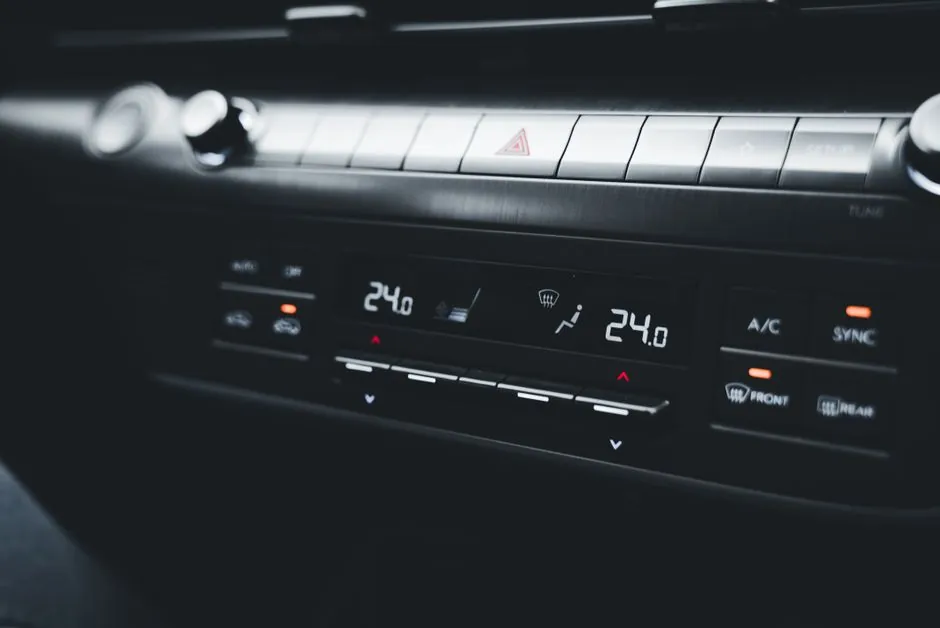
An undersized mold temperature controller is the most common root cause of long cycle times, scrapped parts, and erratic dimensions on an otherwise sound injection-molding cell [S3].
Selection spans four layers: the panel-mount controller (sensor input, control algorithm, DIN size, output type), and the process-side unit (heat-transfer medium, heater kW, pump flow, pump head). Get the wrong layer and the rest of the stack cannot save you [S2][S5].
Sensor Inputs, Output Devices, and Control Algorithms
Three selections lock in before any panel-size talk: input sensor, output type, and control algorithm [S5]. Thermocouples (type J, K, etc.) cover wide ranges and respond fast; RTDs (Pt100/Pt1000) trade response for higher accuracy and stability, which is why most precision plastic-mold loops use 3- or 4-wire RTD inputs [S5].
Output type is dictated by the load: electromechanical relay for small resistive heaters and indicator circuits, solid-state relay (SSR) driver for fast-cycling heater banks, and analog 4-20 mA or 0-10 V where the controller is staging a thyristor power controller or a proportional valve [S5]. On/off control is acceptable for non-critical ovens, but the cycling will continually overshoot and undershoot the setpoint; proportional and PID control are standard where stability matters, and many modern controllers ship with auto-tune so the engineer only has to trigger it on first commissioning [S5].
The three basic controller types are on-off, proportional, and PID; on-off is cheapest, proportional narrows the cycling band, and PID with auto-tune plus adaptive gain is what you want when the spec says plus or minus 0.2 to 0.5 degrees C stability across a production shift [S3][S5].
DIN Panel Sizes and Where Each Fits
Panel-mount controllers are referred to by DIN rail/panel sizes: 1/32 DIN, 1/16 DIN, 1/8 DIN, and 1/4 DIN, in ascending front-of-panel cutout [S2]. A 1/32 DIN is the go-anywhere small indicator/controller for laboratory gear and OEM skids; 1/16 DIN is the workhorse on most single-loop packaging and food-process panels; 1/8 and 1/4 DIN support multi-line displays, multiple outputs (heat/cool/alarm/limit), and 7-segment ramp-soak profile programming for staged processes [S2][S5].
Multi-loop and multi-zone controllers (for example, 4- or 7-zone wall-mount ramp-soak units) exist where one panel must run several setpoint profiles in parallel, common on heat-treat fixtures and on semiconductor wet benches [S5]. Safety-limit controllers are a separate, often independent channel: a hard-wired overtemperature cutout that does not share firmware with the process controller [S5].
Reference the broader temperature controller family page before committing to a DIN size, because the panel cutout and depth drive enclosure layout more than the controller spec sheet does.
Heat-Transfer Media: Water Versus Oil Selection Rules

For common plastics (PP, PE, ABS, PS, and general-purpose engineering grades), mold temperature sits between 30 degrees C and 90 degrees C, and a water-type mold temperature controller is the preferred choice because water has good heat-transfer efficiency, fast response, and low operating cost [S4]. Above 100 degrees C, water-type units become inefficient and oil- or high-temperature-water units should be considered; for engineering polymers such as PC, PA, PPS, PEEK, and LCP, the mold temperature commonly lands in the 120 degrees C to 180 degrees C range, which is the oil-type domain [S4].
Standard oil-type mold temperature controllers are commonly offered in 180 degrees C, 200 degrees C, and 300 degrees C versions, and selection should also account for thermal-oil aging, carbon buildup, scheduled oil replacement, pipe sealing, and the safety protections that go with a hot-oil loop [S4]. As a hard rule of thumb: for setpoints below 100 degrees C use water; for setpoints above 120 degrees C use oil or high-temperature water [S4].
High-temperature polymers (PPS, PEEK) may require an oil-operated unit rated 200 to 300 degrees C, and the maximum temperature rating of the unit should be sized at least 10 to 20 degrees C above the highest process setpoint to leave headroom for tuning transients [S3].
Sizing Heater kW From Thermal Mass and Cycle Time
Common heating-power ratings for injection-molding temperature controllers cluster at 6 kW, 9 kW, 12 kW, 18 kW, 24 kW, and 36 kW, and the right bin is set by mold mass, target temperature, cycle, and start-up time [S4]. For small molds and small machines, 6 to 9 kW is often enough; for medium molds 12 to 24 kW is more common; for large molds, thick-wall parts, multi-cavity molds, or fast start-up, 36 kW or higher may be required [S4].
The thermal-load calculation is straightforward: Q (kJ) = m (kg) x c_p (kJ/kg degrees C) x Delta T (degrees C), with c_p for steel about 0.46 kJ/kg degrees C; convert to power as P_req (kW) = Q (kJ) / cycle time (s) x 0.001, and add a 15 to 30 percent margin for heat losses and inefficiencies [S3]. Worked example: 150 kg effective mold mass, Delta T of 20 degrees C, 30 second cycle yields Q = 1380 kJ, P_req about 46 kW; adding the 25 percent margin lands the spec on roughly a 58 kW heater [S3].
An under-powered heater shows up as slow ramp-up and dropped mold temperature during continuous production; an over-powered heater drives up electrical infrastructure cost and can overshoot tuning, so the right number comes from the heat-load math, not the catalog [S3][S4].
Pump Flow and Head: The Often-Missed Failure Mode
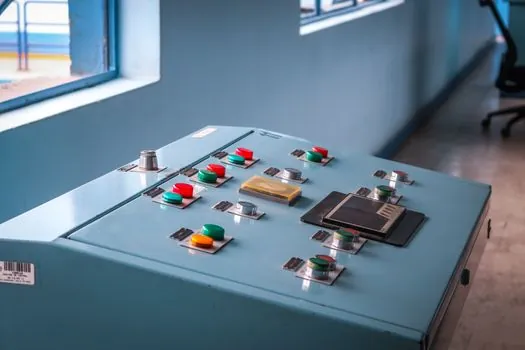
Many mold-temperature problems are not caused by insufficient heating power; they are caused by poor circulation, which means pump flow and pump head deserve at least as much attention as heater kW [S4]. Small mold-temperature controllers commonly deliver 30 to 60 L/min; larger units go substantially higher, and the spec must be checked against both the flow requirement (to exchange heat in time) and the total pressure drop across the mold runners and internal cooling channels [S4].
Hydraulic sizing means: obtain flow rate and pressure loss data from the mold maker, or estimate via empirical formulas; then read the pump curve and select a pump whose head at the required flow exceeds the loop pressure drop plus a margin [S3]. A controller that can hold temperature on the bench but droops in production usually has a head deficit, not a heater deficit, and the fix is a different pump curve, not a bigger heating element [S3][S4].
Integration touches the pump choice too: PID with auto-tuning, adaptive algorithms, and independent heat/cool stages, plus digital communication (Modbus, Ethernet/IP) for tie-in to the injection-molding machine, is now baseline for any new temperature-controller procurement [S3].
Comparison Table: Four Realistic Controller Choices on Four Criteria
For a buyer trying to narrow a shortlist, the four variants that cover most injection-molding and process-heating duties are: 1/16 DIN on/off PID water unit (small machine, water below 100 degrees C), 1/8 DIN auto-tune PID water unit (mid-size machine, 30 to 90 degrees C setpoint), 1/8 DIN PID oil-type unit (engineering polymers, 120 to 200 degrees C), and 1/4 DIN multi-loop ramp-soak controller (heat treat, multi-zone, staged profiles) [S2][S4][S5].
Against four decision criteria: setpoint range (water units 30-100 degrees C typical, oil units 180-300 degrees C typical); temperature stability (plus or minus 0.5 degrees C is common, plus or minus 0.2 degrees C is the high-quality band for precision molding); heater kW bins (6-36 kW for water units, 12-36 kW plus common for oil units at the small end and much higher for large molds); pump flow at 30-60 L/min small, scaling upward with mold size [S3][S4][S5].
Who should not pick the cheap 1/32 DIN on-off unit: anyone running tight-tolerance engineering polymers, anyone with multi-cavity molds, and anyone whose downstream QA tracks Cpk on dimensions will pay for the on-off cycling in scrap before they pay back the controller. Likewise, water below 100 degrees C should not be pushed into the 120 to 180 degrees C band; the loop physics, not the controller, will fight you [S3][S4].
Standards, Sourcing, and Field Constraints
Regional factors materially change the shortlist: power availability (three-phase 400 V versus 480 V versus 220 V single-phase), water quality (hard water scales heat exchangers and cuts heat-transfer coefficient over time), ambient temperature in the plant, and the distance to the nearest service agent all influence the final pick [S3]. IP rating on the controller front face (IP66 for washdown food plants) and CE/UL listings are baseline; safety-limit controllers should be specified as a separate, independent channel with their own agency approvals for over-temperature cutout [S5].
For process industries where temperature controllers sit alongside other measurement and control hardware, also see this spec-first walkthrough of loop power distributor suppliers and selection, which covers the 4-20 mA infrastructure most modern temperature controllers feed into, and the broader lighting and lamps equipment reference for the cabinet and panel illumination side of the same enclosure build.
Trackable signals for the next sourcing cycle: whether the plant's incoming water hardness is above 100 ppm CaCO3 (forces a heat-exchanger spec change), whether the mold maker publishes a flow-versus-pressure-drop curve (forces a pump re-spec), and whether the controller vendor publishes a documented MTBF on the safety-limit channel. For readers building out adjacent process instrumentation, the lighting equipment and electric lamps page covers the auxiliary panel-side hardware often specified in the same procurement lot.