
For food and beverage lines, a precision PID temperature controller with auto-tune is the default pick for repeatable heat-seal, pasteurizer, and oven zones, and PLC or PAC platforms sit above it only when zone count or recipe logic crosses roughly 16 loops [S1][S4].
Across published OEM literature the same four selection axes keep recurring: control mode (auto-tune PID vs on/off), enclosure/wash-down rating, recipe and batch data integrity for FDA 21 CFR Part 11, and integration with the temperature measurement chain [S1][S3][S4].
Why PID auto-tune beats on/off in food and beverage loops
Control Station attributes the bulk of food and beverage temperature loop problems to three tuning issues: oscillation from sluggish or dead-time-heavy loops, signal noise from sensor wiring, and control valve stiction that fights the PID output [S2]. Derivative action, set carefully, counters oscillation in slow temperature loops with large dead-time, while derivative should be backed off in noisy processes to avoid amplifying sensor interference [S2].
For OEM product families this shows up as integrated auto-tune plus a derivative action (dAC) function designed to minimise overshoot, as published in the CAL series datasheet covering pizza ovens, bakery ovens, chillers, and packaging lines [S4]. The CAL9500P programmable variant extends that to 31 programs and 126 segments for batch thermal processing [S4]. On higher-end platforms, Eurotherm publishes autotune on the EPC3000 programmable controller and pairs it with a setpoint programmer to reduce both overshoot and energy use during profile transitions [S1].
Hardware ratings that matter for wash-down and plant floors
Front-panel ingress protection is the first cut on the spec sheet. Eurotherm lists an IP66/NEMA12 rated wash-down front panel as an option on the nanodac recorder/controller, which is the rating that lets a panel survive direct low-pressure hot-water spray and food debris [S1]. For panel builders this matters because most control cabinets in dairy, brewing, and meat plants live inside splash zones, not clean rooms.
Sensor input flexibility is the second cut. Eurotherm's nanodac accepts high-integrity process inputs and pairs them with PID control plus high rejection to industrial noise, which directly addresses the signal-noise failure mode called out by Control Station [S1][S2]. West's CAL range publishes good control at low temperatures down to sub-zero ranges typical of chiller and refrigerated storage duty, alongside positive-feedback rubber buttons and a high-visibility 7-segment alarm message for noisy line-side environments [S4].
Recipe, batch, and FDA 21 CFR Part 11 compliance
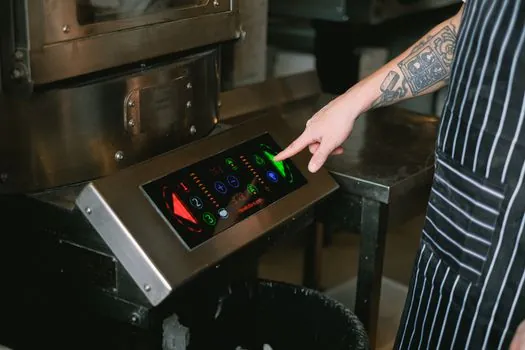
Regulatory exposure is what pushes a buyer from a generic PID to a recorder/controller or PAC. Eurotherm positions its T2750 PAC around three features that map directly to regulated food lines: batch data management and analytics, a recipe feature that saves and recalls process setup, and a configuration lock to protect control IP [S1]. The nanodac adds digital batch recording, auditor options, and electronic signatures that support FDA 21 CFR Part 11 compliance for electronic records and signatures [S1].
Eurotherm's framing for the sector is explicit: precision PID with accurate I/O, paired with high noise rejection, helps meet tight process tolerances and the critical control points (CCPs) that HACCP/HARPC programs and FDA 21 CFR require, while reducing energy cost at the same time [S1]. For plants that need cloud visibility, advanced monitoring solutions integrate with cloud-based software for remote data access and SMS or email alerts on temperature deviation, as described in published food-and-beverage monitoring guidance [S3].
Comparing the main controller options on four criteria
Lining the main options against decision criteria gives a buyer a defensible shortlist. The table below uses only what the cited sources publish.
1) On/off thermostat: low cost, simple set-up, suitable only for non-critical holding duty; no auto-tune, no batch data, no Part 11 support [S4].
2) Auto-tune PID single-loop controller (CAL 3300/9300/9400/9500): auto-tune PID, dAC overshoot control, low-temperature capability, LED display, optional CALGrafix data logging; up to 31 programs and 126 segments on the CAL9500P [S4].
3) Recorder/controller (Eurotherm nanodac): PID control plus high-integrity recording, IP66/NEMA12 wash-down front, web server for remote view, electronic signatures and batch recording aligned to FDA 21 CFR Part 11 [S1].
4) Programmable controller / PAC (Eurotherm EPC3000, T2750): setpoint programmer, fast response to setpoint changes, autotune, multi-zone oven control, recipe save/recall, configuration lock, batch analytics [S1].
On the four buying criteria, an on/off unit loses on control quality and compliance; single-loop auto-tune PID wins on cost per loop but cannot deliver Part 11 batch records; the recorder/controller tier adds compliance and remote visibility; the PAC tier is justified once zone count, recipe complexity, or audit exposure rises, mirroring the loop-count threshold noted earlier.
Limits, failure modes, and when a controller is not the right tool
A temperature controller cannot fix a poorly sized heat exchanger, an undersized steam supply, or a control valve packed so tightly that it sticks, the stiction failure mode Control Station flags as the leading mechanical issue on production lines [S2]. PID tuning, including derivative use and noise filtering, is also a recurring maintenance task, not a one-time commissioning event [S2].
For very large plants the question shifts from which controller to which architecture. Eurotherm's positioning language treats PID controllers, programmable controllers, and PACs as tiers in a single precision-control family, with the choice driven by zone count, recipe depth, and audit need rather than brand preference [S1]. Operators also need to maintain the upstream sensor and refrigeration chain: cleaning condenser coils, checking refrigerant levels, and calibrating thermostats on a scheduled basis are the documented cold-storage efficiency practices that keep the control loop honest [S3].
Selection criteria mapped to application
Map controller tier to the dominant application: chillers, holding tanks, and basic oven zones pair well with an auto-tune PID single-loop controller offering low-temperature stability and a wash-down-capable front [S4]. Heat-seal bars, retorts, and CIP-skid loops benefit from a recorder/controller tier where electronic signatures, batch records, and remote web visualisation carry the audit load [S1].
For multi-zone bakery ovens, sterilizers, and saturated-steam cooking profiles, a programmable controller or PAC with setpoint programming, recipe management, and multi-zone synchronisation is the published fit, with Eurotherm noting function blocks for sterilizer, saturated steam, mass flow, humidity, and recipe as the application toolkit [S1]. For raw-material and finished-goods storage, the controller hands off to a separate data logger and monitoring layer with cloud-based remote access and SMS/email alerts, the architecture that published F&B monitoring guidance recommends for the cold chain beyond the processing line [S3].
Standards, sourcing, and what to verify on the datasheet
Three regulatory references dominate the cited material: FDA 21 CFR Part 11 for electronic records and signatures, FDA 21 CFR (general) plus HACCP/HARPC for critical control points, and good manufacturing practice at federal and local level [S1]. Buyers should confirm on the datasheet, not in marketing copy, that the specific controller model supports these requirements, including the electronic signature and audit-trail options on the nanodac line [S1].
For monitoring and traceability beyond the controller, the published guidance recommends alarm thresholds, real-time data logging, and remote alert functions so personnel can act before temperature deviation forces a rejected batch, and it positions cloud-connected monitoring as the standard practice for cold-chain visibility [S3]. Across all tiers, the recurring engineering lesson from the cited sources is that a temperature controller's value is set by the quality of the loop tuning, the noise rejection on the temperature monitor chain, and the integrity of the batch record, not by the brand badge on the front bezel [S1][S2][S3][S4]. For a broader spec-first view of how instrument categories line up across plants, see this industrial procurement spec digest.