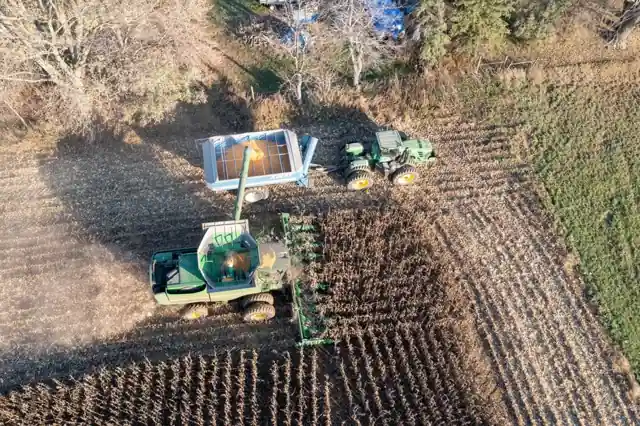
Agriculture-machinery parts span a 50 g to 25 kg weight band and demand UV, moisture, fertilizer, and impact resistance, so the molding process and line configuration must be matched to the casting or molded part profile before any brand shortlist is built [S1][S3].
Two process families dominate the spec: clay-sand casting lines (jolt-squeeze, multi-piston, shoot-squeeze flaskless) for iron and steel housings, gearboxes, and counterweights, and plastic injection molding lines for crates, panels, fluid-system parts, and equipment housings [S1][S2][S4].
Match the Line Architecture to Part Size and Hourly Output
Multi-piston automatic molding lines hit 50–120 molds per hour and hold mold hardness at 85–90 on a B-scale tester, which is why they are the default pick for medium-to-large complex agricultural castings such as gearbox bodies, engine blocks, and valve bodies [S4].
For sub-30 molds/hr simple shapes (small brackets, hardware parts, light agricultural fittings), a standard jolt-squeeze machine such as the Z1410 series is sufficient: it uses high-frequency, low-amplitude vibration plus squeezing, has a simple structure, and tolerates easy mold changes [S4].
When output climbs but part size stays modest (park-bench-style counterweights, small iron parts), a top-and-bottom shoot-squeeze flaskless unit like the Z5161 runs the upper and lower mold in a single cycle at roughly 15 kW, 11.5 t machine mass, and a price band of 50,000 to 75,000 USD, with the flask stripped and recirculated automatically [S4].
Flask vs Flaskless: Workshop Layout Drives the Call
Flask molding keeps the flask travelling with the mold, suits both small and large castings, and is the configuration used by most multi-piston lines; mold changes are flexible, which matters for agriculture OEMs running mixed SKUs seasonally [S4].
Flaskless molding is justified only for very high volumes of small castings because the closed-loop flask handling adds control complexity and a higher upfront automation spend; for most farm-machinery tier-1s the simpler flask architecture pays back faster [S4].
For plastic molding line work, the equivalent decision is single-cavity vs multi-cavity tooling: a single-cavity mold suits parts above 25 kg or with difficult demoulding geometry, while multi-cavity molds cut cycle time on crates, bins, and small fluid-system fittings [S3].
Material Selection for Outdoor Service
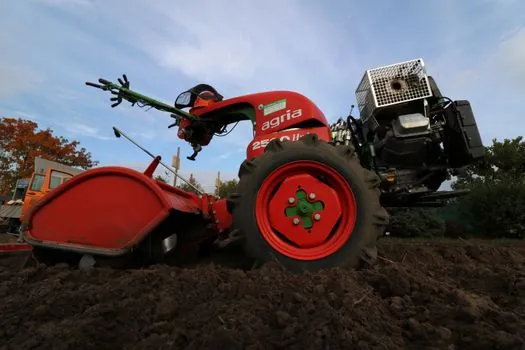
Agricultural plastic parts must tolerate UV, fertilizer splash, repeated wash-down, and temperature swings; the polymer families most often specified for these duties are Nylon, Polypropylene (PP), High-Density Polyethylene (HDPE), and Acetal, with recycled-content options such as UBQ and hemp-based compounds also in production use [S2].
For the castings side, the metal is usually gray iron or ductile iron with controlled CE (carbon equivalent) for gearbox housings; the molding line must hold hardness uniformity because low or uneven hardness causes casting swell and excessive flash on machined faces [S1][S4].
Hygroscopic polymers (Nylon in particular) need a hopper dryer plus a dehumidifier on the automatic molding line, while non-hygroscopic PP and HDPE typically need only the hopper dryer, which changes the upstream auxiliaries you must budget [S3].
Decision Matrix: Which Line for Which Ag-Machinery Part
For small, high-volume, simple castings (hardware, brackets under about 5 kg): jolt-squeeze Z1410-class, fewer than 30 molds/hr, lowest capex, flask-based [S4].
For medium-to-large complex castings needing smooth machined faces (gearbox housings, engine blocks, valve bodies): multi-piston static-pressure molding machine line, 50–120 molds/hr, 85–90 B-scale hardness, internal-force compaction where the frame carries no reactive load [S4].
For very high output of small castings with no huge parts: top-and-bottom shoot-squeeze flaskless unit, single-cycle upper/lower mold close, 15 kW class, 11.5 t machine mass [S4].
For plastic equipment housings, structural panels, fluid-system parts, and storage containers: shell molding machine and plastic injection lines sized to part weight in the 50 g to 25 kg band, with cycle time typically under 10 s for thin-wall PP/HDPE parts and longer for thick Nylon sections [S1][S2][S3].
Selection Criteria That Are Non-Negotiable
Clamping force is one of the key specifications of an injection molding machine, defining its part-handling capability, ranging from a few hundred tons to thousands of tons, and it must be sized to the projected shot volume plus a safety margin for material viscosity [S3].
On a modern casting line, insist on PLC control with motion interlock, built-in fault diagnostics, and remote monitoring; these reduce operator skill dependency and shorten ramp-up for seasonal SKUs common in farm machinery [S4].
For plastics, specify hopper dryer capacity at roughly 2 to 4 times hourly throughput, an autoloader if you run multiple machines on the same polymer, and dehumidification for Nylon and Acetal to keep melt quality and cycle time stable [S3].
Limitations, Failure Modes, and Sourcing Signals to Track
Mold hardness below the 85 B-scale band or uneven across the flask causes casting swell, flash, and scrapped machined faces, which is why multi-piston internal-force compaction is the most reliable route to uniformity on complex ag castings [S4].
Plastic injection molding is poorly suited to parts below 50 g (high scrap rate relative to alternative processes) and above 25 kg (machine and mold cost escalate sharply), so bracket your part weight inside that band before locking the conveyor sorting line and downstream automation [S3].
Track two signals on the next sourcing cycle: verified 85–90 B-scale hardness data sheets from the foundry running the candidate line, and tonnage-per-year reference lists that include agricultural machinery housings rather than only automotive work, since the surface-grade and seasonal-mix demands differ.
For related coverage, see Safety Light Curtain Selection for Confined Space Entry: 2026 Spec Guide.