
Specifying a multi-gas detector in 2026 is a sensor-stack decision first, a certification decision second, and a housing/battery decision third — the order in which procurement often gets it backwards, because the cheapest unit on a quote sheet is almost always a 2-sensor CO/H2S brick that cannot legally enter a Zone 1 sewer [S1][S2].
The mainstream portable form factor covers four gases simultaneously — combustible (LEL), oxygen (O2), carbon monoxide (CO), and hydrogen sulfide (H2S) — and the fixed wall-mount form factor expands that to 6–8 channels with catalytic-bead, electrochemical, IR, and PID sensor slots [S1][S2]. Skipping the LEL channel to save cost is the single most common specification error on entry-level tenders.
Sensor Stack: The First Gate
A 4-gas sensor stack (LEL + O2 + CO + H2S) is the de-facto baseline for confined-space entry across oil & gas, wastewater, and steel-mill work [S1]. The LEL channel traditionally uses a catalytic-bead (pellistor) sensor, which reads most hydrocarbons at %LEL but is poisoned by silicones, leaded fuel, and sustained high-CH4 exposure; infrared (IR) LEL is the spec upgrade when the atmosphere contains those poisons, with the trade-off of zero response to hydrogen, which IR cannot see [S1].
Electrochemical cells cover O2 (typically 0–30% vol, 1-year life), CO (0–500 or 0–1000 ppm), and H2S (0–50 or 0–100 ppm) in the same compact housing, and a PID (photoionization) channel is bolted on when benzene, toluene, or VOC leak surveys are in scope, raising unit cost and adding a UV-lamp warm-up requirement [S1][S2]. A portable gas detector spec that lists "VOC" without naming a PID lamp wavelength (10.6 eV is the workhorse) is under-specified.
Certification & Zone Rating: The Second Gate
ATEX 2014/34/EU (EU) and IECEx (rest of world, including China export) are the two non-negotiable certification families for Zone 0/1 hazardous-area work; North American sites additionally require CSA or UL913, which is why many 2026 OEM datasheets carry a four-cert matrix (ATEX + IECEx + CSA + UL) [S1][S2]. The MGC-S-PLUS family from Gas Clip Technologies lists the four-sensor CO/O2/H2S/LEL stack with intrinsic-safety rating suitable for Zone 1 entry, which is the typical spec floor for upstream oil & gas [S1].
For fixed wall-mount fixed gas detector installations, Ex d flameproof enclosures (IEC 60079-1) for the sensor head and Ex e increased-safety for the wiring compartment are common; the full 2026 cert stack adds SIL 1/2 from IEC 61508 when the detector is wired into a safety-instrumented function (SIF) rather than a SCADA trend [S2]. Buyers should request the cert numbers, not just the logos — Chinese export units frequently carry CCC or CNEx rather than ATEX, which is a customs-acceptance issue at the EU border.
Power, Runtime, and Battery Chemistry
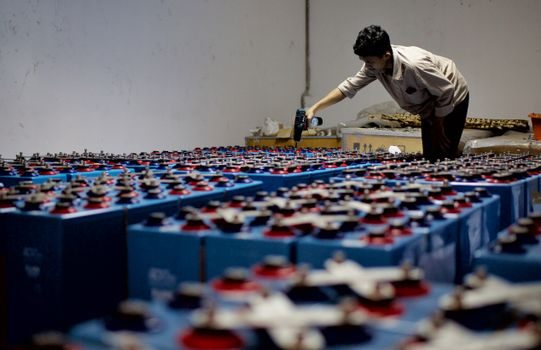
Portable runtime in 2026 splits into two camps: disposable Li-SOCl2 packs rated 2–3 years continuous (no charging, no downtime, the MGC-S-PLUS family sits in this camp) versus rechargeable Li-ion packs rated 12–24 hours per shift with hot-swap capability [S1][S2]. Rechargeables win on any site with a charging dock, on cost-per-shift basis, but lose on cold-weather performance — Li-SOCl2 keeps outputting below −20 °C where Li-ion capacity collapses by 30–40%.
Battery-life claims on Chinese export datasheets should be discounted by 15–20% versus the OEM-spec value because pump-drawn units (e.g. the SKY2000-N2 pumped nitrogen monitor) draw ~200 mA continuously, halving runtime versus diffusion-only units in the same form factor [S2]. For fixed units, 24 VDC loop-powered with 4–20 mA + HART or Foundation Fieldbus output is the 2026 norm; relay outputs (three relays: low/high/fault) remain standard for non-networked trips [S2].
Sensor Range, Accuracy & Calibration Interval
Range selection has to match the hazard model, not the sensor's headline spec: O2 channels typically 0–30% vol, but a confined-space spec should also cover the 0–25% vol alarm set-points mandated by OSHA 1910.146 and equivalent EU norms [S1][S2]. CO and H2S range picks depend on exposure limit: OSHA PEL CO 50 ppm / H2S 20 ppm ceiling means a 0–500 ppm / 0–100 ppm range gives 10× and 5× headroom respectively, which is the 2026 OEM default [S1].
LEL range is almost universally 0–100% LEL, but the meter reading is only as good as the calibration gas — a 4-gas bump test (25 ppm H2S, 100 ppm CO, 18% O2, 50% LEL methane balance air) is the industry-standard field check, and a 30-day calibration interval is the conservative default [S1][S2]. Buyers comparing two 4-gas units at similar price should look at T90 response time (LEL < 25 s, electrochemical < 30 s are typical) and cross-sensitivity data, especially the CO channel's response to H2 — a known false-trigger that can shut a plant down on a hydrogen purge [S1].
Enclosure, IP, and Form Factor
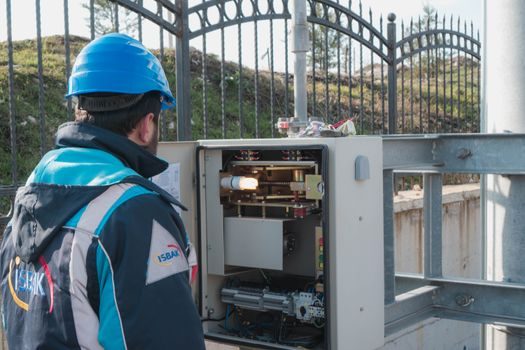
IP66 is the 2026 minimum for any portable entering a wash-down or offshore deck; IP67 adds temporary submersion for sewer and marine work, and MIL-STD-810G drop (1.5 m onto concrete) is the spec buyers should ask for even if vendors don't list it [S1][S2]. Form factor splits the field: pocket-clip single-hand units (~120 g) for personal monitoring, hand-held brick units with pumps (~300 g) for pre-entry testing, and fixed wall-mount with remote sensor head for area coverage [S1][S2].
The Chinese export SKY2000 series illustrates the pumped-monitor niche — a handheld unit with built-in pump, 0–100%VOL nitrogen range for food-packaging and inert-gas purity check, an application pocket that diffusion-only 4-gas units cannot serve [S2]. Specifying the wrong form factor (diffusion where pumped is needed) is the second most common error after wrong sensor stack.
Comparison: Portable 4-Gas vs Fixed Multi-Point vs Single-Gas
Portable 4-gas units (LEL/O2/CO/H2S) dominate confined-space entry because they cover the four OSHA-mandated hazards in one hand-held unit, at 250–500 USD per unit, with 2–3 year battery [S1][S2]. Fixed multi-point units (6–8 channel, 24 VDC loop) cover process-area leak detection and trip functions, with higher per-point cost (~1500–4000 USD per sensor head) justified only when the area classification demands continuous monitoring or SIF integration [S2]. Combustible gas detector single-gas units (LEL only) are the lowest-cost option (~80–150 USD) for hot-work watch but leave the worker blind to O2 displacement and H2S — a dangerous spec for sewer or tank work [S1].
The 2026 selection rule of thumb: portable 4-gas for the worker, fixed multi-point for the asset, single-gas only for dedicated hot-watch or leak-survey crews. A toxic gas detector spec that lists only H2S without O2 is a worker-safety gap; a fixed spec that lacks catalytic-bead poisoning resistance is a maintenance-money pit [S1][S2].
2026 Pricing & Sourcing Levers

Portable 4-gas units from US/EU OEMs (Industrial Scientific, MSA, Dräger, BW/Honeywell) list at 600–1200 USD in 2026; Chinese export equivalents (SKY2000, MGC-S-PLUS tier) list at 250–500 USD with comparable sensor stacks but lighter cert packages (CNEx/CCC rather than ATEX/IECEx) [S1][S2]. Total cost of ownership over 3 years hinges on sensor replacement (50–120 USD per electrochemical cell, every 1–2 years) and calibration gas (a 4-gas cylinder runs 80–150 USD, ~50–80 bump tests) [S2].
The 2026 spec sheet that gets past procurement should lock: sensor stack with model codes (not "4-gas"), four-cert matrix with cert numbers, battery chemistry and runtime at −20 °C, IP and drop rating, and a calibration interval with the bump-test gas concentrations stated. Sourcing pivot points to track over the next 6 months: ATEX-certified Chinese export units entering EU service via third-party importers, and IR-LEL sensor pricing dropping toward catalytic-bead parity as NDIR modules scale.
For related coverage, see Portable Gas Detector 2026 Price & Cost Guide: Sensor Stack, Sensor Count and IS Cert.