
An N95 filtering facepiece respirator removes at least 95% of non-oil particles under its test condition, making it the practical choice for silica dust, welding fume, mold spores and similar airborne particulate hazards [S2][S3].
A nuisance dust mask is appropriate only for non-toxic nuisance dusts and does not seal tightly against the face.
What separates an N95 from a nuisance dust mask?
The decision starts with the contaminant, not the product shape. Nuisance dust includes solid airborne particles generated by cleaning, grinding, sanding, smoking or polishing, as well as pollen [S1]. A loose-fitting nuisance dust mask may provide basic comfort protection against that low-risk material, but it does not establish the same tested particle-filtration performance as a filtering facepiece respirator [S2][S3].
An N95 is a tight-fitting respirator designed to force inhaled air through its filter rather than around the facepiece [S2]. The “N” class applies to non-oil particles, while “95” denotes at least 95% filtration under the specified test method [S2][S3]. NIOSH certification provides a traceable distinction between a certified filtering facepiece respirator and an ordinary dust mask [S3][S5].
This distinction matters because a product carrying “N95” in its marketing is not automatically a nuisance dust mask. In the United States, any NIOSH-tested N95 filtering facepiece is classified as a respirator, even when a vendor or user uses the informal phrase “N95 dust mask” [S3]. For equipment identification and specification work, the dust mask category should therefore be separated from certified respirators by approval marking and intended use.
Which type fits the task and exposure level?
Use a nuisance dust mask for low-risk, non-toxic dust when a site-specific assessment finds no need for a higher APF, no toxic particulate exposure and no chemical vapor or gas hazard. Suitable examples include routine dusting where the material is not a recognized occupational carcinogen, plus limited handling of sawdust, limestone dust or pollen where the exposure is minimal [S2][S3].
Disposable respirators are recommended for welding fumes, paint sprays, fine dust, mold spores, and dust from hardwood, softwood, and wool processing. An N95 is also the minimum filtration class often selected for many lower-risk jobs, but it is not automatically sufficient for every dust task [S3][S4].
Selection must be tied to the airborne concentration and the contaminant’s health effect. Each contaminant has a different risk profile, and a suitable respiratory protective device must have an Assigned Protection Factor appropriate for the exposure [S4]. An N95 has an APF of 10 in the cited selection guidance [S4], but that factor must be matched to the workplace exposure rather than used as a universal pass mark.
Compare filtration, fit, scope and maintenance

The clearest comparison is certification, filtration, face seal and hazard scope. An N95 combines at least 95% tested non-oil particle filtration with a tight-fitting respirator design [S2][S3]. A nuisance dust mask is generally loose fitting, is not NIOSH approved and is not tested to the same performance standard [S2][S3].
For decision criteria, a nuisance dust mask is strongest only on comfort and simple low-risk dust handling. An N95 is stronger on tested particle filtration, face-seal potential and suitability for fine particulates. Neither particulate category provides gas or vapor protection [S2].
The main failure modes are predictable: a loose dust mask leaks around the face, an N95 cannot control gases or vapors, and facial hair or incorrect positioning can compromise the respirator seal [S2][S4].
When is a nuisance dust mask the wrong choice?
A nuisance dust mask is the wrong choice for silica, asbestos, welding fume, toxic dust or mold spores, because it does not provide the certified filtration and seal expected from an N95 respirator [S2][S3]. It is also unsuitable for paint spraying, solvents, ammonia or formaldehyde exposure because particulate filters do not remove organic vapors or gases [S2][S5].
Oil mist is another boundary condition. An N rating is for non-oil particles, so a task involving oil-based aerosol may require a P95, P100 or another filtration class matched to that hazard [S3][S6]. For dry particulate without airborne oils, an N-class filter is the relevant selection [S6].
Do not use fit results from a comfort mask to justify an N95, and do not assume a successful seal proves filtration is adequate for the contaminant. A certified respirator also requires the workplace controls described in 29 CFR 1910.134, including medical evaluation, fit testing, training and program administration where that regulation applies [S4].
How to verify the product before task use
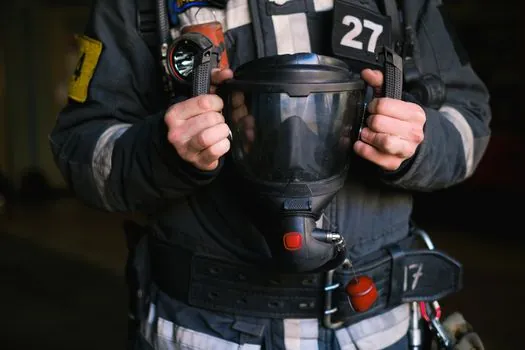
Check the approval marking, model, filter class and manufacturer instructions before issue. A NIOSH-certified disposable respirator carries approval information, a filter series and an efficiency marking, while an ordinary nuisance dust mask does not make the same certification claim [S5]. Verify that the product matches the contaminant and that the approval has not been altered by repackaging, damaged in storage or fitted with an incompatible component.
For fit, perform the manufacturer’s user seal check each time an N95 is donned and confirm that the nose clip, straps and facepiece contact the face without obvious gaps. Facial hair under the sealing area can prevent a proper seal [S2]. Fit testing remains part of the formal respiratory protection process described under 29 CFR 1910.134 [S4].
Use the product label and the chemical safety data for every substance present in the work area. These documents are the proper route for checking whether a pesticide, coating, adhesive or cleaning chemical introduces vapor or gas exposure beyond the capability of particulate filtration [S3]. Where the assessment identifies an uncharacterized or high-concentration hazard, control the exposure before selecting a disposable mask.
Industrial applications and adjacent hazards
Industrial tasks involving grinding, sanding, concrete cutting, demolition, biomass processing, mold remediation and welding require a hazard-specific respiratory protection decision rather than a general dust-mask default [S2][S5]. If particulate concentration is high or the contaminant is toxic, a nuisance dust mask offers no defensible filtration basis; a certified respirator with the appropriate APF and filter class is the minimum logical starting point [S4].
Combustion and chemical hazards move the selection beyond both mask categories. A combustible gas detector addresses atmosphere monitoring, not respiratory filtration, while cartridge respirators must be selected for the specific gas or vapor class [S2]. For complete hot-work and flame-resistance decisions, the separate guide on flame-resistant dust masks for welding and hot work provides a relevant adjacent check.
Record the task, contaminant, concentration basis, selected device, approval marking, fit-test status and replacement or disposal rule. Then verify the decision whenever the material, process, duration or ventilation changes. The trackable signal is not simply whether a mask was worn, but whether the selected protection matches the measured hazard and the wearer passed the required fit procedure.