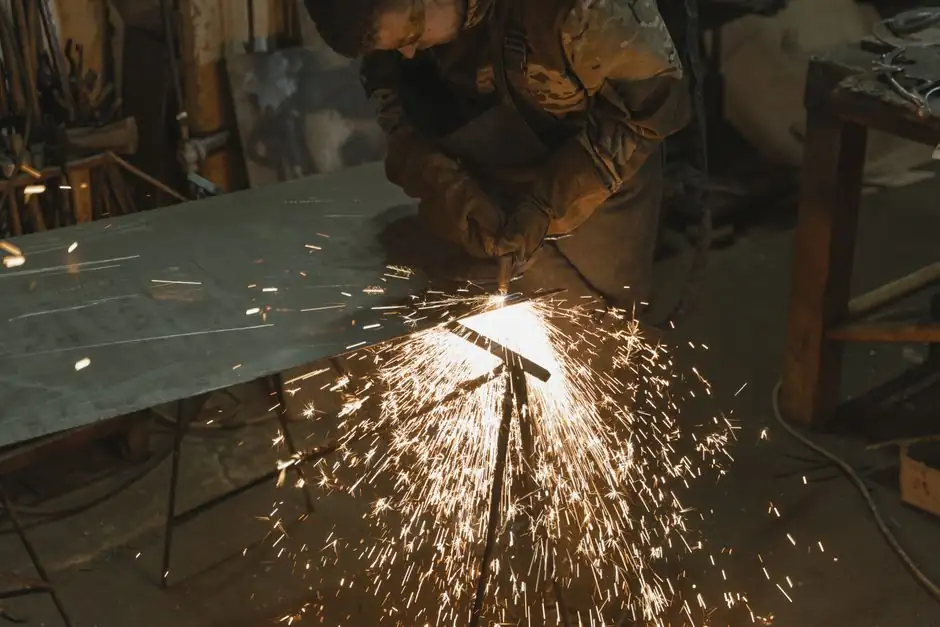
Flame-resistant dust masks serve as supplementary clothing for welding and hot work, but they do not replace an approved respirator, welding helmet, or face shield.
If the object to be welded or cut cannot readily be moved, movable fire hazards in the vicinity must be taken to a safe place; if they cannot be removed, guards must confine heat, sparks, and slag and protect immovable fire hazards.
Define the Protection Before Selecting the Mask
A flame-resistant dust mask is a face-covering garment intended to reduce exposure to heat, flame, sparks, and dust around the head and neck. It is not a complete welding face shield and does not by itself provide adequate respiratory protection against welding fume. [S2]
Welding and allied processes generate hazardous fumes, dust from cutting or grinding, optical radiation, and risks from hot solids and molten metal.
The practical specification separates three tasks: flame-resistant head and neck coverage, respiratory protection for inhalation hazards, and eye and face protection for arc radiation, sparks, and spatter. Flame-resistant head coverings are worn beneath the helmet, while welding gloves remain necessary for handling hot solids and molten metal [S2][S3].
Compare the Main PPE Layers
Protective clothing, respiratory equipment, and eye protection solve different hazards, so substituting one layer for another creates an unprotected exposure. The comparison below identifies the correct role for each component and the principal limitation that makes stand-alone use unsuitable. [S3]
For hot-work tasks, gloves cover the hands, the welding helmet covers the eyes and face, and flame-resistant headwear fits beneath the helmet [S2][S3]. A flame-resistant dust mask belongs in that complete system, not as a substitute for any of these controls.
Select Flame Resistance by the Work Environment
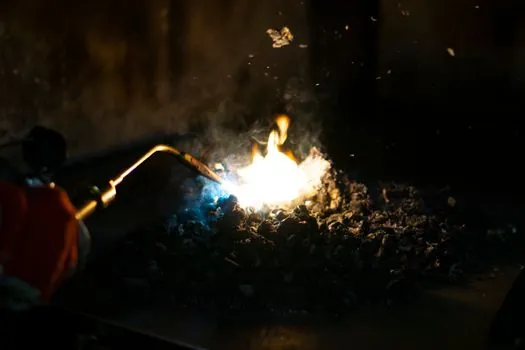
Catalogue examples describe an FR balaclava made from 100% cotton with ventilation, UV and infrared protection, a padded headband, and anti-fog features [S4]. These attributes describe a commercial listing, not a universal performance class or substitute for a documented flame-resistance test.
For welding and hot work, use the mask or balaclava as head and neck clothing beneath the helmet. CCOHS identifies flame-resistant head coverings as protection against heat, fire, burns, radiation, dust, fumes, vapours, and oxides [S2]. The purchase file should identify the fabric, construction, coverage, care instructions, and traceable flame-performance evidence rather than relying only on the phrase “flame resistant.”
A cotton listing does not establish that every configuration performs equally. Seam placement, closures, fabric weight, repeated washing, heat exposure, and restricted ventilation can affect comfort and serviceability. For close-fit arc work, a padded headband, ventilation openings, and an interface that does not interfere with the helmet are practical selection points [S4].
Match Respiratory Protection to the Welding Fume
No welding should proceed without appropriate control measures in place, regardless of task duration [S3]. Welding fume can cause cancer, COPD, occupational asthma, metal fume fever, and neurological injury from some mild-steel metals [S3].
Shielding gases include argon, carbon dioxide, and mixtures containing oxygen, hydrogen, nitrogen, or helium. In confined or restricted areas, shielding gases can cause irritation, breathing difficulty, and asphyxiation at high concentrations [S3]. The respiratory assessment must therefore consider the process, base metal, electrode or wire, filler, coating, ventilation, and possible gas concentration.
A dust mask intended for particulates cannot be assumed to protect against metal fume constituents or shielding gases. A dust detector may support atmospheric assessment, but portable instruments do not establish the correct respirator selection by themselves. Equipment selection should follow the site respiratory-protection program, contaminant-specific approval, and user-fit assessment.
Control Fire Risks Beyond the 35-Foot Work Area
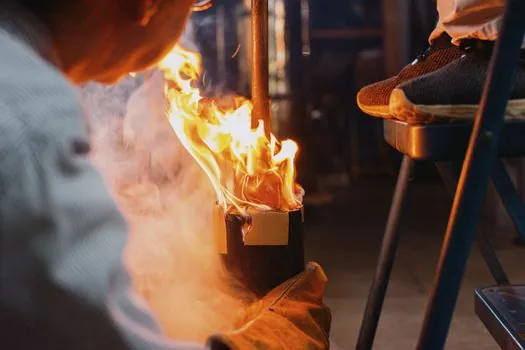
Welding and cutting are permitted only in areas that are or have been made fire safe under OSHA 29 CFR 1910.252. If the workpiece cannot be moved, movable fire hazards must be taken to a safe place; if they cannot be removed, guards must confine heat, sparks, and slag [S1].
A fire watch is required when appreciable combustible material is closer than 35 ft (10.7 m), easily ignitable combustibles are farther away, wall or floor openings expose combustibles within that radius, or combustible materials behind partitions can ignite by conduction or radiation. The watch must have extinguishing equipment available and remain for at least 30 minutes after welding or cutting ends [S1].
Personal protective equipment cannot replace this controls package. Suitable extinguishing equipment must remain ready for immediate use, and hot-work authorization, guards, combustible-material controls, and the fire watch have to be established before the mask is issued [S1].
Identify Users and Excluded Applications
This mask category is intended for welders, cutters, grinders, and other hot-work personnel exposed to heat, sparks, dust, and radiant energy around the head and neck. It can also fit under a welding helmet as an additional flame-resistant layer when the helmet and respiratory protection are selected separately [S2].
It is not the correct primary control for arc-eye exposure, molten-metal splash, shield-gas asphyxiation, or prolonged welding-fume exposure. Those hazards require process-specific controls, welding eye protection, ventilation, respiratory protection, and a competent PPE assessment [S3]. A ventilation opening in a fabric mask also does not establish equivalence to an approved respiratory appliance.
Training must address correct placement under the helmet, inspection for damaged seams and fabric degradation, cleaning, laundering, storage, and replacement. A loose hood, exposed neck, or incompatible respirator interface can negate the practical benefit of a nominally flame-resistant product.
Verify Standards, Evidence, and Supply
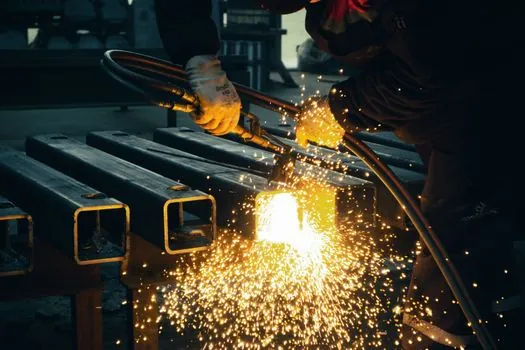
The purchasing specification should separate three evidence sets: flame-resistance documentation for the garment, respiratory approval for the inhalation protection, and welding-helmet specifications for the eye and face protection. A generic “welding mask” catalogue result does not establish all three requirements. [S3]
OSHA 29 CFR 1910.252 points to NFPA 51B for fire-prevention detail in cutting and welding, while the federal rule itself establishes controls for combustible materials, guards, extinguishers, fire watchers, and the 35 ft (10.7 m) radius [S1]. Amazon provides a search-results page for “welding facemask,” but the supplied material does not state the number of listings or establish equivalent safety certification among the products.
Before approval, verify the manufacturer or supplier, model, material composition, coverage, flame-performance documentation, certification or test reports, maintenance instructions, and replacement criteria. The face shield and welding helmet must also be checked for compatibility with the selected head covering.
Track two procurement signals before issue: a complete model-level documentation package and confirmation that the wearer has passed the required respiratory fit and hot-work PPE assessments. The item should remain out of service when its flame-performance evidence, condition, or compatibility cannot be verified.
