
Global natural gas consumption is projected at 4.26 trillion cubic metres in 2026, with low-to-moderate growth driven by LNG export build-out, AI-data-centre power demand, and weather-sensitive heating loads [S5].
Across the 2026 to 2030 horizon, the most-cited price spread is the US Henry Hub benchmark, where authoritative forecasters diverge sharply: the EIA's July 2026 STEO puts 2026 at $3.67/MMBtu, 2027 at $3.49/MMBtu, while S&P Global Ratings, EIA AEO 2025, and Deloitte project 2030 in a band of $3.43 to $4.60/MMBtu [S2][S4].
2026 demand: low-to-moderate growth on a tighter supply balance
The IEA's Q3-2026 Gas Market Report flags a global demand decline in 2026 against tighter supply fundamentals, even as new LNG supply partially offsets that drop [S1].
US dry gas production is expected to hit a record 118 Bcf/d in 2026, with LNG exports of 18.1 Bcf/d in 2027 the first year in which demand is expected to outpace supply [S4]. Above-average storage is forecast at 3,966 Bcf by end-October 2026, roughly 5% above the five-year average, which limits winter spike risk even after a January 2026 cold-snap print above $13/MMBtu [S2]. For process engineers sizing gas detection and gas analyzer skids at LNG terminals, the takeaway is that 2026 throughput planning should anchor to a high-export, high-storage baseline rather than a tight-winter scenario.
2027 to 2028: LNG demand is the swing variable
Shell's LNG Outlook 2026 projects global LNG demand reaching nearly 700 million tonnes per year by 2050, an increase of around 65% from 2025 [S3]. The near-term impact shows up in 2027: EIA projects $3.85/MMBtu and S&P Global Ratings $3.75/MMBtu, with the analytical band widening to $2.88 to $4.17/MMBtu as new US terminals ramp [S4].
By 2028, most new US LNG terminals are expected to operate near full capacity, structurally lifting domestic gas demand and pulling the S&P Global Ratings 2028 figure to $3.50/MMBtu [S4]. For spec teams designing industrial gas treatment packages, the 2027 to 2028 window is when feed-gas composition variability (higher LNG turnaround slugs, heavier mercaptans from Marcellus/Utica blends) becomes a meaningful design case rather than a contingency.
2029 to 2030: diverging forecasts, data-centre load, and Qatari LNG
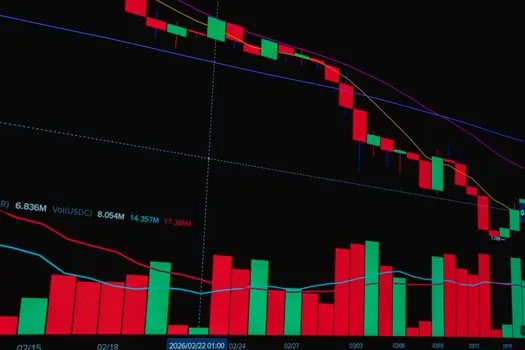
The 2029 outlook band is $1.62 to $4.00/MMBtu, widening in 2030 to $1.16 to $4.27/MMBtu, with the EIA AEO 2025 reference case at $3.43/MMBtu and Deloitte projecting $4.40/MMBtu in 2030, rising to $4.60/MMBtu by 2032 at roughly 2% annual increase [S2][S4].
Range Resources' 2026 to 2030 demand outlook aggregates +25 Bcf/d of total US demand growth, with a significant share attributed to data-centre gas-fired generation [S7]. The downside case (EIA's $1.16/MMBtu 2030 floor) hinges on Qatari and other new LNG capacity tipping global markets into oversupply; the upside case (Deloitte's $4.40/MMBtu) hinges on data-centre load and renewable-build lag. Engineers specifying burner management, gas filters, and pre-treatment for new peaker plants should plan for a 2026 to 2030 base-load growth of roughly 5 Bcf/d per year, not the EIA AEO reference, because data-centre demand is not yet fully captured in the reference case [S4][S7].
Comparison: EIA, S&P Global Ratings, Deloitte on 2026 to 2030 Henry Hub
Three forecasters anchor every serious spec conversation, and they disagree on trajectory even where they agree on level: in 2027 both EIA ($3.85) and S&P Global Ratings ($3.75) cluster near $3.80/MMBtu, yet by 2030 S&P Global Ratings sits at $3.50, EIA AEO 2025 at $3.43, and Deloitte at $4.40, a roughly 28% gap on the same benchmark for the same year [S2][S4].
On volume assumptions, the IEA expects gas to share the 2026 to 2030 incremental electricity-demand load with renewables and nuclear, supporting flat-to-mild consumption growth rather than contraction [S6]. On structural demand, Range Resources' +25 Bcf/d growth line itemises data-centre load as a separate vector, distinct from LNG export and power-sector growth [S7]. The criterion-based read: if the spec is for an LNG pre-treatment train, use EIA / S&P Global Ratings as the lower bound and Deloitte as the upper bound; if the spec is for a US data-centre peaker, Range Resources' +25 Bcf/d growth profile is the more relevant anchor.
Failure modes and risks that bend the forecast

Four risks dominate: LNG export capacity ramp speed, weather-driven storage drawdowns, renewables displacement of gas-fired generation, and price-cap interference. The January 2026 cold-snap print above $13/MMBtu demonstrates that storage buffer of 3,966 Bcf can be depleted inside one weather event [S2]. Renewable displacement is the structural ceiling: IEA expects renewables, gas, and nuclear to meet all incremental electricity demand jointly over 2026 to 2030, so gas share is contested, not foreordained [S6].
For data-centre-driven load growth, the +25 Bcf/d Range Resources line depends on grid interconnection queue clearance, not just announced capacity, and a 2-year delay in queue processing alone shifts the 2030 balance by roughly 5 Bcf/d [S7]. Specifying gas detector networks and gas chromatograph analysers for new gas-fired peakers should weight reliability against forecast uncertainty, not just nameplate capacity, because a forecast under-shoot of 1 Bcf/d across 50 sites equals a roughly 1,800 MW capacity gap at typical heat rates.
Sourcing, standards, and trackable signals for the next 12 months
Primary forecaster cadence: EIA STEO (monthly), IEA Gas Market Report (quarterly), IEA Electricity (annual), Shell LNG Outlook (annual), EIA AEO (annual), S&P Global Ratings (rolling), Deloitte (project-based). Trackable next signals include the EIA's August 2026 STEO revision (due early September 2026), Q4 2026 LNG terminal commissioning updates, and Range Resources' Q4 2026 capex disclosure which will refine the +25 Bcf/d demand-growth line [S2][S3][S7].
No single standard governs gas-demand forecasting; the EIA STEO methodology, IEA demand-model documentation, and the STEO revision history are the de-facto references. Process-engineering deliverables that ride on these forecasts (LNG pre-treatment, pipeline compressor specs, peaker burner management) should be re-baselined quarterly against the EIA STEO, not annually, because the 2026 to 2027 quarterly spread alone runs $2.99 to $3.83/MMBtu, a 28% intra-forecast-year band [S2].
For related coverage, see Air Compressor Manufacturing Equipment Guide: 2026 Spec Map.