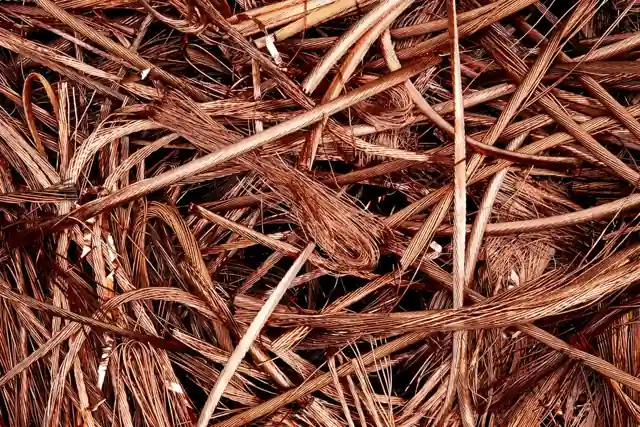
During NdFeB magnet production, 6–73% of swarf is generated, while recycling is unlikely to substantially contribute to the global rare-earth-element supply during the next decade.
The relevant feedstock includes manufacturing swarf, where reported generation ranges from 6% to 73% across magnet production steps, plus end-of-life magnets recovered from e-waste [S1][S3].
What the 18–22% Supply Estimate Means
This distinction matters for project developers. A 20% demand contribution is not equivalent to 20% metal recovery from every tonne of input. Actual output depends on feed composition, contamination, collection rate, process losses, product quality and the extent to which recovered material returns to magnet production [S1][S9].
The USITC paper assesses how commercial adoption of rare-earth-element and NdFeB-magnet recycling from e-waste could affect supply chains and the environment. The USITC paper examines recycling of rare earth elements and NdFeB magnets from e-waste as an approach to reducing import dependence on China and the environmental impacts of mining and refining these products.
Swarf Generation Creates the Largest Concentrated Feedstock
NdFeB manufacturing generates between 6% and 73% swarf depending on the production step, giving recycling operators a concentrated feed with less collection and disassembly work than mixed household e-waste [S3][S6]. The related NdFeB Machining Swarf Generation and Control review separates machining losses from broader production losses and explains why source control determines the quality of the recycling stream.
The 6–73% range is wide because swarf is not a single material stream. It can include alloy chips, grinding particles, surface coatings, adhered coolant and cutting-fluid residues, as well as mixed NdFeB grades. Sorting by alloy family before treatment therefore matters more than treating all swarf as one homogeneous feedstock [S1][S3].
Machine-shop swarf offers a practical advantage over post-consumer e-waste because generators know where the material is produced and can keep NdFeB separate from steels, aluminium and other machining residues. That control can reduce contamination, simplify pre-treatment and improve consistency between delivery batches [S1][S9].
End-of-Life Magnets Add Volume but Raise Collection Complexity
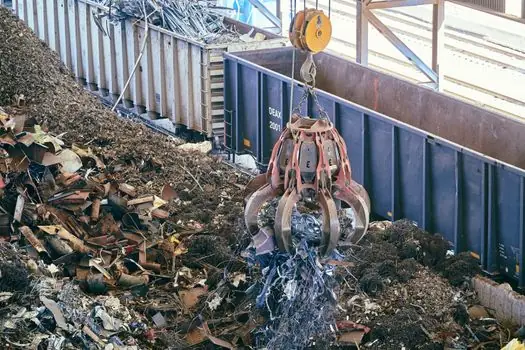
End-of-life NdFeB magnets expand the feedstock base beyond manufacturing scrap, but they arrive through dispersed sources such as e-waste, electric vehicles, wind turbines, hard-disk drives and industrial motors. Their recovery requires collection, disassembly or separation, size reduction and, in some routes, physical or chemical removal of coatings and adhesives [S2][S5].
The difference between swarf and end-of-life scrap is decisive for process selection. A manufacturing plant can deliver a relatively concentrated alloy stream, while an e-waste facility must first identify magnet-containing components and remove them from assembled products. The USITC assessment describes magnet-to-magnet recycling as a supply-chain objective because it aims to preserve the value of the original magnetic alloy rather than recover every element independently [S2].
Collection remains a structural constraint. A 2017 assessment warned that recycling was unlikely to contribute substantially to global rare-earth supply within the following decade because end-of-life stocks were not yet large enough and collection systems were incomplete [S7]. That observation does not erase the swarf opportunity; it separates near-term industrial scrap from the slower expansion of end-of-life feed [S7].
Short-Loop, Hydro, Pyro and Hybrid Routes Compared
Short-loop recycling has the clearest route to preserving magnet performance because it keeps the alloy close to its original composition and can return recovered material directly to magnet manufacturing. Its weakness is feed selectivity, because mixed NdFeB alloys and contamination require sorting and processing before direct reuse [S1][S2].
Hydrometallurgy uses leaching and separation to recover individual rare-earth elements, which can handle more complex or mixed feeds and supports selective recovery. It also adds chemical consumption, liquid-solid separation, wastewater treatment and multiple unit operations, increasing process complexity and cost [S1][S9].
Pyrometallurgy offers bulk handling and a route for separating rare-earth-containing material from iron-rich fractions, but it can lose alloy information and consumes energy at high temperature. Hybrid flows combine these features, using thermal or mechanical preparation before selective chemical recovery to improve yield and product control [S1][S9].
Decision Criteria Separate Viable Recycling Routes
For swarf, short-loop reuse is the first option to evaluate because the feedstock is concentrated and the alloy is already identified. Its main decision limits are mixed grades, coating contamination and the need to close a qualified loop with magnet producers. It offers the shortest route back to NdFeB output, but it has less flexibility than element-by-element recovery [S1][S2].
Hydrometallurgy is the stronger choice when the input contains several magnet grades or elements that must be separated into high-purity outputs. Its constraints are reagent use, leach-residue handling, wastewater treatment and the number of separation stages. Pyrometallurgy is more suitable for high-throughput, iron-rich streams where bulk thermal treatment is acceptable, but its energy demand and reduced retention of alloy value make it less attractive for clean production swarf [S1][S9].
Hybrid processing sits between these options: it adds treatment steps to handle heterogeneous feed, but it can target better rare-earth selectivity and higher product value. The proper choice should be based on measured feed composition, recovery yield, product specification, energy demand, reagent consumption and residue treatment, rather than on laboratory extraction efficiency alone [S1][S9].
Yield Must Be Measured at the Product Stage
Recovering rare-earth oxides does not by itself guarantee a magnet-grade supply contribution. Commercial qualification requires control of elemental ratios, impurities and consistency, because NdFeB magnet production depends on precise alloy chemistry and magnetic properties. Magnet-to-magnet recycling is therefore the strongest route for preserving product value, while hydrometallurgy is more demanding when separated oxides are required [S1][S2].
Machine learning is being examined as a process-support tool, particularly for leaching and selective rare-earth recovery. Its practical value lies in process control, compositional prediction and optimization; the 2026 review also identifies fragmented waste supplies, weak infrastructure and limited regulatory support as barriers to large-scale deployment [S1].
A bankable yield calculation should therefore distinguish metal contained in collected swarf, recovery by process stage, saleable product mass and product mass that re-enters qualified magnet production. Only the final measure directly answers whether recycling adds supply rather than merely transferring material between waste streams [S1][S2].
Commercial Scaling Depends on Collection and Offtake
A June 2026 market review identified HyProMag, MP Resources and Mkango Resources among companies using hydrometallurgical processes to recover rare-earth magnet scrap. The activity shows continuing project development, but the review does not establish a single industry-wide recovery rate or guaranteed share of future magnet output [S8].
Commercial scale-up needs three interfaces: dependable feedstock, a recovery process with acceptable environmental performance and a buyer for specification-compliant output. The 2026 review identifies fragmented waste sources, a gap between technically efficient processes and environmental sustainability, and insufficient regulatory and infrastructure support as persistent implementation barriers [S1].
Extended Producer Responsibility and structured waste monitoring are identified as mechanisms that could improve feedstock capture. Their commercial effect will depend on whether collection obligations cover manufacturing scrap, e-waste equipment and end-of-life magnets in addition to individual consumer products [S1].
What Trackable Supply Signals to Monitor
The first trackable signal is realized saleable output, reported separately from laboratory extraction yield and measured against the 18–22% Nd and Pr and 20–23% Dy and Tb supply-potential ranges [S1]. The second is the share of recovered material sold back into magnet production rather than routed only into oxide or mixed-product markets [S2].
Operational disclosures should also be checked for tonnes of segregated NdFeB swarf collected, alloy-grade split, process recovery, energy and reagent consumption, residue volume and chemical-product quality. Those fields distinguish a functioning circular supply chain from a pilot line with no qualified offtake [S1][S9].
For procurement teams, the defensible 2026 conclusion is narrower than the headline suggests. Swarf recycling already addresses concentrated manufacturing losses and has potential to supply 18–22% of Nd and Pr demand and 20–23% of Dy and Tb demand, but contribution claims must be tied to collected feedstock, saleable recovery and qualified re-entry into magnet production [S1][S3].