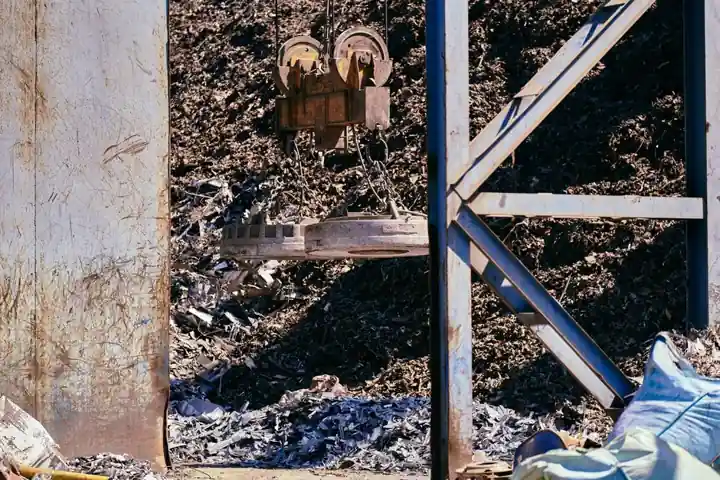
NdFeB magnet manufacturing can generate 6% to 73% swarf during manufacturing steps, with one magnet-recycling assessment identifying approximately 25% scrap generation for some manufacturing processes [S3][S6].
The amount depends on the machining route, starting geometry, finished shape, allowances, and process control, so a universal machining-loss percentage should not be applied to every magnet production line [S1][S8].
How much swarf can machining generate?
Published technical material establishes a wide swarf range rather than a single standard yield: 6% to 73% of swarf may be generated during NdFeB magnet manufacturing, and a separate review states that magnet manufacturing processes could generate around 25% scrap material [S3][S6].
That range is credible because “swarf generation” can include different losses across the manufacturing route, including machining cuttings, damaged magnets, and other production scrap. A plant therefore needs a process-specific mass balance rather than an assumed industry average.
A useful starting calculation is straightforward: swarf mass equals finished magnet mass multiplied by the machining-loss ratio. For example, at the cited 25% level, producing 100 kg of finished magnets would correspond to 25 kg of machining scrap before allowing for reclaimed material or process losses elsewhere [S6].
Why the swarf range is so wide
Diamond tooling, electrical discharge machining, and abrasives are identified as preferred methods for shaping rare-earth magnet material [S8]. These processes create different chip sizes and removal requirements, so the same percentage cannot be transferred between an EDM operation, a saw cut, and a surface-grinding operation [S8].
Finished geometry is another decisive variable. For sintered NdFeB, the manufacturing process includes aligned pressing, sintering at 1,000+ °C, machining to size, and coating [S5]. Magnets requiring tight dimensions, complex cavities, narrow webs, or multiple datum operations generally demand more stock removal than simple block-to-block cuts, although the material does not provide a fixed percentage for each geometry.
NdFeB composition also varies by grade. Typical published ranges include 29% to 32% neodymium, 64.2% to 68.5% iron, 1.0% to 1.2% boron, 0.2% to 0.4% aluminum, 0.5% to 1.0% niobium, and 0.8% to 1.2% dysprosium by weight, with other elements added for specific properties [S2]. These values establish why swarf composition cannot be assumed from the name “NdFeB” alone.
Which machining route creates the most waste?
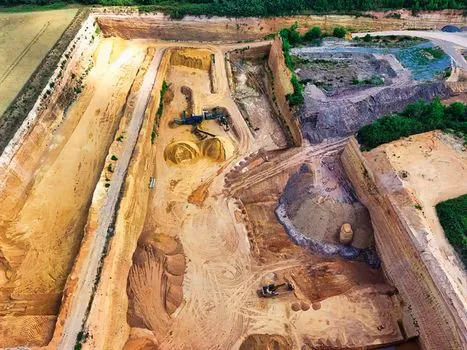
Diamond tooling, EDM, and abrasive processing are the documented shaping options, but the research does not establish a universal ranking of their scrap rates [S8]. The defensible comparison is therefore based on stock removal, workpiece geometry, and process capability rather than an invented efficiency percentage.
For procurement and production planning, the strongest approach is to weigh each route against four criteria: removable volume per finished magnet, process time, obtainable dimensional tolerance, and swarf recovery difficulty. A route that removes less metal can still be unattractive if it produces a hazardous or contaminated powder stream or requires extensive secondary processing.
Safety controls for dry and fine NdFeB swarf
During machining, the controls needed are therefore tied to the actual collection system: prevent dry powder accumulation, provide suitable liquid cooling, and separate swarf from combustible shop contaminants.
The material requires liquid cooling but does not establish one universal coolant formulation, concentration, flow rate, or nozzle arrangement. Those parameters should come from the magnet grade, machine geometry, swarf particle size, and a documented risk assessment. A facility should not treat a general machining coolant as adequate without validating collection performance and fire-control response for its specific NdFeB operation.
Recovering swarf without losing magnetic material
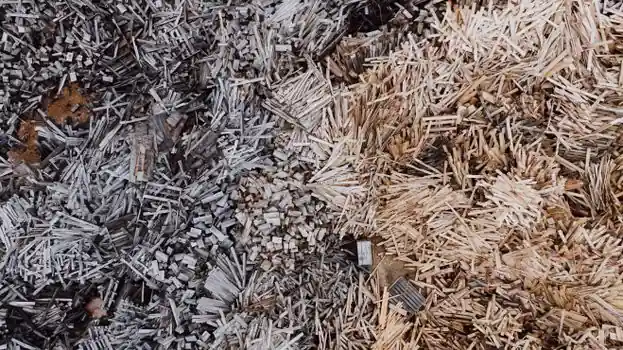
NdFeB permanent magnets contain about 31% to 32% rare-earth elements by weight, making machining swarf a concentrated secondary feed rather than ordinary metal scrap [S7]. That composition makes direct recovery economically different from handling low-grade industrial residue, but the research does not provide a universal recovery value for every swarf stream [S7].
The recycling study covering 6% to 73% swarf generation focuses on using manufacturing swarf as a feedstock for element recovery [S3]. In practice, segregation remains central because machining oil, abrasive contamination, mixed grades, and damaged finished magnets can change the incoming composition. A recycler needs grade identification, moisture and oil information, particle-size data, and a clean mass balance before assigning a processing route.
Reclaiming a swarf stream for the same magnet production route is a different proposition from recovering neodymium, dysprosium, or other rare-earth elements. The research establishes both substantial swarf generation and the presence of roughly 31% to 32% rare-earth elements in NdFeB magnets, but it does not establish that all generated swarf can be returned directly to the press line [S3][S7].
Measurement method that plant managers can defend
A defensible yield calculation requires measured input mass, finished-good mass, recoverable swarf mass, and non-recoverable process loss for the same production period. Reporting swarf as a percentage of input mass reveals machining loss, while reporting the finished magnet as a percentage of input mass reveals total material yield [S1][S3].
For each campaign, separate weighing stations should capture blank or ingot input, acceptable finished magnets, swarf at collection, and rejected material. If 6% to 73% is used as a screening envelope rather than a plant target, each production route should still be benchmarked from its own measurements [S3]. The 25% manufacturing-process figure can serve as a preliminary planning case, not as a guaranteed production yield [S6].
Machine identity, magnet grade, blank dimensions, finished dimensions, machining allowance, operation sequence, coolant flow, collection time, and swarf moisture should accompany the mass balance. Without those variables, two shops reporting different percentages cannot be compared reliably, even if both are machining NdFeB.
Best fit for different production environments
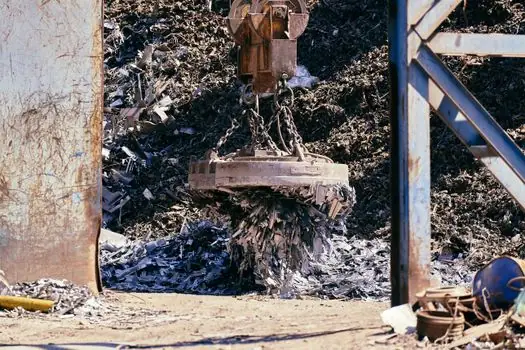
A high-volume magnet plant with stable blanks and repeatable grades is the best candidate for detailed mass balancing because input mass and part count can be measured continuously [S1]. Smaller machining operations still need a simplified system: weigh each batch, record the finished part count, and collect swarf in a controlled liquid medium [S2][S4].
The approach is less suitable for estimating a one-off prototype or a job shop without weighing infrastructure. In those cases, use the cited 6% to 73% range to frame uncertainty and the 25% case for preliminary planning, then replace the estimate with measured campaign data [S3][S6].
Machining NdFeB for a finished magnet, preparing blanks for later magnetizing, and recovering swarf for elemental recycling are separate decisions. The first two concern mass yield and fire prevention, while the third requires composition control and a qualified recovery route. For the broader rare-earth supply context, Ferrite Magnets in EV Motors: A Mature but Heavier Rare-Earth Substitute provides a separate comparison with a material that does not use neodymium.
The next controllable figures for a machining cell are the swarf-to-finished-magnet ratio by part number, the percentage collected in the approved liquid stream, and the moisture and contamination status of that stream. Those three measurements convert the broad 6% to 73% literature range into an actionable plant yield model [S3][S4].